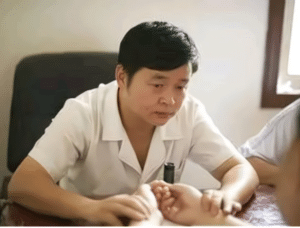
Bone spurs—known in Chinese as “骨刺”—are medically referred to as osteophytes or bone hyperplasia. They are bony projections that form along the edges of bones. Most bone spurs are asymptomatic and do not require treatment; intervention is only necessary when they compress nerves or impair joint movement.
Symptoms by Location
Cervical bone spurs: Neck pain and stiffness, which may cause numbness in the upper limbs and dizziness; in severe cases, they can compress nerves and blood vessels.
Lumbar bone spurs: Lower back pain and stiffness, which are more pronounced at rest and may improve with activity.
Knee bone spurs: Knee pain and swelling; pain worsens when walking and may be accompanied by a clicking sound during movement.
Heel bone spurs: Heel pain that worsens with prolonged standing or walking.
Other locations: Bone spurs may also develop in the finger joints, shoulder joints, hip joints, and other areas.
A Story About Eating Fish
When I was a child, there was a small river in front of our house teeming with fish. So whenever I had free time, I loved to go fishing. Catching fish meant we had fish to eat, and eating fish inevitably led to situations where a fishbone would get stuck in my throat.
I remember that every time a fishbone got stuck, my family would have me drink some vinegar, saying it could soften the bone.
Every time I got a fishbone stuck, I’d drink vinegar, but the results were only so-so—it always took a day and a half or so to clear it.
Later, my great-grandfather told me to take a small handful of Clematis root, boil it with half a bowl of vinegar, and drink the decoction, saying this would dissolve the fishbone.
I tried this method a few times, and it really worked well. Swallowing the boiled decoction slowly gradually softened the fishbone, and it was usually resolved in about ten to fifteen minutes.
Since becoming a doctor, whenever I’ve encountered patients with fish bones stuck in their throats, I’ve often recommended this method to them. As long as the fish bone isn’t too large, this approach is effective.
I. Treating Bone Spurs Through Both Internal and External Methods
I’ve always wondered: if fish bones can be softened, can bone spurs formed by osteophytes in the human body also be softened?
Patient Li, a 75-year-old woman, had been experiencing heel pain for over a month. She said she felt pain as soon as her heel touched the ground, which severely affected her ability to walk. An X-ray at a top-tier hospital revealed a bone spur on her calcaneus, and the doctor recommended surgical removal. The patient came to me on a “try-it-and-see” basis, hoping to resolve the bone spur issue through traditional Chinese medicine. After some thought, I prescribed the following formula: 100 grams of Weilingxian, 30 grams of safflower, and 250 grams of aged vinegar.
Directions: Boil the Weilingxian and safflower in water for half an hour to obtain 1,000 milliliters of decoction. Add 250 grams of aged vinegar, then soak her feet in this solution for 15 minutes. Do not discard the decoction after soaking; repeat the soak after 8 hours. Soak twice daily for 7 consecutive days. Replace the decoction every two days.
After 5 days of treatment, the patient was able to get out of bed and walk, with significant relief from pain, though some discomfort remained when bearing weight. After the 7-day soak, the symptoms had virtually disappeared.
I then advised the patient to continue taking 30 grams of Epimedium decocted in water daily, followed by Liuwei Dihuang Pills, for 10 consecutive days to consolidate the therapeutic effect.
Some may be puzzled: while the initial foot soaks with Weilingxian and safflower mixed with vinegar make sense, why is it necessary to decoct 30 grams of Epimedium and take it with Liuwei Dihuang Pills afterward?
There is a scientific rationale behind this.
Bone spurs are derived from bone tissue. In the human body, the kidneys govern the bones; in other words, all the bones in the body are managed by the kidneys. Another function of the kidneys is to “seal and store.” If there is kidney deficiency, the ability to seal and store is insufficient, causing bone marrow to leak out and form “marrow overflow syndrome”—which modern medicine refers to as osteophytes.
So how can we prevent this condition from worsening? It’s simple: tonify the kidneys! Once the kidneys are tonified, their ability to “seal and store” is enhanced, preventing the marrow from continuing to leak and thereby resolving the issue. The combination of Epimedium and Liuwei Dihuang Pills serves precisely this purpose!
Soaking the feet in a decoction of external herbs can soften bone spurs—this addresses the symptoms; taking internal medications to control marrow leakage addresses the root cause. Only by combining treatment of both the symptoms and the root cause can patients recover more quickly.
II. Nourishing the Kidneys Can Also Treat Lumbar Disc Herniation
As mentioned earlier, kidney deficiency leads to insufficient “sealing and storage” capacity, resulting in the “marrow leakage syndrome” and subsequently bone spurs. Some may ask: Aside from bone spurs, are there other possible pathological conditions that can arise from kidney deficiency?
“The kidneys govern the bones”—all skeletal disorders in the human body are related to the kidneys!
Once, while dining with some friends who are Western medicine practitioners, we discussed how to treat cervical spondylosis. During the meal, someone asked me, “How do you Traditional Chinese Medicine practitioners view this issue?”
I replied, “It’s caused by kidney deficiency!”
Everyone burst out laughing. In Western medical thinking, it seems that kidney deficiency is always associated with excessive sexual indulgence!
In fact, kidney deficiency isn’t necessarily caused by excessive sexual activity; long-term engagement in certain occupations can also damage the kidneys. For example, teachers who stand for extended periods—as the *Huangdi Neijing* states, “Prolonged standing damages the bones.” Drivers who spend long hours behind the wheel and people who frequently stay up late playing mahjong are also prone to kidney damage.
Once the kidneys are damaged, the body’s kidney essence becomes deficient, leading to symptoms such as soreness and weakness in the lower back and knees. At this point, if a person lifts heavy objects or maintains an improper sitting or standing posture for extended periods, a herniated disc may occur!
For patients with lumbar disc herniation, traction can increase the space between the vertebrae, causing the herniated disc to retract. This alleviates clinical symptoms, but the problem often recurs before long.
Some patients even opt for surgery to remove the herniated disc, only to discover shortly afterward that after removing the herniated discs at the L3 and L4 levels, the discs at the L4 and L5 levels have herniated; or after the herniated discs at the L4-L5 level are removed, herniations occur at the L2-L3 level before long! Treatment is constantly playing catch-up with the disease.
Why is this? Because the underlying pathogenesis of kidney deficiency in these patients remains unchanged, their dietary and lifestyle habits have not improved, and the treatments used only address the symptoms—none of them resolve the root cause of the problem.
Clinically, I have treated countless cases of lumbar disc herniation using a combination of oral Chinese herbal medicine and topical applications, achieving good results in all cases. In fact, the treatment approach is quite simple: it starts with the kidneys.
For patients with lumbar disc herniation who also present with symptoms such as a deep, thin, and weak pulse in the ulnar positions of both wrists and a pale root of the tongue, treatment must prioritize tonifying the kidneys and strengthening the lower back, supplemented by herbs that promote blood circulation to relieve pain, dispel cold and dampness, and unblock the meridians.
The herbs I frequently use are as follows:
Astragalus (tonifies the kidneys by tonifying lung qi, following the principle of “when there is deficiency, tonify its mother”);
Apricot Kernel (enters the Lung channel; bitter in nature and descending in action, it directs the essence of the lungs downward to the kidneys);
Aconite, Dodder Seed, and Deer’s-horn Grass (tonify kidney fire and nourish kidney essence);
Rehmannia glutinosa, Cistanche deserticola, and Chinese yam (to tonify kidney yin);
Black beans and Schisandra berries (to drain dampness, transform phlegm, and reduce nerve root edema);
Eucommia ulmoides and Chinese achyranthes (as guides to direct the herbs to the lower back);
Curcuma zedoaria, Curcuma longa, and Milettia reticulata (to invigorate blood circulation, unblock meridians, and relieve pain).
With this formula, relief is usually seen after five doses, and the condition is nearly resolved after ten doses.
Clinically, for patients with severe pain, Strychnos seed can be added; for those with severe leg numbness, pig’s penis should be included—this ensures rapid results.
III. Dietary Therapies for Nourishing the Kidneys
There are always people who dislike taking medicine. They ask: Aside from medication, are there any foods that can nourish the kidneys and seal the marrow?
Below, I’ll introduce another dietary therapy for tonifying the kidneys: Eucommia and Goji Berry Pork Kidney Soup.
Ingredients: 30 grams of Eucommia, 20 grams of goji berries, 1 pair of pork kidneys, 50 grams of winter bamboo shoot meat, 50 milliliters of peanut oil, 1,000 milliliters of fresh broth, and appropriate amounts of cooking wine, salt, soy sauce, ground pepper, and scallion whites.
Instructions: Wash the Eucommia bark and place it in a muslin bag. Remove the outer membrane from the pork kidneys, split them open into two halves, remove the odor glands, score the inside in a crisscross pattern, then cut into small cubes. Soak in clean water, rinse thoroughly, and sprinkle with cooking wine to marinate briefly. Peel the winter bamboo shoots, slice the flesh into thin strips, and stir-fry with salt until cooked.
Place a clay pot over high heat, add the fresh broth, winter bamboo shoots, goji berries, and the Eucommia gauze bag. Bring to a boil and simmer for 30 minutes, then remove the Eucommia. In a separate pot, bring water and salt to a boil, add the pork kidneys while they’re still warm from the previous step, and then add cooking wine. Transfer the slightly cooled pork kidneys to the soup in the clay pot and simmer over low heat until fragrant and tender. Season with ground pepper, MSG, soy sauce, and scallion whites to taste, then serve.
This soup nourishes the kidneys and strengthens the lower back. It is highly effective in treating lumbar disc herniation, osteophytes, and lumbar muscle strain caused by kidney deficiency.
IV. People with Kidney Deficiency and Bone Damage Should Avoid Excessively Salty Foods
Many illnesses can often be effectively managed through dietary adjustments. Among the five tastes, saltiness enters the kidneys. Salty medicines or foods most readily affect the kidneys. A moderate amount of salt can nourish the kidneys, but excessive salt damages them. For patients who have already developed symptoms of kidney deficiency, such as bone spurs or osteophytes, it is essential to avoid consuming too many salty foods; otherwise, it will only aggravate the condition and be detrimental to health.
As the saying goes, “Water can support a boat, but it can also capsize it.” Kidney deficiency can lead to osteoporosis. Many elderly people frequently experience leg cramps; when they see a doctor, they are often diagnosed with osteoporosis—commonly referred to as a calcium deficiency—and the most direct treatment for this deficiency is calcium supplementation.
Is calcium supplementation effective? It works for some patients, but as soon as they stop taking the medication, the leg cramps return immediately.
Patients like this often ask me, “Do I have to take these calcium tablets until I die? Until I’m in my coffin?”
The human body is a highly sophisticated system. If you have to take calcium tablets every day just to maintain it, that indicates there’s a problem with the treatment approach! To illustrate this point, let’s look at the following story: the story of the reservoir.