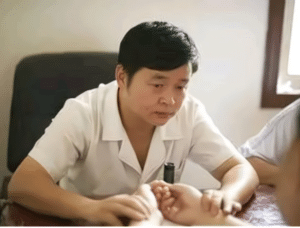
Musculoskeletal disorders is a general term for a group of conditions that affect the muscles, bones, nervous system, and related tissues of the human body, including arthritis, tendinitis, back pain, and other conditions.
Classification by Cause:
Inflammatory diseases: such as rheumatoid arthritis.
Painful conditions: such as osteoarthritis and back pain.
Osteoporosis and fragility fractures.
The Story of Making a Bow
One day last year, a neighbor’s child brought me a thin bamboo stick and asked me to help make a bow. This was an easy task—I used to play with homemade bows and arrows all the time when I was a kid. So I found a thin string, tied one end to the bamboo stick, pulled it tight, and then tied the other end to the already bent part of the stick. After lightly smoothing out the rough spots on the bamboo, the bow was ready!
The little guy happily searched for thin sticks to use as arrows and started playing!
Before long, the bowstring snapped. He found another thin bamboo stick and asked me to make another bow. So I made one for him, and with nothing else to do, I stood by and watched him play.
The little guy pulled the bowstring with all his might. Just as it looked like it was about to snap again, I immediately stopped him: “You can’t pull the bow like that—if you go too far, it’ll snap!” I said, demonstrating as I spoke.
“Dr. Yu, a patient is here!” Just then, the pharmacy clerk called out to me.
I put down the bow and arrows and returned to the examination room. The patient was a long-time patient of mine. After taking his pulse, I found that his left Guan pulse was blocked and his right Chi pulse was deep and thin. I asked him, “Do you feel nauseous after eating animal fats?” He shook his head. I said, “You have a problem with your knee joint. Take a few steps so I can take a look!”
The patient struggled to stand up and walked with a slight limp. He explained that the hospital had taken X-rays and diagnosed it as degenerative knee disease—an age-related condition that couldn’t be cured, so he hadn’t pursued treatment. Previously, the pain had been minimal and his condition manageable, but over the past couple of days, the pain had intensified, and his joints had become stiff.
I manually mobilized the patient’s knee joints and found that movement in his left knee was significantly restricted. I fell into deep thought for a moment: How could I find an effective solution?
I. It’s Clearly a Tendon Issue, Yet the Bones Often Take the Blame
Outside, a neighbor’s child was still playing with a bow and arrow. Watching his smiling face and the bowstring tightening and loosening in his hand, I suddenly realized a truth: stiffness and pain in the knee aren’t necessarily caused by bone lesions; they could also result from the contraction of tendons surrounding the joint, which reduces the joint’s range of motion and leads to a series of symptoms such as limited movement, stiffness, and pain.
This patient’s osteophytes didn’t form overnight, yet they remained pain-free for many years. What caused the sudden onset of pain? Why isn’t the pain now being attributed to the tendons, rather than the bones?
It’s just like the neighbor’s child playing with a bow and arrow: if the string is pulled too hard, the bow will naturally snap. Only when the tension of the string is just right and the pulling force is appropriate will the bow remain intact!
It seems that as long as the patient’s tendons are slightly relaxed, giving the joint a little more room to move, the pain should subside.
With this in mind, I inserted needles at the attachment points of the tendons above and below the patient’s knee joint, then applied cupping. Ten minutes later, the patient’s joint movement felt much easier. In conjunction with acupuncture, I also prescribed the following herbal formula: White Peony Root (Bai Shao), Licorice (Gan Cao), Huai Achyranthes (Hua Niuxi), Chicken Blood Vine (Ji Xue Teng), Corydalis (Yan Husuo), and Chinese Angelica (Dang Gui).
The combination of White Peony Root and Licorice uses sour and sweet flavors to generate yin, relieve spasms, and stop pain; Achyranthes Root directs the medicinal effects to the knee joint; Chicken Blood Vine unblocks the meridians and relieves pain; and Corydalis promotes blood circulation and alleviates pain. Many people may wonder why Angelica Root is included—after all, it nourishes, replenishes, and promotes blood circulation, which seems unrelated to knee pain.
There is an ancient saying in Traditional Chinese Medicine: “The liver governs the tendons, and the knee is the residence of the tendons.” The liver is the true “boss” of the knee joint; when the “subordinates” below develop problems, they naturally turn to the boss for help. Angelica sinensis nourishes the blood of the liver; when the liver’s blood is sufficient, the tendons are naturally nourished, becoming supple and strong rather than stiff and contracted. That is why Angelica sinensis is so important here!
On the third day, the patient reported, “After taking just one dose of the medicine, my joint pain was almost completely gone—traditional Chinese medicine works really fast!”
Later, I ran into a friend who specializes in micro-needle knife therapy. He told me that many joint disorders aren’t actually bone problems, but rather issues with tendons and ligaments—the bones are merely taking the blame. By using the micro-needle knife to gently release the tension at the tendon attachment points, the patient recovered quickly.
Traditional Chinese medicine often emphasizes that to treat a disease, one must address its root cause. But how do we identify this “root cause”? Is what we typically observe actually the root cause? Is the Western medical diagnosis of degenerative knee joint disease the true root cause?
I never expected that my unintentional foray into archery would actually enrich my experience in treating joint pain!
II. Soften the Tendons, Relieve the Bone Pain
With this experience under my belt, my approach to treating joint disorders has broadened considerably.
The patient, Ms. Liu, a 42-year-old woman, had been experiencing pain in both knees for one month. She could barely manage climbing stairs, but needed assistance when descending them. Taking Fenbid did not always provide relief. After visiting a top-tier hospital, the doctor diagnosed her with degenerative knee joint disease. The hospital specialist told her, “There’s no cure for your condition; you’ll just have to take some painkillers.”
Referred by an acquaintance, the patient came to see me; at the time of her visit, she still needed assistance to walk through the door. Upon taking her pulse, I found the left Guan position blocked and constricted like a bean, and all six pulses were taut, hard, and thin. I explained to the patient, “The tendons in your knees have contracted excessively, leading to joint stiffness and limited mobility. Osteophytes do not form overnight, but the recent worsening of your condition is primarily related to the tendons. As long as we can relax these tight tendons, your condition will improve.”
The patient was skeptical, so I prescribed three doses of the following herbs: white peony root, prepared rehmannia root, ophiopogon tuber, roasted jujube seed, morinda root, angelica root, chicken-blood vine, and Chinese achyranthes root.
After taking the medicine for three days, her knee regained full range of motion and was no longer stiff, though she still experienced some discomfort when going down stairs. I advised her to continue taking the same formula for another week. A month later, she referred a new patient to me, saying that after taking ten doses, her knee had been completely cured, and she expressed her deep gratitude.
III. Aging ≠ Poor Health
As we age, our bones become more porous and may undergo deformation. This change is a gradual process, and the body slowly adapts to it; this is a normal physiological aging process—a compensatory process—that does not affect normal physical activity.
However, when certain external factors come into play, this gradually established compensatory mechanism can be disrupted, leading to the development of new diseases. Treating these new diseases is difficult, but by addressing the root cause of the disruption to this compensatory mechanism, the symptoms can be alleviated.
We cannot expect an 80-year-old with a hunched back to stand as straight as a young person, nor is there any need to do so. However, we can address the pain caused by a deformed spine when exposed to cold—and that is the true goal of treatment!
My insights from archery have not only made me realize the importance of tendon disorders but have also taught me that understanding human diseases is not so straightforward. Treating illness is not about blindly pursuing perfection, but rather about seeking a new balance within the pathological state—one that aligns with the ways of nature.
Treating illness is an insight into the disease itself, as well as an insight into one’s own body. In the process of battling illness, we can employ many different methods; direct confrontation is one approach, and a flanking maneuver is another. As The Art of War by Sun Tzu states: “In all warfare, one uses orthodox tactics to secure harmony and unconventional tactics to achieve victory.” ” The same applies to treating illness. When we fall ill, we should view it with a calm and balanced mindset. The aging of the body is a natural law; it is impossible to defy it. All we can do is nurture our gradually declining bodies while conforming to this law. The approach to managing illness varies by age group. Consider the elderly in their eighties and nineties—how many of them do not have osteoarthritis? Although osteoarthritis cannot be cured, as long as one can maintain a balance within this compensatory condition and find an exercise regimen suited to one’s own needs, it is possible to live out one’s life comfortably—rather than giving up or overcompensating, thereby violating the laws of nature itself.
IV. Leg Stretching: Adapting to the Laws of Life Itself
I remember when I was in school, our physical education teacher often had us do leg stretches. At the time, I didn’t pay much attention to the benefits of these stretches. Now that I’ve come to understand the vital role tendons play in the human body, I’ve gradually started making a habit of stretching my legs. The process of leg stretching is essentially the process of stretching the tendons; only by stretching the tendons in the legs can the body’s joints retain their elasticity, absorb external impacts, and become less prone to illness.
During my college years, sitting in meditation postures was popular, and I participated as well. At first, I could only sit in the loose-legged cross-legged position. After a week, I began sitting in the single-legged cross-legged position. Each time I sat in this position for 20 minutes, my feet would go numb and my knees would ache; I’d have to rest for a few minutes before I could stand up and walk. Seeing my roommates’ perseverance, I didn’t give up easily either. After practicing for about ten days, sitting in the single-leg cross-legged position felt almost effortless, so I moved on to the double-leg cross-legged position. While sitting in this posture, the ligaments in both knees are stretched—similar to leg-stretching exercises. At the time, I didn’t give much thought to the benefits of this practice; I simply focused on the state of mind it brought. After a month of consistent practice, I gradually began to feel the benefits: my legs felt very light when walking, and I could take three steps at a time up the stairs without any strain. These were all results of the practice, which is also a method for strengthening the tendons.
V. Nourishing the Tendons Also Requires Tendon-Nourishing Soup
The two previous cases show us that the stiffness, pain, and limited range of motion caused by degenerative knee joint disease originate in the tendons, not the bones. Therefore, the focus of treatment must be on the tendons; treatments targeting the bones will be ineffective.
Although the term “degenerative knee joint disease” did not exist in ancient times, medical texts have long documented treatments for conditions described as “deficiency of the liver and kidneys, contracted tendons that cannot be stretched, lying in bed moaning, and being unable to take a step.” Volume 8 of *The Record of Differentiation of Syndromes* mentions a wonderful formula—the Nourishing Tendons Decoction—which is a classic herbal prescription for treating this condition. The Yangjin Decoction contains the following herbs: white peony root, prepared rehmannia root, ophiopogon tuber, stir-fried jujube seed, and morinda root. Its function is to tonify the kidneys and nourish the heart, while nourishing the liver and relaxing the tendons. It is remarkably effective for symptoms such as deficiency of the liver and kidneys, deficiency of heart yin, contracted tendons that cannot be stretched, lying in bed moaning, inability to walk, pain throughout the body, and soreness and numbness in the arms. It is said that “after one dose, the tendons feel slightly more relaxed; after four doses, they are significantly more relaxed; and after ten doses, pain and soreness and numbness are completely eliminated.”
VI. Nourishing the Tendons Through Diet: Like Cures Like
Some might say that traditional Chinese medicine is too unpleasant to drink. Is there anything less bitter that can still treat illnesses—preferably something we eat regularly?
Medicine and food share the same origin! Once you understand that limited joint mobility in degenerative knee conditions stems from problems with the tendons, the solution becomes clear.
Traditional Chinese Medicine espouses the principle of “like nourishes like,” meaning that consuming animal tendons can nourish the tendons of the human body. What kinds of animal tendons are available? Foods we commonly eat—such as beef tendons, mutton tendons, chicken feet, and pork trotters—are all rich in tendons. Regular consumption of these foods is highly beneficial for the human body, especially for elderly patients. Nourishing the tendons with tendons can prevent “tendons from shortening and failing to extend, making it impossible to take a step.”
In clinical practice, in addition to treating these conditions with Tendon-Nourishing Decoction, deer tendons can also be used for therapeutic purposes. Deer tendons strengthen tendons and bones, nourish the blood and unblock meridians, generate essence, and enrich the marrow. They are primarily used to treat overuse injuries and trauma from falls or blows, significantly strengthening tendons and bones while tonifying yang energy; It is highly effective for chronic rheumatism, joint pain, lower back and spinal pain, fatigue or weakness of the tendons and bones, difficulty walking, weakness in the hands and feet, cramps in the hands and feet, injuries from falls or overuse, and aching tendons and bones.
How should deer tendons be prepared? I recommend a dish called “Stewed Chicken Feet with Deer Tendons.”
Ingredients: 100 grams of dried deer tendons, 200 grams of fatty chicken feet, 25 grams of ham slices, and 50 grams of sliced mushrooms. Add cooking wine, salt, MSG, scallion segments, ginger slices, and chicken broth to taste.
Preparation: 1. First, rinse the deer tendons in cold water and set them aside. Place them in an earthenware pot, pour boiling water over them, and let them soak until the water cools. Then replace the water with fresh boiling water. Repeat this process of changing the boiling water several times; the tendons are ready for use only after they have fully rehydrated (approximately two days). Then trim the tendons clean, cut them into finger-sized strips, and place them in a pot with ginger, scallions, cooking wine, and water. Simmer until tender, then remove and transfer to a stewing pot.
Blanch the chicken feet thoroughly in water, remove the yellow skin, trim off the claw tips, and remove the large bones. Blanch them briefly in boiling water, then remove, rinse, and place them in the stewing pot. Top with ham slices and mushrooms, add chicken broth, cooking wine, ginger, and scallions. Steam in a steamer until the deer tendons are tender. Strain the broth, add MSG and salt, stir until dissolved, then pour it back into the steaming bowl. Return to the steamer and steam for about half an hour before removing; the dish is now ready.
In this dish, both the deer tendons and chicken feet help strengthen tendons and bones. As a medicinal dish, it also has the benefits of tonifying qi and nourishing blood, nourishing yin and replenishing essence, strengthening tendons and bones, and fortifying the lower back and knees. It is suitable for patients with deficiency of essence and blood, poor appetite and emaciation, post-illness physical weakness, postpartum blood deficiency, as well as those suffering from soreness and pain in the lower back and knees, stiffness and difficulty in bending or stretching, rheumatic joint pain, or deficiency of kidney essence.
Some people ask: Is there a way to manage these issues without taking medication or relying on dietary supplements? Yes, there is! The currently popular practice of “tendon stretching” is actually a form of treatment. Through stretching exercises, the tendons are lengthened, increasing the range of motion in the joints and thereby reducing pain. For those unfamiliar with tendon stretching, practicing the “disc” exercise is also effective. Elderly individuals should approach the “cross-legged sitting” practice gradually. It’s best to start with the “loose cross-legged” position. After practicing for a while, you can move on to the “single-leg cross-legged” position, and after practicing that for some time, you can progress to the “double-leg cross-legged” position. After practicing this, the tendons around the knee joints will be stretched, increasing the range of motion and alleviating joint stiffness.
Degenerative changes in the knee joint can be treated using the methods described above, and degenerative changes in other joints can be treated in the same way—as long as the issue involves the tendons, the aforementioned methods can be applied.
A patient once asked me, “Doctor, my heel hurts. After getting an X-ray at the hospital, I was diagnosed with bone spurs. Western doctors recommended surgery, but they can’t guarantee that the condition won’t recur after the operation. What do you think I should do? I’m over 80 years old—is it really worth going under the knife for a procedure that might not even cure the problem?” To address this issue, we must first analyze it from the perspective of the bone spur and then examine the underlying tendon-related issues.
Now let’s look at another short story: “The Story of Eating Fish.” Through this story, we’ll learn about the treatment of calcaneal bone spurs.