In the context of Traditional Chinese Medicine (TCM), “Internal and External Syndromes” corresponds to the technical terms “exterior syndrome” and “interior syndrome”—a pair of guiding principles used in the Eight Principles of TCM to determine the depth of a disease’s location.
Simply put, exterior syndromes refer to conditions affecting the body’s periphery (skin, muscles, and meridians), while interior syndromes refer to conditions affecting the body’s interior (organs and viscera, qi, and blood). Exterior syndromes typically have an acute onset and a short course, commonly presenting with chills, fever, headache, body aches, nasal congestion, runny nose, and a floating pulse; interior syndromes are located deeper within the body, are relatively more severe, and present with complex and varied manifestations, such as various symptoms caused by dysfunction of the organs and viscera.
How to Distinguish Between Exterior and Interior Syndromes
Check whether chills can be relieved: If chills subside after putting on more clothes or covering up with a blanket, it is usually an exterior syndrome; if you remain cold no matter how much you cover up—or even experience cold hands and feet, or a cold sensation in the abdomen and back—it is usually interior cold.
Check the location of symptoms: If discomfort is concentrated on the surface of the skin, muscles, or respiratory tract (headache, nasal congestion, itchy throat, general tightness), it is usually an exterior syndrome; if symptoms are located deeper within the body (chest tightness, abdominal distension, acid reflux, deep joint pain), it is usually an internal syndrome.
Observe the onset pattern: External syndromes often appear suddenly and acutely—for example, feeling unwell on the same day after being exposed to wind or rain; internal syndromes usually develop gradually, with symptoms possibly appearing several days later.
Comparison of Common Types
Exterior Cold Syndrome: Severe chills, mild fever, no sweating, headache and body aches, clear nasal discharge; commonly treated with pungent-warm methods to dispel exterior pathogens.
Exterior Heat Syndrome: Severe fever, mild chills, sore throat, thirst, sweating; commonly treated with pungent-cool methods to dispel exterior pathogens.
Internal Heat Syndrome: Fever without chills, dry and bitter mouth, constipation, and restlessness; requires clearing internal heat.
Internal Cold Syndrome: Cold abdomen, loose stools, cold hands and feet, and aversion to cold foods; requires warming the interior to dispel cold.
Exterior and interior syndromes are not fixed; exterior pathogens can penetrate to the interior (progression of the disease), and interior pathogens may emerge to the exterior (regression of the disease). Therefore, when you are unsure, do not take medication indiscriminately—especially do not treat an exterior cold syndrome as an interior heat syndrome by clearing heat, as this can easily trap the pathogenic factors inside the body.
The Story of Fixing a Fan
The fan at home broke down. I opened the casing myself and spent a long time trying to figure out what was wrong, but I couldn’t find the cause. The motor didn’t seem to be burned out, and the fuse wasn’t blown—it appeared to be in good condition. But when I plugged it in, it just wouldn’t work—it wouldn’t spin. It looked like the fan needed to go to the “hospital”! With no other choice, I had to carry the fan to an appliance repair shop to see if they had any clever solutions. After listening to my “description of the fan’s symptoms” and my “attempts at fixing it,” the technician also unscrewed the screws, opened the casing, and then plugged it in to test for power directly with a voltage tester. After testing, he told me the fan itself was fine—the wire was broken! He replaced the wire, and the fan was fixed.
What seemed like a complicated problem was easily diagnosed with a voltage tester. I had to admit: “Different trades are like different mountains”—I exclaimed with sincere admiration.
I. Can Cold in the Small Intestine Meridian Cause Heart Disease?
This story should have ended there, but an incident a few days later gave me a deeper understanding—or perhaps a deeper insight—into the fan repair experience.
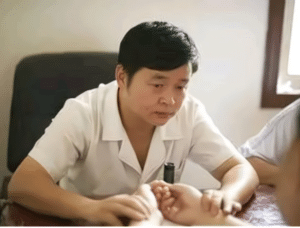
An elderly woman had been experiencing palpitations and chest tightness for half a month. She was treated at the hospital, where coronary heart disease was suspected. She underwent an electrocardiogram and a cardiac ultrasound, but neither revealed any obvious abnormalities. After taking medication to improve blood supply to the heart, her symptoms did ease, so the hospital recommended she take medication for heart disease. However, the elderly woman had always been in good health before her symptoms began, and she personally felt there was nothing wrong with her heart. If her heart really is fine, wouldn’t long-term use of heart disease medication cause unnecessary harm to her body? While taking the medication, the elderly woman sought opportunities to consult other doctors, hoping to resolve her doubts. Later, she came to see me, recounting the details of her examinations and treatment in detail, hoping I could help her resolve her concerns. As I listened to her, I took her pulse.
Her left cun pulse was floating, fine, and weak when taken superficially, but strong when taken deeply. There was no varicosity in the sublingual veins, and the color of her lips was fairly normal—none of these findings were consistent with blood stasis obstructing the heart meridian.
“How have your bowel movements been lately?” I asked.
“Don’t even mention it. I ate something cold that upset my stomach, and for the past half a month, my digestion hasn’t been right. I’ve had a dull ache in my stomach, and I’ve been having three or four bowel movements a day,” the elderly woman began describing her symptoms. “It’s strange—every time I have loose stools, I feel a sense of emptiness in my chest, and then I start to feel anxious!”
The elderly woman’s description of her symptoms reminded me of a fan repair I’d done a few days earlier. That fan wouldn’t spin because its wire had snapped; in this case, the elderly woman’s intestines had been exposed to cold, causing the Hand-Taiyang Small Intestine Meridian to contract, which in turn affected the supply of qi and blood to the heart.
The Huangdi Neijing: Lingshu: Chapter on Meridians states: “ The Hand-Taiyang Small Intestine Meridian originates at the tip of the little finger, runs along the outer side of the hand up to the wrist, emerges at the center of the wrist, ascends straight along the lower border of the forearm bone, emerges between the two bones on the inner side of the elbow, ascends along the outer and posterior border of the upper arm, emerges at the shoulder joint, encircles the scapula, crosses over the shoulder, enters the Qubin, connects to the heart, runs along the throat, descends through the diaphragm, reaches the stomach, and belongs to the small intestine; A branch of this meridian extends from the Qiebeng up the neck and along the cheek to the outer corner of the eye, then turns back and enters the ear; another branch diverges from the cheek, ascends to the nose, reaches the inner corner of the eye, and connects obliquely to the zygomatic bone.”
The heart and small intestine are paired organs. The phrase “enters the Qiebeng and connects to the heart” here serves as proof that the Small Intestine Meridian is connected to the Heart Meridian.
The elderly woman’s small intestine was affected by cold; the contracting nature of cold led to obstruction in the small intestine meridian, blocking the internal-external connection between the small intestine and the heart. As a result, the heart was deprived of the meridian energy supplied by the small intestine, naturally causing palpitations. Following the episode of diarrhea, the meridian energy of the small intestine meridian diminished, further exacerbating the condition. The heart itself was not at fault; it was merely bearing the brunt of the small intestine’s condition.
Treatment focused solely on the heart—using herbs to invigorate blood circulation and unblock the meridians—actually offers some benefit in clearing the Small Intestine Meridian in addition to improving cardiac blood circulation, which is why it is effective. However, the root cause of the illness is cold in the intestines; if this intestinal cold is not resolved, the Small Intestine Meridian will remain chronically obstructed—a problem that cannot be solved simply by taking medication for heart disease. It’s just like the story of repairing the electric fan mentioned earlier: fixing the wiring is the key; repairing the motor alone won’t solve the problem.
Having grasped these principles, I patiently explained to the elderly lady why she was experiencing heart discomfort, how it should be treated, how to prevent it in the future, and what dietary precautions she should take.
After hearing my explanation, the elderly woman was very pleased and let out a long sigh of relief: “I knew I didn’t have heart disease. Now I can rest easy. So, please go ahead and treat my intestines!”
I recommended that she take Fuzi Lizhong Pills and eat some longan flesh regularly. A week later, the elderly woman told me that her bowel movements had returned to normal, her heart no longer felt anxious, and she hadn’t taken a single dose of heart medication—she felt quite well.
A patient suspected of having heart disease—and advised to take long-term medication—was cured just like that!
Are there many patients like this?
Plenty! Clinically, I frequently encounter patients with palpitations and chest tightness. When they undergo an ECG at the hospital, the results are normal. Their bowel movements are irregular—sometimes several times a day, other times once every few days. Some patients are emaciated, while others are obese. When these individuals seek treatment from a TCM practitioner, they all receive the same diagnosis: spleen deficiency. In reality, their pathological changes involve not only the spleen but also the small intestine; the key lies in the small intestine’s impaired function.
Determining whether there is a small intestine issue is quite simple: examine the patient’s left cun pulse. A normal pulse is neither floating nor deep, but gentle and strong. If the pulse is deep and thin, or if there is no pulse when taken superficially, this is called “absence of the small intestine pulse”; if the pulse is full and strong when taken superficially, this is called “excess of the small intestine pulse.” Both of these conditions indicate a pathological change in the small intestine.
Some practitioners, upon palpating the left cun pulse, may perceive it as slightly floating or slightly sunken and mistakenly attribute this to a heart condition. They then apply Western medical treatment principles—such as promoting blood circulation and resolving stasis—to address coronary artery insufficiency. However, this approach cannot cure the underlying condition.
To address the pathogenesis of Qi stagnation in the Small Intestine Meridian—treating cold with heat, heat with cold, deficiency with tonification, and excess with purgation—is the only way to fundamentally treat cardiac discomfort.
While applying the above principles, one herbal ingredient must not be overlooked: fire hemp seeds. Though this herb may seem ordinary, it lubricates the Small Intestine and unblocks the Small Intestine Meridian; it is effective regardless of whether the condition is characterized by cold, heat, deficiency, or excess. Those who are skeptical can consult the Treatise on Cold Damage and examine the Decoction of Fried Licorice Root (Zhi Gancao Tang), a classic formula for treating palpitations. The inclusion of fire hemp seeds in this formula serves precisely to lubricate the small intestine, unblock the Small Intestine Meridian, and improve the flow of qi in the Shao Yin Heart Meridian.
The herbs recorded in the Treatise on Cold Damage all carry profound significance; what may appear to be ordinary ingredients often conceal deeper meanings.
The heart and small intestine are paired as exterior and interior organs, much like two brothers or the left and right hands of the human body—they are interconnected and influence one another. When the flow of qi in the Small Intestine Meridian is obstructed, it affects the circulation of qi and blood in the heart; similarly, when heart fire is deficient, the small intestine becomes vulnerable to invasion by cold pathogens, and its ability to transform and digest substances diminishes.
When taking the pulse, a floating pulse at the left cun position indicates a Yang pulse—the Taiyang Small Intestine Meridian; a deep pulse indicates a Yin pulse—the Shaoyin Heart Meridian. Only when Yin and Yang are harmoniously balanced will the pulse be neither floating nor deep. By assessing the pulse, one can determine whether the small intestine is causing heart dysfunction or the heart is causing small intestine dysfunction. Treatment can then be directed toward the small intestine via the heart, or toward the heart via the small intestine.
II. Can Constipation Cause Coughing?
Among the five zang organs, in addition to the heart and small intestine being paired as exterior-interior, the lung and large intestine are also paired, as are the liver and gallbladder, the spleen and stomach, the kidney and bladder, and the pericardium and triple burner. Based on the mutual influence between the heart and small intestine discussed earlier, we can infer that other paired zang-fu organs are also interconnected and influence one another.
Let’s first examine the lung and large intestine, which are paired as exterior-interior. When a person has excessive lung fire, this fire descends to the large intestine. If the heat and toxins in the large intestine become too severe, dry, hard stools or even constipation may occur. Many patients experience this condition, which is easily triggered by consuming spicy foods. In such cases, taking medications that reduce lung fire often yields good results.
Mulberry leaves are very light in nature and belong to the category of “light and clearing” substances; they ascend to the Upper Jiao to clear lung fire. For constipation caused by lung fire, brewing mulberry leaves into tea can be highly effective. In addition to hard, dry stools, such patients often exhibit symptoms such as excessive dandruff, dry hair, a dry throat, and a dry nasal cavity. These accompanying symptoms indicate that the constipation stems from excessive lung fire, which has impaired the large intestine’s ability to transmit and transport, leading to the condition.
Conversely, dysfunction in the large intestine’s peristalsis can also impair the lung qi’s ability to descend and consolidate. In patients with chronic constipation, this descending function is compromised, making them prone to upward rebellion of lung qi. Such patients are likely to develop a cough after being exposed to cold, and this cough tends to persist for a long time. In such cases, purging the large intestine is the most effective treatment.
I have treated a typical case like this: Patient Chen, a 75-year-old woman, had suffered from hard, dry stools for over a decade and had been coughing for one week.
She had suffered from chronic constipation for more than ten years, with bowel movements only once a week—the stool was hard and dry, resembling sheep droppings. A week earlier, she was exposed to cold, after which she developed a cough with phlegm, accompanied by chest tightness, anxiety, and palpitations. After three days of antibiotic supports at the hospital with no significant improvement, she sought supports from a TCM practitioner. The patient had a notably fissured tongue with a peeling tongue coating; the right cun pulse was floating, full, and tight, with a strong response to deep pressure; the right guan and chi pulses were stagnant and rough; and the left guan pulse was also stagnant and rough.
This patient had suffered from chronic constipation for a long time. The large intestine pulse was firm, leading to the failure of lung qi to descend. This stagnation transformed into fire, scorching the body’s yin fluids and causing a deficiency of yin fluids internally. Compounded by exposure to cold pathogens, the lung qi’s functions of dispersing and descending became further disrupted, causing qi to rise upward—hence the persistent cough. Treatment should focus primarily on nourishing yin and relieving constipation, while also dispelling external cold.
I prescribed a Chinese herbal formula incorporating Scrophularia root, Ophiopogon tuber, and fire hemp seeds, among other ingredients. After taking just one dose, the patient passed a large amount of dry, hard stool. Her cough improved significantly for over half a year, and after taking three doses, the cough was completely cured. This case demonstrates the treatment of disease through the relationship between the exterior and interior.
III. The Exterior-Interior Relationships of Other Zang-Fu Organs
The Five Zang Organs and the Six Fu Organs are mutually exterior-interior. The Five Zang Organs belong to Yin; they store but do not discharge. The Six Fu Organs belong to Yang; they discharge but do not store. When turbid pathogens linger in the Five Zang Organs, a condition of “storing but not discharging” is likely to occur. Only by promoting the discharge of the Six Fu Organs—treating the interior through the exterior—can the pathogenic factors accumulated in the Five Zang Organs be expelled.
Draining the Large Intestine can treat turbid pathogens in the Lungs.
Draining the Small Intestine can treat turbid pathogens in the Heart.
Draining the Gallbladder can treat turbid pathogens in the Liver.
Draining the Bladder can treat turbid pathogens in the Kidneys.
Descending the Stomach Qi can treat turbid pathogens in the Spleen.
Clinically, it is common to see doctors treat patients with jaundice-type hepatitis using therapeutic principles that focus on regulating the liver and promoting bile flow. This approach treats the liver by purging the gallbladder; if treatment does not begin with the gallbladder and instead focuses solely on the liver, the pathogenic factors within the liver will have no outlet, and treatment will reach a dead end.
When treating patients with kidney disease, doctors begin with the bladder, because only when urination is unobstructed can toxins be expelled from the kidneys. In patients with chronic kidney disease, indicators such as blood urea nitrogen and creatinine will show abnormalities; these can only return to normal once urination is unobstructed. No patient can have healthy kidneys if their bladder is unable to expel urine.
To treat diseases of the spleen, one must begin with the stomach. When the spleen is obstructed by phlegm-dampness, its function of ascending the pure and its transformative and transportative functions will decline. While strengthening the spleen, promoting the descent of the stomach to expel turbidity facilitates the elimination of phlegm-dampness through the intestines. Only when the stomach’s function of descending turbidity is normal can the spleen’s function of ascending the pure be fully exerted; only then can the qi mechanism of the middle jiao maintain a balance of ascension and descent, the middle jiao function as a “fermenting vessel” operate normally, and the “earth” of the spleen and stomach generate all things.
With an understanding of the above principles, when treating diseases of the five zang organs, it is necessary to take the six fu organs into account as well, assessing whether their functions are abnormal. By addressing the six fu organs first to clear and drain the turbid pathogens from the five zang organs, one can achieve twice the result with half the effort.
Treating the zang organs by draining the fu organs applies to excess patterns; for deficiency patterns, however, one must target the deficient zang-fu organs and replenish qi and blood. If drainage methods are still used for deficiency patterns—specifically by draining the large intestine—the five zang organs will become even more deficient, and the condition will worsen.
To illustrate this point, let’s consider the following story: The Story of the Oil Lamp.