
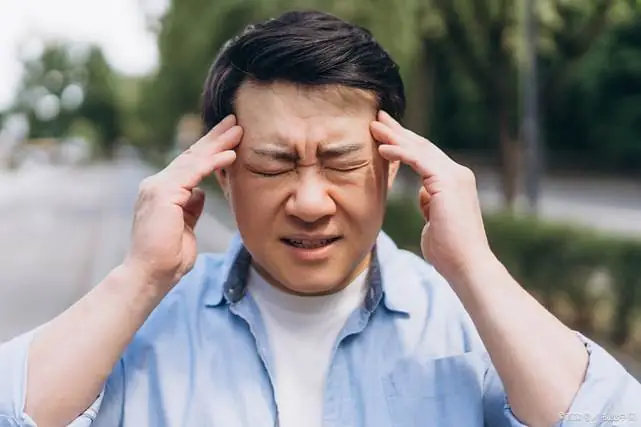
Do you often feel a throbbing pain in your right temple, get nauseous after eating greasy food, and find yourself inexplicably on the verge of losing your temper? Even if your blood tests and ultrasound reports show everything is “normal,” don’t be fooled by these scattered “minor ailments”—they’re likely all pointing to the same problem: the “highway” running along the side of your body—the Foot Shaoyang Gallbladder Meridian—is blocked!
A blockage in this meridian is no laughing matter. It’s like a city’s main thoroughfare—once it grinds to a halt, traffic throughout the entire city goes haywire. Today, I’ll break it down for you in simple terms: when the Gallbladder Meridian is blocked, your body will flash six warning signs. More importantly, I’ll teach you a “major unblocking technique” frequently used by traditional Chinese medicine practitioners—no need to memorize a bunch of acupoints; just tap one spot to get this main artery flowing smoothly again.
When the Gallbladder Meridian Is Blocked, Six Ailments Arise—Your Discomforts May All Stem from the Same Source
Stop treating symptoms in isolation. The Gallbladder Meridian starts at the outer corner of the eye, loops around the ear, runs along the side of the head, neck, shoulders, and the side of the body, all the way to the toes. If it becomes blocked and qi and blood cannot flow through, the following six seemingly unrelated ailments will come knocking one after another.
I.First Red Flag
Migraines and a throbbing, aching sensation in the eyes. The Gallbladder Meridian runs right through both sides of your head. When it becomes blocked here, qi and blood cannot rise to nourish the head and face—and where there is no free flow, there is pain. That throbbing, aching pain—especially when it’s on one side—is almost always related to this meridian. Many people take painkillers year after year without addressing the root cause; starting by unblocking the Gallbladder Meridian can often solve the problem at its source.
Do you think this is just a simple “headache”? Wrong—it’s Gallbladder Fire burning upward along the meridian, and the next step could be blurred vision or tinnitus.
II.The Second Warning Sign
Distending pain in the flanks, as if air is rushing through. The area around the ribs on both sides of the chest is a key pathway for the Gallbladder Meridian and a pivotal hub for the rise and fall of qi throughout the body. When blockages occur here, the sensation is most pronounced. You constantly feel a sense of distension in your rib cage, as if a burst of energy is trapped inside, and the pain moves around—it seems to be darting back and forth internally. Whenever you get angry or feel depressed, the symptoms immediately worsen.
This isn’t because you’re “petty”; it’s a genuine blockage in the meridians, where energy is being held back.
III.The Third Warning Sign
Waking up in the morning with a bitter taste in your mouth and a throat so dry it feels like it’s on fire. This is a very typical symptom of a blockage in the Gallbladder Meridian. Gallbladder qi is supposed to flow downward to aid digestion. Now that the channel is blocked, the qi surges upward, bringing the bitter taste of bile into your mouth. This feeling is especially pronounced in the morning after a night’s sleep. Gallbladder fire also scorches body fluids, leaving you with a constant sensation of a dry throat—no matter how much water you drink, it never seems to quench your thirst.
Don’t just assume it’s “internal heat” and reach for herbal tea; clear the blockage in the lower meridians, and the heat will naturally subside.
IV.The Fourth Red Flag
Poor digestion and a fear of anything greasy. The gallbladder secretes bile, which is essential for digesting fats. When the Gallbladder Meridian is blocked, it directly affects the gallbladder’s function, disrupting the secretion and excretion of bile. As a result, foods like braised pork belly or fried chicken legs simply can’t be digested; they get stuck in your stomach, leading to bloating and loss of appetite. In severe cases, just the smell of greasy food can make you want to vomit.
If this persists over time, your body won’t be able to absorb nutrients properly, leaving you feeling lethargic and potentially setting the stage for gallbladder disease.
V.The Fifth Red Flag
Emotional Instability—Either Depression or Irritability. Traditional Chinese Medicine states that “the gallbladder governs decision-making.” When gallbladder qi flows smoothly, a person acts decisively and with determination. When the Gallbladder Meridian becomes blocked and gallbladder qi stagnates, a person becomes indecisive, sighs constantly, and lacks energy all day long—this is “depression.” If this stagnation persists, it transforms into “fire,” causing a person to fly off the handle at the slightest provocation, find fault with everything, and feel sudden, uncontrollable bursts of anger—this is “agitation.” This is not a personality issue at all, but rather a direct emotional manifestation of an imbalance in the flow of qi along the Gallbladder Meridian.
If you feel your emotions have been particularly off lately, don’t just consult a psychiatrist—check your Gallbladder Meridian; that may be the root cause.
VI.Sixth Red Flag
A line running along the side of your body that feels sore and painful. Starting from the side of your buttocks (near the Huantiao acupoint), running down the outer thigh, and continuing along the outer calf (near the Yanglingquan acupoint)—this line traces the Gallbladder Meridian’s path through the lower limbs. When it becomes blocked, these areas will send out warning signals: soreness, numbness, distension, and pain. These sensations are particularly noticeable after sitting for long periods at an office desk or when your legs get cold while sleeping at night.
Many people assume it’s “sciatica” or “chronic cold legs,” but actually, the first step should be to try unblocking the Gallbladder Meridian.
By now, you’ve probably recognized several of these symptoms in yourself. Don’t panic—the solution is simpler than you think. To unblock the entire Gallbladder Meridian, you don’t need to be an acupuncture expert; you just need to locate one “master switch.”
Core Acupoint Guide—Tap the “Jianjing Point” Correctly, and Everything Falls into Place
This master switch is the Jianjing point. Located in the upper half of the Gallbladder Meridian, it serves as a convergence point for multiple Yang meridians—including the Gallbladder, Triple Energizer, and Stomach meridians—functioning much like a major “transportation hub.” Stimulating this point efficiently transmits energy throughout the entire Gallbladder Meridian, achieving the effect of “moving a thousand catties with just four liang.”
How do you find it? It’s very simple. Tilt your head down and feel for the most prominent bony protrusion at the center of the back of your neck (the seventh cervical vertebra), then locate the highest point of your shoulder (the acromion). The Jianjing acupoint is exactly halfway along the line connecting these two points. Press firmly with your thumb; if you feel a very distinct sensation of soreness, numbness, or fullness—or even pain—you’ve found the right spot.
How exactly should you tap it? If your technique is wrong, it’s all for nothing.
Hand Position: Use the opposite hand. For example, to tap your left shoulder, use your right hand. Form a loose fist and use the thick muscle on the little-finger side of your palm (the thenar eminence) to tap.
Pressure and Rhythm: Never pound with all your might! That’s not clearing blockages—it’s causing damage. Start with light pressure and gradually increase it until you feel a sour, distended “deqi sensation” that’s still tolerable. Maintain a steady rhythm, one tap at a time—don’t rush it. A rate of 1–2 taps per second is ideal.
Duration and Frequency: Tap for 3 to 5 minutes each time, until you feel localized warmth and a sensation of soreness and fullness spreading out. Do this 1–2 times a day. It’s recommended to tap immediately after sitting for long periods, upon waking up in the morning, or whenever you feel mentally stifled or your shoulders feel stiff.
Here’s a key point I must emphasize: The core of tapping the Jianjing acupoint lies in “relaxation” and “penetration.” While tapping, your shoulders must be completely relaxed—don’t tense up. Let your mind follow the sensation of the tapping vibrations. Imagine that energy flowing like a wave, starting from the Jianjing acupoint, traveling down the side of your body, and clearing away all blockages along the way. If you simply tap until your skin turns red or it hurts, that’s self-harm, not self-care.
Guide to Maximizing Effectiveness and Avoiding Pitfalls
Want better results? After tapping the Jianjing acupoint—the “master switch”—you can build on that momentum. Using your palm or a cupped fist, gently tap along the course of the Gallbladder Meridian, starting from the armpit and moving down to the side of the waist, then from the buttocks to the outer side of the calf. This is like opening the master switch and then clearing out the various tributaries to guide the flow of qi and blood more effectively.
However, there are several practices that are purely counterproductive—you must avoid them:
Pitfall1: Believing that the harder you tap, the more pain you feel—or even causing bruises—means it’s effective. This is a huge mistake! Excessively forceful tapping can cause subcutaneous capillaries to rupture and damage soft tissues, leading to new bruising and inflammation—which actually creates more blockages. Remember: comfort and the sensation of “qi” are the golden standards.
The second major pitfall: focusing solely on tapping acupoints without changing your lifestyle habits. This merely treats the symptoms rather than the root cause. Think about it: why does the Gallbladder Meridian become blocked? Chronic late nights (the Gallbladder Meridian is most active between 11 p.m. and 1 a.m.), bottling up anger all day, and overeating greasy meals at every meal—these are the true “culprits” behind the blockage. Tapping acupoints is “unblocking”; changing bad habits is “prevention.” You can’t keep the system clean if you’re creating new blockages while trying to clear them.
Finally, and most importantly: self-treatment is intended for daily wellness and relieving mild discomfort. If, after regular tapping, your symptoms show no improvement—or even worsen—or if you experience severe pain in the upper right abdomen, a fever, or noticeable yellowing of the skin or eyes, you must stop immediately and seek medical attention. These could be signs of an acute attack of organic diseases such as acute cholecystitis or gallstones, which require professional medical intervention and cannot be delayed.
The body is like a precision machine; those scattered discomforts are often early warning signs from its core components. The Gallbladder Meridian—this “lifeline” running along the side of the body—is worth your careful attention. Spending just a few minutes each day gently tapping the Jianjing acupoint is an effective way to maintain and clear this vital pathway. When your qi flows smoothly, the pain subsides, and your emotions will naturally stabilize.
Now, raise your hand, locate that tender spot on your shoulder, and try tapping it gently a few times. Feel that warm, soothing sensation—isn’t it slowly spreading throughout your body?