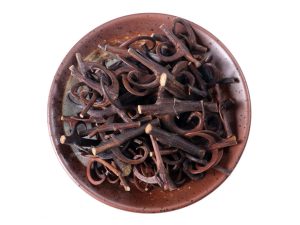
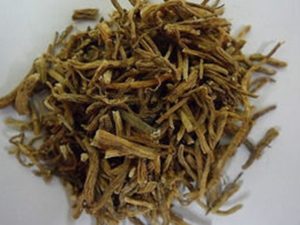
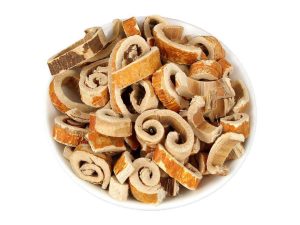
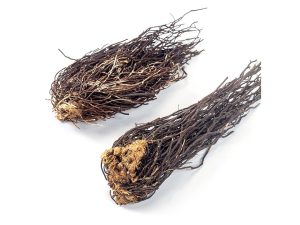
Strobilanthes oliganthus, also known as “Purple Clover,” is a traditional Chinese medicinal herb. It is the whole plant of Strobilanthes oliganthus Miq. of the Acanthaceae family. It has the effects of clearing heat, calming convulsions, and stopping bleeding. It is primarily used to treat colds with fever, fainting due to fever, and bleeding from external injuries.

Purple Vetch and Indigo
Disclaimer: These statements have not been evaluated by the Food and Drug Administration (FDA). This product is not intended to diagnose, treat, cure, or prevent any disease. All references in this article to TCM syndrome differentiation, herbal medicines, teas, and decoctions are intended to promote TCM culture and are provided solely for educational and reference purposes.
Strobilanthes oliganthus, also known as "Purple Clover," is a traditional Chinese medicinal herb. It is the whole plant of Strobilanthes oliganthus Miq. of the Acanthaceae family. It has the effects of clearing heat, calming convulsions, and stopping bleeding. It is primarily used to treat colds with fever, fainting due to fever, and bleeding from external injuries.
Chinese Name : 紫云英马蓝
Nature, Flavor & Meridian Tropism : Taste: salty and bitter; Nature: cold
Benefits & Efficacy
Benefits
Clears heat, calms convulsions, and stops bleeding.
Indications
Common cold with fever, syncope due to febrile diseases, and bleeding from traumatic injuries.
Usage and Dosage
Internal use: 15–30 g. External use: Pound the fresh herb into a paste and apply to the affected area.
Processing & Preparation
Harvesting & Processing
Harvest in summer and fall; sun-dry the whole plant.
Botanical Information
Botanical Classification
Acanthaceae family, Astragalus, Indigofera.
Morphological Characteristics
Perennial herb, 40–50 cm tall; stem base swollen and geniculate at the nodes; upper part quadrangular with grooves. Sparsely covered with white, sometimes recumbent hairs.Leaves are petiolate, with petioles 3.5–4 cm long; leaf blades are broadly ovate to elliptical, 4–10 cm long and 2–4 cm wide, with an acuminate apex, a broadly cuneate base, and sparsely serrate margins; there are 4–6 lateral veins on each side, and the leaf surface bears dense and prominent white calcareous deposits.Several flowers are clustered into a capitate spike; the bracts are leaf-like, with the outer ones about 1.5 cm long and the inner ones smaller; the bracteoles are linear-spatulate, about 1 cm long; both bracts and bracteoles are covered with segmented (spaced) white soft hairs;The calyx is 5-lobed, with linear lobes approximately equal in length to the bracteoles; the corolla tube is cylindrical, slightly curved, 1.5 cm long, expanding upward into a bell-shaped corolla 2.5 cm long; the corolla margin is sparsely covered with short soft hairs on the outside and bears two rows of short soft hairs on the inside; the corolla lobes number 5, are nearly equal in size, and are usually about 5 mm long;There are 4 stamens, 2 of which are longer; the filaments are connected at the base by a membrane; the anthers are erect; the pollen grains are globose, bearing scattered, pappus-like globose raised patterns. The capsule is about 1 cm long and bears short soft hairs near the apex; it contains 4 seeds. It is finely hairy.
Distribution Area
Distributed in Zhejiang, Anhui, Jiangxi, Fujian, Hunan, Hubei, and Sichuan.
Copyright: Excerpt from Internet, Copyright belongs to the Original Author and all original sources, This article was shared by DeDe on July 31, 2026, Please credit the source and include a link to the original article when reposting.
Terminology Proofreading: [Cheng Bo] | July 31, 2026 Reviewed by: [Wang Zhongxiang, Associate Chief TCM Physician (China)] | July 31, 2026
Correct Content Errors: Errors may occur during the writing, editing, translation, and publication of website content. If you find any errors or inaccurate information in this article, please feel free to Contact Us to report them, and we will correct them promptly.
FDA Disclaimer: The descriptions of the efficacy of Chinese herbal medicines, herbal teas, decoctions, and formulas, as well as the content on Traditional Chinese Medicine (TCM) diagnostic theory and traditional TCM therapies contained on this site, are intended solely for the purpose of popularizing TCM culture and serving as an educational reference; they do not constitute medical diagnosis or treatment advice. Please do not attempt to use these products on your own without proper guidance. These statements have not been evaluated by the Food and Drug Administration. This product is not intended to diagnose, treat, cure, or prevent any disease. If you are experiencing any physical discomfort, please consult a licensed healthcare professional and seek treatment at a reputable medical institution. This platform assumes no responsibility for any consequences resulting from the use of herbs or formulas by any individual based on the information provided on this site. Please read Medical Disclaimer.