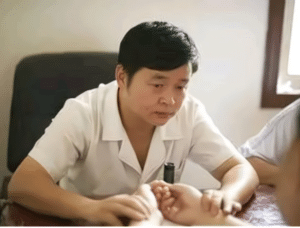
“The Body Needs to Cast Out the Old and Welcome the New” refers to the body’s need to maintain health and vitality through processes such as metabolism and cell renewal—for example, the replacement of old cells with new ones is a classic example of “casting out the old and welcoming the new.”
“Dust-Sweeping Day” typically falls on the 24th day of the 12th lunar month and is a traditional day in China for spring cleaning before the Lunar New Year to bid farewell to the old and welcome the new; in some parts of northern China, it may also be observed on the 23rd day of the 12th lunar month.
The Story of the Spring Cleaning
Every year during the 12th lunar month leading up to the Spring Festival, back in my hometown, we always set aside a few days for a thorough cleaning. We’d go through every nook and cranny, wiping and scrubbing until everything—inside and out—was spotless, all in preparation for the New Year.
Bidding farewell to the old and welcoming the new—it’s truly put into practice in a very tangible way.
One year when I returned home, I happened to arrive just as the family was in the midst of a big cleanup. I took on the task of cleaning the threshing floor outside the house. It wasn’t a huge job—since the threshing floor is swept regularly—but it required attention to detail; every nook and cranny had to be thoroughly cleaned. A few hours passed, and the results were clear. Looking at the fresh and tidy threshing floor, I felt especially happy.
Just as I was about to wrap up and take a break, an elderly villager came knocking on my door. He explained that he’d cut his hand with a knife a while back and had been taking anti-inflammatory medication every day, but the wound hadn’t healed even after more than half a month, so he asked me to take a look.
Naturally, I first unwrapped the gauze to examine the wound. The affected area had become infected, with yellow pus oozing out—it was clear that proper debridement was essential.
So I boiled 30 grams of Coptis root to make a bowl of decoction, dipped a piece of gauze in it, and carefully cleaned the wound.
The old man joked from the side, “We’ve just finished our big spring cleaning to get rid of the old and welcome the new for the Lunar New Year—your wound debridement is like getting rid of the old and welcoming the new, too!”
I smiled and said, “If you don’t get rid of the old, the new won’t come. What needs to be removed really must be removed.”
I thoroughly cleaned the wound, applied some anti-inflammatory powder, and bandaged it up.
Three days later, the old man came back for a dressing change. I unwrapped the gauze and saw that the wound surface was relatively dry, with no exudate, and fresh granulation tissue had already begun to grow. The old man remarked with emotion, “I applied medication a few times at home, but nothing worked. You’ve really got this under control! It seems cleaning is the key!”
“Clearing out the old to make way for the new” is an old saying we’ve all heard. But often, before welcoming the new, we forget to bid farewell to the old.
I. Treating Gastrointestinal Disorders: Purge First, Then Nourish
Clinically, there are many patients with chronic enteritis. They have three or four loose, unformed bowel movements daily; even a slight chill triggers abdominal pain and diarrhea, as does eating spicy foods. When treating such patients, it’s essential to “clear out the old and make way for the new.” First, use laxatives to thoroughly cleanse harmful substances from the intestinal lining—much like cleaning an infected wound. Only by removing the old can the new be generated, and only then can intestinal function be restored to normal. If treatment focuses solely on stopping diarrhea, symptoms may ease slightly while the medication is being taken, but once the medication is stopped, the condition will likely recur shortly thereafter.
A 38-year-old female patient had been experiencing four to five bowel movements daily for three years, accompanied by a dull ache in her lower abdomen and sticky, mucus-like stools resembling thick nasal discharge. Her condition worsened immediately after exposure to cold or consumption of raw or cold foods. She was diagnosed with chronic ulcerative colitis at a local hospital. Her condition improved after taking antibiotics combined with enema therapy, but one month ago, her condition worsened due to exposure to cold, she began experiencing intermittent abdominal pain and a constant urge to defecate, though her stools remained loose. These symptoms were accompanied by shortness of breath, weakness in the limbs, and palpitations upon even slight exertion. Her tongue showed tooth marks, with a thick, yellow coating and a slightly white area at the root; the pulse at the right cun position was absent when taken superficially, while the guan and chi positions on the right were stagnant and涩 (rough), and the guan position on the left was stagnant and涩 (rough) like a bean.
Based on her condition, this appears to be liver qi stagnation with spleen deficiency, stagnation of damp-heat in the intestines, and impaired flow of qi in the Large Intestine Meridian. Treatment should be divided into two steps: first, removing the “rotten” matter by clearing the stagnant damp-heat and toxins from the intestines; second, promoting tissue regeneration and healing the ulcers to repair the intestinal wall.
I prescribed a modified Peony Decoction (Shaoyao Tang). The formula included peony root, Bupleurum root, Chinese angelica root, Coptis root, areca nut, wood fragrant, fried licorice root, rhubarb, scutellaria root, mugwort, red vine, and sophora root—a total of five doses, to be taken one dose per day for five consecutive days.
After taking the medicine, the patient experienced frequent flatulence and passed large amounts of sticky, viscous stools, and the abdominal pain subsided. Subsequently, I adjusted the prescription to include Atractylodes macrocephala, Atractylodes lancea, Bupleurum, longan flesh, Angelica sinensis, mugwort, honeysuckle, Astragalus, red vine, and Guang Sanqi, among others, to soothe the liver, strengthen the spleen, tonify qi, invigorate blood circulation, and promote tissue regeneration to heal the ulcers.
In this formula, Atractylodes macrocephala and Atractylodes lancea strengthen the spleen, dry dampness, and raise clear yang; Bupleurum and Angelica sinensis soothe the liver and relieve depression; longan flesh tonifies the spleen and stomach, effectively treats intestinal bleeding, and repairs the intestinal wall; Astragalus tonifies qi and expels toxins; Honeysuckle and Red Vine clear heat and eliminate toxins; Notoginseng removes necrotic tissue and promotes tissue regeneration; finally, the addition of Artemisia leaves warms the meridians, unblocks the vessels, dispels cold from the intestines, and accelerates the repair of the intestinal lining. After taking the above formula with appropriate modifications for over a month, all symptoms disappeared. A follow-up one year later revealed no recurrence of the condition.
In treating this case, I actually applied the guiding principle of “removing the old to make way for the new”: first eliminating toxins from the intestines, then repairing the damaged intestinal mucosa. By implementing this in stages—combining offensive and defensive strategies—I was ultimately able to achieve a comprehensive cure.
Clinically, there is a category of patients who are prone to diarrhea after consuming spicy foods. They often have heat-toxin in their intestines, so eating spicy foods exacerbates this condition. Diarrhea is actually the body’s normal compensatory mechanism—a natural protective response designed to expel the heat-toxin from the body. Patients who do not understand this principle immediately reach for anti-diarrheal medications upon experiencing diarrhea. As a result, while the diarrhea is temporarily controlled, they actually feel worse. This is because the heat-toxin is trapped inside the intestines—akin to “locking the door and keeping the enemy inside.” In reality, if patients simply take some Sanhuang Tablets to eliminate the heat-toxin from their bodies, the body will achieve a new balance, and the diarrhea will naturally subside. This is also the body’s way of using diarrhea to “eliminate the old” and prepare the intestines to “welcome the new”! Therefore, although Sanhuang Tablets are primarily a laxative, using them in this context can also achieve the goal of stopping diarrhea—the key lies in understanding the underlying principle.
II. Treating Illness Also Requires “Suppressing First, Then Boosting”
Patients with chronic colds often experience nasal congestion and a runny nose at the slightest exposure to cold. We typically attribute this to constitutional weakness and focus on tonifying the body’s vital energy. However, upon closer examination, it becomes clear that these patients all harbor some degree of external pathogens within their bodies. While tonifying the body’s vital energy is essential, the treatment may yield even more significant results if we first dispel the external pathogens, regulate the body’s qi circulation, and then use tonifying herbs to restore the body’s vital energy. Isn’t this also a process of “clearing out the old to make way for the new”?
This principle applies not only to the treatment of colds caused by constitutional weakness but also to the treatment of kidney deficiency! Consider the formula of Liuwei Dihuang Wan: three tonifying herbs and three purging herbs—tonification contains purgation, and purgation contains tonification. This embodies the process of eliminating turbidity to preserve essence, and of discarding the old to make way for the new.
In clinical practice, we often instinctively focus on directly targeting the pathogenic factors—going straight to the source. However, we must recognize that for many chronic conditions, the most effective approach is to “retreat in order to advance.” We must approach the treatment from the opposite direction: for conditions requiring purgation, we first tonify and then purge; for conditions requiring tonification, we first purge and then tonify; when ascension is needed, we first descend; when descent is needed, we first ascend. In summary, this principle can be expressed as “to seek Yang, one must first address Yin; to seek Yin, one must first address Yang.”
There’s a saying: “Sharpening the axe doesn’t delay the woodcutting.” If we apply this concept here, drawing on the idea of “removing the old to make way for the new,” it actually conveys the same principle. Any driver knows that to make a U-turn, you must first back up a few steps to create ample space—only then can you turn with ease.
If we want to turn the tide against an illness, we must also give it some room to maneuver.
Many things in life are like this: what appears to be a step backward is actually a step forward.
A while back, a business owner came to see me for treatment. His business was doing very well, with assets exceeding 100 million, but what interested me wasn’t his business or his wealth—it was his philosophy on life. He said that running a business requires taking into account national policies and the international and domestic landscape. If you don’t grasp these broader trends well, it’s easy to ruin your business. National policies change, but these changes follow certain patterns. It takes time for a policy to be introduced, and it also takes time for it to be revised. It’s like a ship sailing at sea: a small boat can turn easily, but a large ship must trace a wide arc to turn; otherwise, if it turns too sharply, it’s likely to capsize. In business, we often need to act during the process of the ship turning—entering and exiting quickly is the key to making money; if we miss the opportunity, it’s gone for good.
By drawing an analogy from a ship turning, this business owner has distilled the secrets of business success—lessons that are truly worth learning. Many successful people in life are able to gain profound insights from small things, which in turn leads to their success.
III. Before Treating Serious Illnesses, First Ensure Your Body Is Strong Enough
With some serious or critical illnesses, we all know we must eliminate the pathogenic factors—much like turning a boat around. Turning is necessary, but how to do so smoothly and safely is crucial! Clinically, for some late-stage cancer patients with tumor metastasis and enlarging masses, it’s natural to focus treatment on the masses themselves. However, patients are often physically weak and cannot tolerate aggressive treatment. so it is necessary to first strengthen the body’s vital energy and holistically regulate the body. Only after the vital energy has been restored should we consider combining the strengthening of the body’s vital energy with the expulsion of pathogenic factors. Only then can the pathogenic factors be effectively expelled. If we simply focus on treating the tumor with radiation therapy and chemotherapy, the patient’s life may be lost before the mass has even disappeared.
I once treated a patient with bone tuberculosis. The patient developed a mass in the lower back and experienced unexplained fever. After undergoing a biopsy at the hospital, they were diagnosed with a “cold-type abscess,” suspected to be bone tuberculosis, and were advised to undergo antituberculosis treatment. One week after starting antituberculosis medication, the patient’s temperature returned to normal, but they experienced a loss of appetite, occasional nausea, pallor, and dizziness. The patient was already physically frail and unable to tolerate the side effects of the anti-tuberculosis drugs. If he continued taking them, his condition might deteriorate further; however, if he stopped, his fever might return. Faced with this dilemma, the patient came to me—we had known each other for a long time and were on friendly terms. Looking at the patient’s pale and gaunt cheeks—a young man who stood 1.7 meters tall but weighed only 45 kilograms—I decisively told him to stop taking the anti-tuberculosis medication for the time being and to stop taking any medication at all. I advised him to eat whatever he felt like each day, to set aside all the chaotic matters related to work, career, and family, to stop worrying and fretting, and to focus on recuperating in peace. I told him to think about just two things each day: What to eat today, where to go for a walk, and how to get some exercise?
When we met again a week later, the patient had regained some color in his face, was in good spirits, and had regained his appetite—he was able to eat whatever he wanted for all three meals. Although it had only been a week, it seemed his physical strength had improved significantly; his legs were noticeably stronger when climbing stairs or walking uphill. Furthermore, since he was no longer worrying about the myriad trivial matters of work and family, his psychological burden had lifted, and he gained confidence in overcoming his illness—no longer harboring the fear he had felt a week earlier.
After talking with him for about half an hour, I sensed that he had recovered both physically and mentally. I therefore recommended that he continue combining dietary adjustments with exercise, and only consider resuming anti-tuberculosis treatment once his weight reached over 55 kilograms.
He followed my advice, and three months later, his weight had recovered to 57 kilograms; he had a healthy glow and a good appetite. He then began anti-tuberculosis treatment. Throughout the course of taking the medication, he did not experience any physical complications, and the treatment results were satisfactory.
Treating an illness is like waging a war—it requires great flexibility and adaptability. There is offense and defense, advance and retreat. An offensive does not necessarily mean success, nor does a retreat necessarily mean failure.
When faced with illness and death, we are often overcome by fear rather than wisdom. When fear fills our minds, we frequently lose our basic rationality; instead of comprehensively analyzing our own situation, we entrust everything to the doctor. In today’s climate of strained doctor-patient relationships, doctors—to ensure their own safety and minimize the risk of complications—often follow clinical pathways and adhere to standard treatment protocols, This approach overlooks individual differences among patients. While these protocols are effective for most patients, they can sometimes lead to unintended consequences. Therefore, when facing illness, we should approach it just as we would any other challenge in life: by analyzing the situation rationally and seeking appropriate medical assistance. Both overtreatment and neglecting treatment are inappropriate. At the same time, we should read more books on health and wellness in our daily lives and take timely measures to restore balance when feeling unwell—rather than waiting until a disease has fully developed, by which point treatment may be too late.