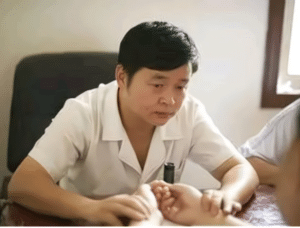
We no longer need the outdated mindset of “as long as I’m not sick, that’s good enough”; instead, we need a holistic view of health that integrates physical, mental, social, and lifestyle factors.
Simply put, health is not a destination—it’s a state that results from the cumulative effect of every choice you make in your daily life. Considering your location in Linxia, Gansu—where the climate is relatively dry and there are significant temperature fluctuations between winter and spring—this philosophy can be applied in a more concrete way.
The Story of Buying Coal Stoves
Every day, the pharmacy prepares decoctions of traditional Chinese medicine for patients, which requires coal stoves. In early 2008, I bought 10 coal stoves at once, paying 15 yuan each. Because they were used daily, all ten stoves burned out in less than three months. The pharmacy staff suggested I buy a few stove liners and build the stoves myself, believing this would make them more sturdy and durable.
The stove liners cost 2 yuan each, and with a thin sheet-metal bucket for 0.5 yuan, plus a little cement and loess, a homemade coal stove was quickly assembled. In terms of both appearance and performance, it was in no way inferior to the coal stoves sold on the market. The only drawback was that it couldn’t be sealed off. Since we decocted large quantities of medicine daily—with all ten stoves burning from morning till night—whether the fire could be sealed off or not didn’t really matter.
The homemade coal stoves were indeed durable; after six months of use, they remained completely intact. Just in terms of the stoves themselves, I saved nearly 300 yuan over those six months that I would have spent buying them. However, upon examining our coal consumption, I realized I had made a mistake—and a major one at that. The homemade stoves consumed nearly one-third more coal per day than the original ones—that is, about 15 pieces more of coal daily, costing an extra 6 yuan a day. Over half a year, this amounted to more than 1,000 yuan in additional expenses.
Although the coal stove hadn’t broken yet, after carefully crunching the numbers, I decided to go to the market immediately and buy the best coal stoves available. At 40 yuan each, they were a bit pricey, but using a high-quality stove meant I wouldn’t waste those 15 pieces of coal every day. Furthermore, using a good stove saved me 10 pieces of coal daily compared to the inferior one I’d been using—the difference between the extra and the savings amounted to over 20 pieces of coal. It really is true that you don’t realize the impact until you do the math—and when you do, it’s a real eye-opener.
Replacing a single small coal stove brought about a shift in my investment philosophy.
Life offers many investment opportunities. Investments in health may seem uneconomical in the short term—just like the story of buying the coal stove mentioned above: if you’re reluctant to spend a small amount, you’ll end up spending a lot more in the long run.
I. Don’t Delay Treatment for Minor Illnesses
Many illnesses start with very mild symptoms and can be cured quickly with timely treatment. But if you’re unwilling to seek treatment, reluctant to spend a small amount of money, and keep putting it off, the condition will eventually develop into a chronic illness. Treating it then will not only be time-consuming, labor-intensive, and costly, but the results will also be poor.
I once treated a patient with chronic rhinitis. Three years ago, after catching a cold, he failed to seek timely treatment. After a month of neglect, he began to have a thick, pus-like nasal discharge. He bought Qianbai Rhinitis Tablets on his own, but they had little effect. Eventually, his condition worsened to the point where he could only control his symptoms through long-term use of ephedrine nasal drops. Three years later, his symptoms had worsened significantly. Not only was he discharging foul-smelling, thick mucus, but he also suffered from constant mental fogginess that severely impacted his work. Left with no other choice, he finally sought medical attention at a hospital. After being admitted to the hospital, the doctor performed surgery on him, which cost several thousand yuan. Although his condition did improve, his nose remained blocked at times, causing him extreme distress. Eventually, he had no choice but to seek treatment from a traditional Chinese medicine practitioner. Treated for internal abscesses, he finally recovered after about a month.
What could have been resolved with very little money was instead allowed to drag on until it required a large sum to fix—and in some cases, even a large sum couldn’t resolve the issue, ultimately leading to loss of life. Looking back, it really wasn’t worth the cost!
There’s a saying in the countryside: “If you don’t address it when it’s small, it’ll grow to a foot and a half when it’s big.” Many illnesses don’t develop overnight. In the early stages of an illness, one should nip the problem in the bud, promptly reverse the negative trend, and keep the illness contained to the smallest possible extent.
It may sound complicated, but in reality, as long as you master a few simple health practices, anyone can do it. For example:
If you’re dressed too lightly in cold weather and accidentally catch a chill, quickly brew a bowl of ginger and brown sugar tea to warm your body and induce a sweat. This expels the cold pathogen from your body, preventing the illness from progressing further.
If you’ve been working night shifts or staying up late and experience lower back pain or dry eyes, brew some goji berries and chrysanthemum flowers into tea. At the same time, get plenty of rest to allow your body to recover promptly, and you’ll prevent your health from deteriorating.
If, during your period, you’ve eaten raw or cold foods or been exposed to the cold, resulting in lower abdominal pain and dark-colored menstrual blood, In this case, promptly apply moxibustion to the lower abdomen to dispel the cold pathogens from the uterus; this will prevent future menstrual irregularities.
If a child stops eating and exhibits symptoms such as loss of appetite, abdominal distension, fever, and constipation, let the little one skip a meal or two and give them some digestive medicine to clear the undigested food from their system. This will prevent the condition from dragging on and developing into chronic malnutrition…
The path to health in life is like a car traveling on a highway; the road is never a straight line—there are always twists and turns. For this “health express,” what we must do is adjust the steering wheel in a timely manner, ensuring that this “express” of our body can forever travel along the road to health. We must not wait until the car has veered off the highway to adjust the steering wheel—by then it will be too late. It may already be too late to make any adjustments, as the car could have crashed and the occupants perished. As The Yellow Emperor’s Classic of Internal Medicine states: “To treat a disease only after it has taken hold, or to resolve chaos only after it has erupted—this is like digging a well when one is already thirsty, or forging a spearhead in the midst of battle. Is that not too late?”
Anyone who has visited Qingdao marvels at the city’s excellent urban planning. In fact, life is no different: everyone should have their own health plan. Only then will they take health seriously and be able to prevent illness before it arises and treat it when it does.
The five viscera each experience cycles of prosperity and decline, deficiency and excess. Each of us should take the time to check our own pulse, understand the condition of our internal organs, and then nurture them with targeted care—only then can we achieve health and longevity.
I remember once when my bicycle tire got a puncture. After having it repaired at a bike shop, it started leaking again just a few days later. So I went back to the mechanic and asked him why the tire was leaking again so soon after being patched—had he not repaired it properly the first time?
The mechanic removed the outer tire, located the leak in the inner tube, and pointed to a small hole, telling me, “This is a fresh puncture—it’s not where I patched it last time.” He then said earnestly, “A mechanic can patch any puncture, but I can’t guarantee how long it will last. It’s up to you to take care of your bike. If you’re not careful while riding, it’s bound to break down.”
In clinical practice, we often encounter patients complaining, “Doctor, I just got over my cold—why did I catch another one? I’ve been taking medicine for my stomach problem for over a month, and just when it was starting to get better, why did it flare up again?”
Actually, this is the same principle as repairing a bicycle tire. A doctor may cure a patient’s illness, but if the patient doesn’t take care of their body or cherish their health, they’re naturally prone to relapses.
II. Details Determine Health: Never Neglect Small Acts of Kindness
So how can we take good care of our bodies?
When I was a child, I’d hear others playing the xiao and thought it sounded beautiful. I always wanted one, but because of our family’s financial situation, I couldn’t bring myself to ask my parents for one. So I decided to make one myself. My hometown had plenty of bamboo, so finding a suitable piece was very easy. I cut off a section of the right length and, following the layout of the small holes on a flute, set to work copying it exactly. Polishing and drilling the holes were easy; the most complicated part was making the mouthpiece. At first, I thought I could just make a simple wooden plug, cut a flat surface on it, and align it with the small hole at the bottom. But after making several of them, I still couldn’t get any sound out of them. Later, my father saw what I was doing and explained that the wooden stopper had to fit the bamboo hole perfectly; mine was too rough, with too many gaps, so it was impossible to produce a sound. After my father used a small knife to scrape the stopper until it fit the bamboo hole like a glove, he inserted it into the mouthpiece, and when I blew into it again, it indeed produced a pleasant sound. Although this was a very small matter, I still remember it vividly more than twenty years later—it was the first time I truly understood that “details determine success or failure” .
Today, many years later, when patients ask me how to take care of their health, I often tell them: “Details determine health!”
Human life is fleeting. During this brief time, keeping our bodies in a healthy state at all times requires us to pay close attention to the details of daily life. Many people assume that neglecting minor details won’t harm their health, but in fact, it is precisely these oversights that become the root cause of illness.
Many young women often neglect to avoid the cold during their postpartum recovery period—washing their baby’s diapers, turning on the air conditioner when it’s hot, or consuming cold drinks… Neglecting these daily details ultimately leads to the bitter consequences of illness. The so-called “postpartum ailments” are precisely caused by exposure to the cold during this period.
Take patient Ms. Zhang, for example. She had a miscarriage in the summer. The weather was sweltering, and she felt unbearably hot, so she turned on the air conditioner. A week later, she began to feel chilled all over and became sensitive to drafts. Whenever her hands touched cold water, a chill would spread throughout her body. At night, she felt as if she were sleeping in an ice cellar and could never quite warm up, even though her temperature readings were normal. When she came to see me, she was wearing several sweaters and had a coat draped over her, yet she still felt waves of coldness washing over her and shivered from time to time.
This was because the patient suffered from postpartum deficiency of qi and blood, causing her pores to open; when she was exposed to the air conditioner, cold pathogens directly entered the Three Yin meridians. While this may seem like a minor ailment resulting from a lack of attention to daily details, in reality, the cold pathogens had already penetrated deep into the body’s Three Yin meridians, making treatment extremely challenging. I treated this patient by regulating her qi and blood, warming and tonifying the spleen and kidneys, and dispelling wind and cold. It took three months for her to fully recover.
Clinically, many diseases are often triggered by seemingly insignificant details. Much like the butterfly effect, these issues gradually amplify within the body, ultimately leading to serious illnesses—some even terminal. When faced with a terminal illness, if we look back and trace the progression of the disease, we cannot help but lament that initial, inadvertent mistake we made.
Perhaps that mistake was catching a cold after a shower; perhaps it was having sex after drinking; perhaps it was a minor setback… It was precisely because of this tiny starting point—whose impact we overlooked—that the mistake eventually amplified within the body, leading to the intractable illness we face today.
The law of development states, “One gives rise to two, two gives rise to three, and three gives rise to all things.” This law also governs the progression of disease. If we inadvertently give rise to “one,” and fail to take this “one” seriously, allowing it to continue developing in a negative direction, “two” will follow. If we still fail to control it at the “two” stage and let it progress to “three,” the inevitable outcome will be “the birth of all things”—resulting in a chronic illness.
“Do not commit evil because it is small; do not neglect good because it is small.” These words came from the posthumous edict Liu Bei left for his son, Liu Shan, before his death, urging him to cultivate virtue, refine his character, and achieve great things. Good deeds should begin with small acts, accumulating to form something great; bad deeds must also be guarded against from the outset, for if small wrongs accumulate, they will eventually ruin great matters. Therefore, do not neglect to do good simply because it is small, and certainly do not commit evil simply because it is small. When small acts of goodness accumulate, they become great acts that benefit the world; when small acts of evil accumulate, they are “sufficient to bring chaos to the nation.”
If we apply this saying to health and wellness, “Do not commit evil because it is small; do not neglect good because it is small” also offers valuable guidance. If we take the “small evils” that harm our bodies seriously and avoid them, while valuing the “small goods” that benefit our bodies and embracing them at all times, our minds and bodies will naturally remain healthy.
Health preservation is an art that embodies many profound philosophical truths. Just as a single drop of water can reflect the vastness of the universe, so too can many small details in daily life reflect the great principles of health preservation. Let us explore the nature of illness, the path to health, and the way of health preservation through these small aspects of daily life.