
Introduction to Medicinal Cuisine
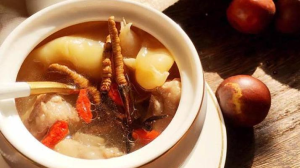
The Cordyceps-Dendrobium Seabass Soup is a classic nourishing medicinal dish that combines tonifying benefits with delicious flavor. Its main ingredients are Cordyceps sinensis (Dongchongxiacao), Dendrobium officinale (Tiepishihu), and fresh seabass, slowly simmered to perfection. Cordyceps sinensis has long been revered as a “precious tonifying herb” and holds an esteemed place in traditional medicine. Dendrobium officinale, known as the foremost of “China’s Nine Great Immortal Herbs,” is valued for supporting the body’s Yin and helping maintain a balanced internal environment. Seabass has tender, delicate flesh and offers both nourishing food value and support for overall wellness when consumed regularly. The combination yields a soup with a clear, milky broth and a savory, subtly sweet taste—making it a suitable health-supporting soup for seasonal balance throughout the year.
This medicinal food recipe masterfully embodies the TCM principle of “medicine and food homology.” It is especially suitable for consumption during the dry autumn and winter seasons or for spring health maintenance. The formula is gentle, balancing nourishment with a light, moistening quality, and is traditionally used to support a robust constitution, aid recovery during convalescence, and promote daily well-being. In recent years, as TCM food therapy culture has gained popularity, Cordyceps sinensis (Dongchongxiacao), Dendrobium nobile (Shihu), and sea bass soup has become a sought-after nourishing supports among urban populations—helping maintain internal moisture balance and supporting immune function.
Benefits of Medicinal Diet (Yaoshan)
The Cordyceps sinensis (Dongchongxiacao), Dendrobium nobile (Shihu), and Lateolabrax japonicus (Perch) soup supports yin-nourishing and Kidney health, qi and blood health, Lung health and respiratory comfort, and strong tendons and bones for overall well-being. Cordyceps sinensis supports Kidney and Lung health, and helps maintain a balanced internal environment for normal clotting and respiratory function. Dendrobium nobile is known to support stomach health and fluid production, and maintain a balanced internal environment. Perch supports Liver, Kidney, Spleen, and stomach health, and strong bones and tendons. The three work synergistically to support the overall balance of qi, blood, yin, and yang, and support vital energy (Zheng Qi). Regular and moderate consumption helps maintain normal energy levels, lower back and knee comfort, breathing patterns, sweat regulation, and moisture in the mouth and throat.
From a modern nutritional perspective, this soup is rich in high-quality protein, various amino acids, polysaccharides, and trace elements, which can effectively support immune function, promote cellular health and natural regeneration, and support healthy aging. For individuals who are under long-term high-pressure work environments and frequently stay up late, leading to a pattern of Yin Deficiency with Fire Blazing, this soup can play a good role in balancing and supporting the body’s natural restoration processes, helping to restore vitality and support restful sleep, allowing the body to radiate vitality from the inside out.
Functions of Traditional Chinese Medicine
Core Functions of Cordyceps sinensis (Dongchongxiacao)
Cordyceps (Dongchongxiacao) is sweet in taste and warm in nature, entering the Lung and Kidney Meridians. Its functions support the health of the Kidneys and Lungs, and help maintain normal blood and phlegm processes. It warms and tonifies Kidney Yang while nourishing Lung Yin, making it a balanced tonic for both Lung and Kidney. In the Cordyceps, Dendrobium (Shihu), and Sea Bass Soup, Cordyceps acts as the sovereign (principal) herb, playing a leading role. It is especially beneficial for supporting individuals who may experience occasional respiratory discomfort, lower back and knee soreness, and general vitality, often associated with dual deficiency of the Lung and Kidney. By nourishing the lower burner vitality (Yuan Qi), it provides foundational support to the body.
Synergistic effect of Dendrobium (Shihu) and sea bass (Luyu)
Dendrobium officinale (Tiepi Shihu) is slightly cold in nature and sweet in flavor, entering the Stomach and Kidney Meridians. It excels at nourishing the stomach, promoting fluid production, supporting Yin, and clearing internal heat. It helps maintain oral moisture and digestive comfort, and supports healthy vision, particularly in individuals with Yin Deficiency patterns. Lateolabrax japonicus (Luyu, sea bass) is neutral in nature and sweet in flavor, entering the Liver, Spleen, and Kidney Meridians. It tonifies the Liver and Kidneys, benefits the Spleen and stomach, and supports healthy pregnancy. The three ingredients balance cold and warmth, providing nourishment without dryness and enrichment without greasiness. The “clearing and moistening” nature of Dendrobium balances the “warming and tonifying” effect of Cordyceps, while the “neutral tonification” of sea bass acts as a bridge, allowing the entire formula to achieve a harmonious state of balanced Yin and Yang, and dual supplementation of Qi and Yin. This formula is especially suitable for individuals with Qi and Yin Deficiency patterns who may not tolerate strong tonics.
Suitable for
This medicinal dietary is suitable for individuals presenting with Lung and Kidney Yin Deficiency and Qi and Yin Deficiency, commonly manifested as dry cough with scant sputum, dry mouth and throat, hoarseness, soreness and weakness of the lower back and knees, night sweats, seminal emission, and a feeling of heat in the palms, soles, and chest. For those with a weakened immune system, who are prone to occasional seasonal discomfort, or who feel unwell during weather changes, as well as individuals with a weak constitution recovering from surgery or postpartum, the Cordyceps sinensis (Dongchongxiacao), Dendrobium nobile (Shihu), and Sea Bass Soup provides high-quality nutrition and gentle supportive nourishment, helping to maintain the body’s natural balance and vitality.
Furthermore, for urban white-collar workers who frequently stay up late, experience high work pressure, and engage in excessive mental exertion, as well as those with Yin Deficiency with Effulgent Fire (Yinxu Huowang) who have occasional sleep disturbances, dream-disturbed sleep, dry skin, and occasional constipation, consuming this soup helps nourish Yin, maintain a balanced internal environment, calm the Spirit (Shen), and moisten dryness. For elderly individuals, moderate consumption supports bone strength, helps with occasional joint discomfort, supports the body’s natural aging process, and enhances quality of life in later years. For adolescents in their growth and development stage, occasional consumption under the guidance of a licensed practitioner can also help support their physical constitution and promote healthy growth and development.
Contraindicated Populations
During periods of externally-contracted patterns characterized by signs of imbalance such as mild fever, occasional cough with yellowish phlegm, chest tightness, or rapid breathing, it is advisable to avoid consumption, as the formula’s tonifying nature may not be suitable and could hinder the body’s natural response to external influences. This product is also not recommended for individuals presenting with internal damp-heat patterns, such as a feeling of fullness or bloating in the abdomen, a thick and greasy tongue coating, or sluggish bowel movements, as its nourishing properties may exacerbate these conditions. Discontinue use if allergic to Cordyceps, Dendrobium, or fish ingredients, as it may trigger an allergic response.
Those with Spleen and Stomach Deficiency Cold pattern, loose stools, or undigested food in stools should use with caution. Because Dendrobium nobile (Shi Hu) is slightly cold in nature, it may increase the burden on the Spleen and Stomach and affect normal bowel regularity. Children, pregnant women, and breastfeeding women should use cautiously under the guidance of a professional TCM practitioner and should not blindly tonify. In addition, individuals with Yin Deficiency Fire Blazing complicated by Phlegm Dampness, or those with prominent Excess Heat pattern (such as red face and red eyes, mouth sores, scanty dark urine) should also avoid use, as it may not be suitable for their condition and could aggravate internal heat, counteracting the intended effect.
Proportion of ingredients in the formula
Cordyceps sinensis (Dongchongxiacao) 3-5 grams (or can be substituted with Cordyceps flower (Chongcaohua) 15-20 grams, though the benefits may be reduced), fresh Dendrobium officinale (Tiepishihu) 30 grams (or dried 10 grams), fresh sea bass (Luyu) 1 piece (approximately 400-500 grams), fresh ginger (Shengjiang) 15 grams (sliced), red dates (Hongzao) 6-8 pieces (pitted), Goji berries (Gouqi) 10 grams, green onions (Cong) 2 stalks (cut into sections), salt (Yan) to taste (approximately 3 grams, added before removing from heat), water (Qingshui) 1500-2000 ml. This recipe serves 2-3 people; adjust proportionally according to actual number of servings.
When selecting ingredients, note that *Ophiocordyceps sinensis* (Dongchongxiacao) is best when the caterpillar body is plump, the color is bright yellow, and the stroma is short; fresh *Dendrobium nobile* (Shihu) is superior when it is rich in gelatinous substance and feels sticky when chewed. Fresh *Lateolabrax japonicus* (Luyu, common bass) should be chosen live, as dead fish have a strong fishy smell and their beneficial properties are greatly reduced. *Ziziphus jujuba* (Hongzao, Chinese red dates) is best when the flesh is thick, the pit is small, and the sweetness is rich; *Lycium barbarum* (Gouqi, goji berries) are preferred when the berries are large, red in color, and free from mold. The freshness and quality of all medicinal herbs and food ingredients directly determine the taste and the health-supporting properties of the soup.
Cooking Method
Step 1: Ingredient Preparation
Scale the bass, remove the gills and entrails, and thoroughly clean the black membrane and blood residue inside the belly. Pat dry with kitchen paper. Make three diagonal cuts on each side of the fish, rub with a small amount of cooking wine and ginger slices, and marinate for 10 minutes to eliminate any fishy odor. Gently brush the surface dust off the Cordyceps sinensis (Dongchongxiacao) with a soft brush, then soak in warm water for 15 minutes; be sure to reserve the soaking liquid. Wash and cut fresh Dendrobium nobile (Shihu) into sections; if using dried, soak for 2 hours in advance until soft. Rinse the Ziziphus jujuba (Hongzao) and Lycium barbarum (Gouqizi) in clean water, and remove the pits from the jujubes. Set all aside.
Step Two: Frying and Braising the Fish
Add a small amount of cooking oil to a wok and heat until it reaches about 70% hot (medium-high heat). Add ginger slices and scallion segments, stir-fry until fragrant. Place the sea bass in the wok and fry over medium-low heat until both sides are golden brown. Splash in a small amount of cooking wine to remove fishiness and enhance aroma. Transfer the fried sea bass to a clay pot or ceramic stewing pot. Add Cordyceps sinensis (Dongchongxiacao), Dendrobium nobile (Shihu), and Ziziphus jujuba (Hongzao / red dates). Pour in the water used to soak the Cordyceps and enough fresh water to cover. Bring to a boil over high heat, then skim off any foam and excess oil with a soup spoon. Reduce heat to low, cover the lid, and simmer gently for 40–50 minutes, until the soup turns milky white, the fish becomes tender and flaky, and the aroma fills the air.
Step 3: Adjust Flavor and Remove from Pot
When the stewing time is up, remove the lid and add Lycium barbarum (Gouqi). Continue to stew for another 5 minutes, then turn off the heat. Finally, season with an appropriate amount of salt, sprinkle with chopped scallions or cilantro for garnish, and gently stir to combine before serving. Before eating, you may remove the ginger slices, scallion segments, and herbal residues to make the soup clearer and more palatable. Note that salt should not be added too early, as this may cause the meat to become tough and affect the texture, while also helping to avoid excessive sodium intake.
Drinking Tips
1. The best time to consume is early morning on an empty stomach or warm before bedtime. Drinking it on an empty stomach in the morning helps support nutrient absorption and awakens digestive function. Taking it warm before bedtime helps promote relaxation, supports restful sleep, and nourishes the five major organs. It is best to consume the soup along with the solid ingredients, but during a cold or when digestion is weak, drinking only the soup and eating less of the meat can help reduce the digestive burden.
2. This soup should ideally be consumed on the same day it is prepared and not stored overnight. If any remains, it must be sealed and refrigerated, then consumed within 24 hours. When reheating, the preferred methods are double-boiling (隔水炖) or gentle heating over low heat. Avoid using a microwave or repeated boiling, as these can damage the active polysaccharide components in *Cordyceps sinensis* (Dongchongxiacao) and *Dendrobium nobile* (Shihu), thereby affecting the soup’s supportive properties.
3. During consumption, avoid spicy, greasy, raw, and cold foods such as chili peppers, mustard, cold drinks, and fried foods. Do not consume together with white radish, strong tea, or coffee to helps maintain the descending Qi (Xia Qi) effect from weakening the tonic benefits of Cordyceps sinensis (Dongchongxiacao). It is recommended to maintain a light diet during use and increase intake of fresh fruits and vegetables to support the herb’s efficacy.
4. It can be consumed 2-3 times per week, with a continuous 4-week period considered one regulation cycle. Once the body’s condition shows significant improvement, the frequency may be reduced to once a week for maintenance. Avoid overconsumption, as excessive nourishment may cause a cloying sensation and affect digestive comfort. Those with a sensitive constitution may start with once a week and gradually increase the frequency based on their body’s response.
This soup sounds amazing! I love how traditional Chinese medicine turns everyday ingredients into healing meals. The combination of cordyceps and dendrobium with seabass must give such a rich, umami flavor. Definitely trying this recipe next time I need a nourishing boost—perfect for cold winter days too!
This sounds amazing! I’ve been wanting to try more TCM recipes, and the combination of cordyceps and seabass seems perfect for boosting immunity. Do you simmer the seabass whole or fillet it first? Can’t wait to make this for my family this weekend!
This soup sounds incredible! I love how TCM blends healing with everyday meals. Cordyceps and dendrobium together must give such a unique, earthy flavor to the seabass. Definitely trying this for my next nourishing weekend cook—perfect for boosting energy and immunity. Thanks for sharing the recipe!
Klingt nach einem wahren Wohlfühlgericht! Ich liebe es, wie die traditionelle chinesische Medizin Genuss und Gesundheit vereint. Der Barsch mit Cordyceps und Dendrobium – das muss ich unbedingt mal ausprobieren. Danke für das tolle Rezept!
This soup sounds incredible! I’ve been wanting to try more TCM recipes that actually taste good. Do you think I could substitute dried seabass if fresh isn’t available? Would love to know if the flavor changes much.