
Introduction to Medicinal Diet
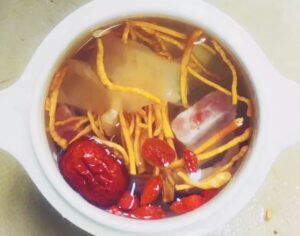
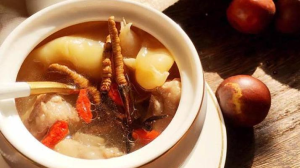
Cordyceps and Fritillaria Throat-Soothing Soup is a classic Lung-nourishing functional dish originating from the Lingnan region, blending Cordyceps sinensis (Dongchongxiacao), Fritillaria cirrhosa (Chuanbeimu), and Borassus flabellifer (Haidiyue, palm fruit). The soup features a clear, bright broth with a sweet, moistening taste, embodying a dual character of both nourishing and clearing. It is especially popular during dry autumn and winter seasons or in hazy weather conditions. This soup is formulated around the core principle of “clearing, supplementing, and moistening,” with carefully selected ingredients. It may be enjoyed as a daily health-maintenance soup and also supports respiratory comfort and overall Kidney-Lung harmony.
Cordyceps sinensis (Dongchongxiacao) has been listed as one of the “Nine Immortal Herbs” since ancient times. It is sweet in taste and neutral in nature, and enters the Lung and Kidney Meridians. Fritillaria cirrhosa (Chuanbeimu) is bitter-sweet and slightly cold in nature, known for helping to maintain a cool and clear internal environment and supporting comfortable respiratory function. Haidiye (sea coconut fruit) is not actually a coconut but the fruit of a palm tree; it is neutral in nature and sweet in taste, helping to nourish Yin, moisten the Lungs, and support a calm and hydrated state. When combined with lean meat or chicken to enhance flavor, these three ingredients work synergistically, embodying a medicinal dish that supports moisture balance without greasiness and provides nourishment without causing dryness.
Medicinal Cuisine Functions
The overall function of this soup can be summarized as: helps maintain Lung moisture and respiratory comfort, supports Kidney health and balanced breathing, and nourishes yin to promote a cool internal environment. It is formulated to support the body’s natural ability to manage occasional dry cough with scant phlegm, dry and itchy throat, and hoarseness that may be associated with Lung Dryness or Lung Yin Deficiency. Additionally, the Kidney-tonifying and essence-preserving properties of *Cordyceps sinensis* (Dongchongxiacao) help support lower back and knee comfort, as well as normal energy levels and breathing, which are aspects of Kidney health.
Modern research also indicates that Cordyceps sinensis (Dongchongxiacao) contains active components such as cordyceps polysaccharides and cordycepic acid, which support immune function, help reduce fatigue, and support respiratory health; the alkaloids in Fritillaria cirrhosa (Chuanbeimu) can help maintain normal bronchial function and reduce phlegm production; Haidiye (sea coconut) is rich in various amino acids and trace elements that help maintain a balanced internal environment. Together, these three ingredients work synergistically to provide unique dietary support for overall well-being during seasonal respiratory challenges.
Functions of Traditional Chinese Medicine
Formula Compatibility from the Perspective of Zang-Fu Pattern Differentiation
In Traditional Chinese Medicine (TCM), the Lung is considered a “delicate organ” that prefers moisture and dislikes dryness. It governs the body’s Qi and controls respiration. The Kidney governs the reception of Qi and is considered the root of Qi. The Cordyceps-Chuanbeimu-Sea Coconut Soup embodies the principle of “supports both the Lung and Kidney simultaneously.” Cordyceps sinensis (Dongchongxiacao) enters both the Lung and Kidney meridians, gently supporting the balance of Yin and Yang in these organs. Fritillaria cirrhosa (Chuanbeimu) specifically targets the Lung Meridian, helping to clear phlegm and heat while maintaining the body’s upright Qi. Sea Coconut (Hai Di Ye) is sweet and cool in nature, supporting Lung moisture and fluid generation, while helps maintain any excessive drying effect of Chuanbeimu. The combined use of these three herbs helps maintain Lung moisture, supports the descending of Qi, and promotes Kidney consolidation.
Analysis from the perspective of properties, flavors, and meridian tropism.
In this formula, Cordyceps (Ophiocordyceps sinensis, Dongchongxiacao) is neutral in nature, neither cold nor hot, making it suitable for supporting long-term wellness. Fritillaria (Fritillaria cirrhosa, Chuanbei) is slightly cold and helps maintain respiratory comfort in cases of occasional heat-related discomfort. Sea coconut (Haidiyu) is neutral to slightly cool and assists in maintaining a balanced internal thermal environment. The overall nature of the formula is cooling and moistening, so it should be used with caution for cough patterns associated with Deficiency-Cold (such as thin white phlegm, aversion to cold, and cold extremities). Additionally, two slices of fresh ginger (Zingiber officinale, Shengjiang) are often added to the soup, which not only removes fishy tastes but also moderates the cooling nature of Fritillaria, making the overall formula more balanced.
Suitable For
This soup is most suitable for the following individuals: long-term smokers, those with chronic throat dryness or hoarseness, or people with vocal overuse such as teachers and singers, who commonly experience dry throat, hoarse voice, and dry cough without phlegm; those with Lung-Kidney Yin Deficiency, characterized by persistent cough unrelieved over time, tidal fever, night sweats, and dry mouth and tongue; individuals in the recovery period from bronchitis or pneumonia who still have mild cough, fatigue, and lack of strength; as well as middle-aged and elderly people who experience shortness of breath or wheezing upon exertion due to Lung Qi Deficiency and Kidney failing to grasp Qi.
In addition, for individuals experiencing Yin Deficiency with Fire Blazing, dry skin, and dry stool due to work pressure and staying up late, consuming this soup 1–2 times per week may help support Yin nourishment and internal moisture balance. It is also a gentle winter option for those in a suboptimal health state looking to support immune health.
Contraindicated Populations
Since the medicinal food contains Fritillaria cirrhosa (Chuanbei) and Sea Coconut (Haidiyu), which are cool in nature, the following individuals should use with caution or avoid: those with Spleen and Stomach Deficiency Cold (often feeling cold pain in the stomach and abdomen, loose stools) may experience loose stools if consumed in large amounts; those with Exterior Wind-Cold Cough (white thin phlegm, clear nasal discharge, aversion to cold with no sweating) may have their condition exacerbated by misuse of Chuanbei, as it may “close the door and trap the pathogen,” interfering with the body’s natural recovery process; pregnant women and children should consume only under the guidance of a physician, especially Cordyceps sinensis (Dongchongxiacao), which is a tonic ingredient—excessive consumption may lead to internal heat (Shanghuo).
Additionally, individuals with allergies to seafood or fungi should pay attention to the source of Cordyceps sinensis (Dongchongxiacao) (artificially cultivated or wild), as a very small number of people may experience allergic reactions. Meanwhile, those taking anticoagulant medications (e.g., warfarin) should consult a doctor, because Cordyceps sinensis (Dongchongxiacao) may affect blood clotting function. This soup is not a substitute for standard medical supports; it serves only as supportive health maintenance.
Ratio of Ingredients in the Formula
The following are the exact gram amounts for one stewing for a family of three (based on dry ingredients):
Cordyceps: 3 grams (approximately 6-8 medium-sized pieces) Fritillaria cirrhosa (Chuanbeimu): 8 grams (crushed before use or kept whole) Seaside coconut (Haidiyè): 15 grams (dried, pre-soak in warm water for 30 minutes) Lean pork: 150 grams (or skinless chicken thigh meat 200 grams, blanched and set aside) Fresh ginger: 2 slices (approximately 3 grams) Honey date (Mizao): 1 piece (approximately 10 grams, optional, adds a mild sweetness) Salt: to taste (recommended to add at the end for seasoning) Water: 1200 milliliters (approximately 5 cups; after simmering yields about 3 cups of soup)
Preparation Method
1. Pre-supports the ingredients: Use a soft brush to gently brush off surface soil from Cordyceps sinensis (Dongchongxiacao); be careful not to wash with too much water. If using whole Fritillaria cirrhosa (Chuanbeimu) as a medicinal ingredient, lightly crush them with the back of a knife. Soak Haidiyu (sea coconut) in warm water until soft, then wash clean. Cut pork lean meat into 2 cm cubes. Put into cold water, bring to a boil, then remove and rinse off any scum.
2. Assemble the stewing pot: Place the blanched lean meat, Borassus flabellifer (Haidiyai, sea coconut), Zingiber officinale (ginger slices), and Ziziphus jujuba (honey dates) into a stewing pot or clay pot. Add 1200 ml of water. Bring to a boil over high heat, then reduce to low heat and simmer for 1 hour.
3. Add Chuanbei and Cordyceps: After the meat soup has simmered for 1 hour, add Fritillaria cirrhosa (Chuanbei) and Cordyceps sinensis (Dongchongxiacao). Continue simmering on low heat for 30 minutes. Note that Cordyceps should not be boiled for too long to avoid loss of active constituents; the final 30 minutes are sufficient to release their beneficial components.
4. Season and serve: 5 minutes before turning off the heat, add a small amount of salt according to taste (since the soup is naturally sweet, use less salt rather than more). Skim off any surface oil. Ladle out and drink warm. If using a stewing pot, cover and steam over water for 2 hours for even better results.
Drinking Tips
1. Frequency of consumption: For daily wellness, it is recommended 1–2 times per week. If used to support the body during occasional cough discomfort, it may be taken for 3 consecutive days, followed by a 2-day break, then another 3 days, while observing the body’s response. Do not exceed the recommended amount to avoid digestive heaviness.
2. Best time for administration: It is recommended to take it warm on an empty stomach in the morning or afternoon, when the absorption efficiency of the Spleen and stomach is high. Evening consumption may affect sleep due to the mild stimulating effect of *Fritillaria cirrhosa* (Chuanbei), but most people do not experience this reaction. The *Cordyceps sinensis* (Dongchongxiacao) in the dregs can be chewed, but ensure it is thoroughly stewed until soft.
3. Dietary Contraindications: While taking this soup, avoid spicy, greasy, raw, and cold foods (such as chili peppers, grilled foods, and ice cream) to avoid irritating the throat and causing occasional discomfort. Additionally, it is not advisable to eat radish or drink strong tea at the same time, as radish may interfere with the beneficial effects, and the tannins in tea may affect the absorption of beneficial components from cordyceps (Cordyceps sinensis). If you are also taking other Chinese herbal medicines, please consult a licensed TCM practitioner.
This soup sounds amazing! I’ve been trying to incorporate more TCM recipes into my diet, and the combination of cordyceps and fritillaria for lung health is exactly what I need during allergy season. Can’t wait to try making it at home—thanks for sharing the guide!
I’ve been looking for a good throat-soothing soup recipe, and this sounds perfect! The combination of cordyceps and fritillaria is so smart for lung health. Definitely trying this clear broth version—thanks for the TCM insights!
I’ve always been curious about traditional soups like this—sounds perfect for soothing a dry throat in winter. The combination of cordyceps and fritillaria is genius. Definitely adding this to my weekend cooking list! Thanks for sharing such a clear recipe and TCM insights. 🍵
I’ve always wanted to try this soup for my dry throat in winter. The combo of cordyceps and fritillaria sounds so nourishing! Does the Haidiyue add a special sweetness? Might finally attempt it this weekend. Thanks for the recipe and TCM insights!