Purple jasmine belongs to the genus Jasminum in the family Jasminaceae; its roots, leaves, fruits, and flowers are used medicinally.Among these, the roots of Purple Jasmine have a sweet and bland taste and a slightly cold nature. They are effective in clearing heat, draining dampness, detoxifying, and promoting blood circulation. They are primarily used to treat heat-induced dysuria, cloudy urine, edema, red and white vaginal discharge, swollen and painful joints, abscesses and swellings caused by toxins, mastitis, and trauma;Purple jasmine leaves have a sweet and bland taste and a slightly cold nature. They clear heat, detoxify, dispel wind, drain dampness, and promote blood circulation. They are primarily used to treat abscesses, boils, and toxic sores; scabies and tinea; and trauma;Purple jasmine seeds have a sweet taste and a slightly cold nature. They clear heat, resolve skin rashes, promote diuresis, and eliminate toxins. They are primarily used to treat facial spots and moles, as well as pustular skin conditions; Purple jasmine flowers have a slightly sweet taste and a cool nature, entering the Lung Meridian. They moisten the lungs and cool the blood. They are primarily used to treat hemoptysis.

Purple Jasmine
Purple jasmine belongs to the genus Jasminum in the family Jasminaceae; its roots, leaves, fruits, and flowers are used medicinally.Among these, the roots of Purple Jasmine have a sweet and bland taste and a slightly cold nature. They are effective in clearing heat, draining dampness, detoxifying, and promoting blood circulation. They are primarily used to treat heat-induced dysuria, cloudy urine, edema, red and white vaginal discharge, swollen and painful joints, abscesses and swellings caused by toxins, mastitis, and trauma;Purple jasmine leaves have a sweet and bland taste and a slightly cold nature. They clear heat, detoxify, dispel wind, drain dampness, and promote blood circulation. They are primarily used to treat abscesses, boils, and toxic sores; scabies and tinea; and trauma;Purple jasmine seeds have a sweet taste and a slightly cold nature. They clear heat, resolve skin rashes, promote diuresis, and eliminate toxins. They are primarily used to treat facial spots and moles, as well as pustular skin conditions; Purple jasmine flowers have a slightly sweet taste and a cool nature, entering the Lung Meridian. They moisten the lungs and cool the blood. They are primarily used to treat hemoptysis.
Chinese Name : 紫茉莉
Aliases : Bitter Clove, Wild Clove, Clove Flower, White Clove Flower, Rouge Flower, Pink Ball Flower, Zhuangyuan Red, Wild Jasmine, Pink Bean Flower
Authentic Producing Area : Purple jasmine roots are produced throughout the country; purple jasmine leaves are produced throughout the country; purple jasmine seeds (fruits) are produced in most regions of the country
Nature, Flavor & Meridian Tropism : Purple jasmine roots have a sweet and bland taste and a slightly cold nature; purple jasmine leaves have a sweet and bland taste and a slightly cold nature; purple jasmine seeds (fruits) have a sweet taste and a slightly cold nature; purple jasmine flowers have a slightly sweet taste, a cool nature, and enter the Lung Meridian
Benefits & Efficacy
Benefits
1. Purple jasmine root has the effects of clearing heat, draining dampness, detoxifying, and promoting blood circulation. 2. Purple jasmine leaves have the effects of clearing heat, detoxifying, dispelling wind, draining dampness, and promoting blood circulation. 3. Purple jasmine seeds have the effects of clearing heat, resolving skin rashes, draining dampness, and detoxifying. 4. Purple jasmine flowers have the effects of moistening the lungs and cooling the blood.
Indications
1. Purple jasmine root is primarily used to treat heat-induced dysuria, cloudy leukorrhea, edema, red and white vaginal discharge, swollen and painful joints, abscesses and toxic swellings, mastitis, and trauma. 2. Purple jasmine leaves are primarily used to treat abscesses, boils, and toxic sores; scabies and tinea; and trauma. 3. Purple jasmine seeds are primarily used to treat facial spots and moles, as well as pustular dermatitis. 4. Purple jasmine flowers are primarily used to treat hemoptysis.
Usage and Dosage
1. Purple Jasmine Root (1) Internal use: Decoct 15–30 g; use 30–60 g of fresh material. (2) External use: Apply an appropriate amount of fresh material, pounded into a paste and applied topically. 2. Purple Jasmine Leaves External use: Apply an appropriate amount of fresh material, pounded into a paste and applied topically, or apply the extracted juice externally. 3. Purple Jasmine Seeds External use: Apply an appropriate amount; remove the outer shell, grind into a powder, and apply topically; or decoct in water for washing. 4. Purple Jasmine Flowers Internal use: 60–120 g; crush fresh flowers to extract juice.
Precautions
1. Those with spleen and stomach deficiency-cold should use purple jasmine root with caution. 2. Pregnant women should not take purple jasmine root.
Applications
Notes
Patients requiring treatment with Chinese herbal medicine should first consult a licensed Traditional Chinese Medicine (TCM) hospital, where a TCM practitioner will conduct a professional pattern differentiation and prescribe an herbal formula.
Processing & Preparation
Harvesting & Processing
1. Purple Jasmine Root: Harvest in October–November of the year of sowing. Dig up the entire root, wash off dirt and sand, and use fresh; or remove the root crown and fibrous roots, scrape off the coarse bark, remove all black spots, slice, and immediately sun-dry or kiln-dry to prevent discoloration and maintain quality. 2. Purple Jasmine Leaves: Harvest when the leaves are lush and the flowers have not yet bloomed; wash thoroughly and use fresh. 3. Purple Jasmine Seeds: Harvest when the fruits ripen in September–October; remove impurities and sun-dry. 4. Purple Jasmine Flowers: Harvest when the flowers are in full bloom from July to September; use fresh or sun-dry.
Crude Drug Identification
Properties of Crude Drugs
1. Purple Jasmine Root: The root is oblong-conical or cylindrical in shape; some are flattened, and some have visible lateral roots. It measures 5–10 cm in length and 1.5–5 cm in diameter. The surface is grayish-yellow, with longitudinal wrinkles and traces of fibrous roots. There is a stem base scar at the apex. The texture is hard and difficult to break; the fracture surface is irregular, with visible annular rings. When steamed or boiled, the fracture surface becomes horn-like.Odorless, with a mild taste and a sensation of throat irritation.
2. Purple Jasmine Leaves: The leaves are mostly curled; when flattened, intact leaves are ovate or triangular, 4–10 cm long and approximately 4 cm wide. The apex is long and pointed, the base is wedge-shaped or heart-shaped, and the margins are slightly wavy. The upper surface is dark green, while the lower surface is grayish-green. The petioles are relatively long and covered with fine hairs. They have a faint odor and a sweet, neutral taste.
3. Purple Jasmine Seeds: The fruit is ovoid, 5–8 mm long and 5–8 mm in diameter. The surface is black, with five distinct ridges and covered with punctate protrusions; the inner surface is relatively smooth, with prominent ridges. There is a scar from the style at the apex and a scar from the fruit stalk at the base. The texture is hard. The seeds are yellowish-brown, with a well-developed endosperm that is white and mealy.
Botanical Information
Botanical Classification
Purple jasmine (Jasminum purpureum), a plant of the genus Jasminum in the family Jasminaceae.
Morphological Characteristics
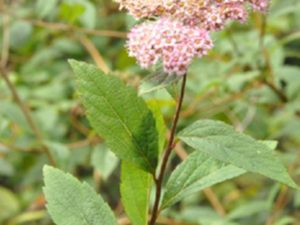
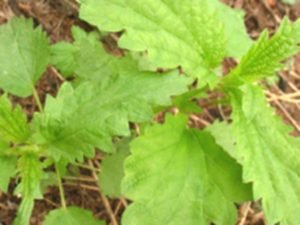
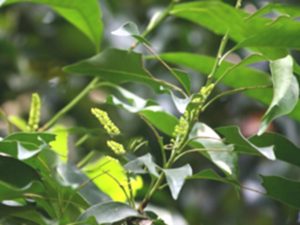
An annual or perennial herb, 50–100 cm tall. The root is robust, conical or spindle-shaped, fleshy, with a brownish-gray surface and a white, mealy interior. The stem is erect, highly branched, cylindrical, with swollen nodes.Leaves are opposite; long-petiolate, with lower petioles exceeding half the length of the leaf blade, while upper leaves are nearly sessile; leaf blades are papery, ovate or ovate-triangular, 3–10 cm long, 3–5 cm wide, with an acute apex, a truncate or slightly cordate base, and entire margins.Flowers number from 1 to several, terminal, arranged in a corymb; each flower has a calyx-like involucre at the base, green, 5-lobed; flowers are hermaphroditic, with a single perianth, red, pink, white, or yellow; the perianth tube is cylindrical, 4–5 cm long, expanding into a trumpet shape at the top, 5-lobed, and spreading;There are 5–6 stamens with slender filaments equal in length to or slightly longer than the perianth; there is a single pistil with a superior, ovoid ovary; the style is solitary, slender and linear, and the stigma is capitate and slightly lobed. The fruit is an achene, nearly spherical, about 8 mm long, black when ripe, finely ribbed, and enclosed by persistent bracts. Flowering occurs from July to September, and fruiting from September to October.
Distribution Area
Distributed throughout China.
Growth Habits
Prefers a warm and humid environment; grows best in partial shade and is not cold-tolerant. Not particular about soil type, but thrives best in fertile, deep sandy loam or oil-sand soil.
Propagation Methods
Propagation is by seed.
Cultivation Techniques
Harvest in batches 2–3 times during the fruit ripening period; after the final harvest, cut the fruit-bearing branches, thresh out the seeds, and sun-dry or air-dry them for later use. Sow in March–April; prepare 1.3-meter-wide raised beds, dig holes with 33 cm row and plant spacing, and sow 7–8 seeds per hole, using 15 kg of seed per hectare.Seedlings may also be raised and transplanted. Cultivate the soil and remove weeds three times: the first time after the seedlings have emerged uniformly, at which point thin and replant as needed, leaving 3–4 seedlings per hole; the second time in early summer; and the third time in late summer. After each cultivation, apply liquid manure made from human or animal waste as a top dressing.