
Can goji berries boost collagen for healthier skin? As a herbal pharmacist, I break down how goji supports collagen synthesis, key compounds, client story, research, dosage and safety warnings.
Collagen is the structural protein that keeps skin plump, firm and elastic. Aging, UV exposure, oxidative stress and chronic inflammation steadily break down collagen fibers, leading to fine lines, sagging and dull complexion. Many clients ask: Do goji berries help build collagen and protect existing collagen in skin?
As a herbal pharmacist, I explain that goji berries do not contain collagen itself. Instead, they supply key nutrients and bioactive compounds that fuel your body’s own collagen production, while shielding collagen fibers from free radical breakdown. It is an internal nutritional support strategy, not a replacement for topical skincare or sunscreen.
Key Compounds in Goji Berries That Support Collagen
Lycium barbarum Polysaccharides (LBP) LBP protects skin fibroblasts — the cells responsible for manufacturing collagen. Oxidative damage and inflammation weaken fibroblasts and degrade collagen matrix. Goji polysaccharides reduce oxidative stress and calm low-grade inflammation, helping fibroblasts maintain steady collagen synthesis and prevent premature collagen breakdown.
Vitamin C An essential cofactor for collagen formation. Without sufficient vitamin C, your body cannot assemble stable collagen strands. Goji berries deliver natural vitamin C to support every stage of collagen production. Vitamin C also acts as an antioxidant, defending existing collagen from free radical destruction.
Flavonoids: Quercetin, Rutin, Chlorogenic Acid These polyphenols stabilize collagen and elastin fibers. They inhibit matrix metalloproteinases (MMPs), enzymes that break down collagen when triggered by UV light and environmental stress.
Beta-carotene (provitamin A) Once converted to vitamin A in the body, it supports skin cell turnover and maintains the extracellular matrix, creating a favorable environment for healthy collagen.
Real Client Case: Loss of Skin Firmness and Fine Lines
A 48-year-old client consulted me. She noticed gradual loss of facial firmness and fine lines around the mouth. She already used vitamin C serum and daily SPF, but wanted nutrition to support collagen from within. Blood tests showed slightly low antioxidant status with no hormonal skin disorders.
I recommended 15g dried goji berries eaten daily with breakfast, while keeping her existing skincare routine unchanged.
After 10 weeks of consistent intake, she reported her skin felt firmer and less crepey, and fine lines appeared softer. Her follow-up lab test showed improved antioxidant levels. This case shows goji berries work synergistically with topical skincare to preserve and support collagen production, rather than delivering instant dramatic results.
Clinical Research & Industry Data
In vitro studies demonstrate LBP protects skin fibroblasts against oxidative damage and supports collagen expression. Human trials published in Nutrients show daily goji consumption raises systemic antioxidant capacity, which limits collagen-degrading enzyme activity.
Important reality check: Goji berries support your natural collagen production, but they cannot reverse deep wrinkles or severe sagging. UV damage remains the biggest enemy of collagen; sunscreen is non-negotiable. They are nutritional support and cannot replace dermatological treatments like fillers or laser therapy.
Core Ways Goji Berries Support Collagen & Skin
- Protect collagen-producing fibroblast cells LBP reduces oxidative injury to fibroblasts, so they keep making collagen efficiently.
- Supply vitamin C required to build new collagen Vitamin C is mandatory for cross-linking collagen fibers to keep skin strong and elastic.
- Block collagen-destroying enzymes (MMPs) Goji flavonoids reduce activity of enzymes that break down collagen triggered by sun and pollution.
- Reduce inflammation that degrades skin matrix Chronic low-grade inflammation speeds collagen loss. Goji balances inflammatory response to preserve skin structure.
- Improve skin microcirculation Better blood flow delivers nutrients to skin cells, supporting healthy collagen formation.
Recommended Dosage for Collagen & Skin Support
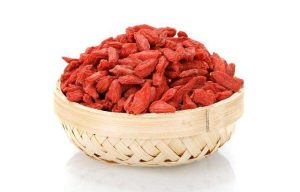
Whole dried goji berries deliver the full spectrum of collagen-supporting nutrients.
- Standard daily serving: 10–20 grams dried goji berries (roughly a small handful)
- Allow 8–12 weeks of consistent intake before seeing visible skin improvements. Collagen turnover is a slow process.
- Do not exceed 30g daily. Overconsumption may cause loose stools or bloating for sensitive people.
Safety Notes & Herb-Drug Interactions
Goji berries are safe for most healthy adults, but keep these precautions in mind:
- Blood thinners (warfarin): Goji berries may increase bleeding risk.
- Blood pressure medications: Goji can amplify these drugs and lead to low blood pressure.
- Diabetes medication / insulin: Goji may lower blood sugar; regular glucose monitoring is required. Pregnant or breastfeeding individuals should consult a healthcare provider before long-term daily consumption.
Disclaimer: Goji berries are a nutritional herbal food supplement, NOT a medical or dermatological treatment. They cannot replace prescription skincare, collagen injections or professional skin treatments.
Frequently Asked Questions
Q: Can goji berries replace collagen powder supplements?
A: No. Collagen powder provides preformed collagen peptides, while goji berries supply nutrients to help your body make its own collagen. Many people use both together.
Q: Can eating goji berries repair damaged collagen from sun exposure?
A: It helps limit further collagen breakdown and supports new collagen synthesis, but it cannot fully repair existing severe sun damage. Sunscreen is still essential.
Q: Is goji extract better than whole dried berries for collagen support?
A: Standardized LBP extracts contain concentrated polysaccharides. Whole berries supply natural vitamin C and flavonoids. New users typically start with whole dried berries.
Q: Can I combine goji berries with oral collagen peptides?
A: Yes. They work in complementary ways. Always check with your healthcare provider before combining multiple supplements.


枸杞我