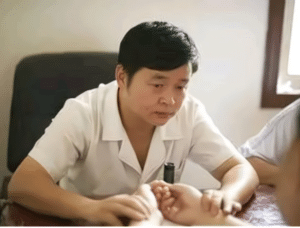
“Damp-Heat Syndrome” is a diagnostic term in Traditional Chinese Medicine that refers to a series of symptoms caused by the combined invasion of dampness and heat pathogens into the body, such as a heavy and sluggish sensation, a bitter or sticky taste in the mouth, sticky stools, scanty and reddish urine, and a yellow, greasy tongue coating.
Common Manifestations
General Symptoms: Afternoon hot flashes, heaviness and sluggishness in the head and body, aching limbs, and excessive sweating.
Damp-Heat in the Spleen and Stomach: Epigastric and abdominal distension, nausea, poor appetite, sticky and unpassable stools, or stools that stick to the toilet bowl.
Damp-Heat in the Liver and Gallbladder: Distending pain in the flanks, bitter taste in the mouth, irritability and short temper; jaundice may occur in severe cases.
Damp-Heat in the Lower Jiao: Scanty, red, and painful urination; yellow, foul-smelling vaginal discharge in women; and a damp scrotum in men.
Damp-Heat in the Skin: Oily face, acne, eczema, itchy skin, or eroded, oozing lesions.
The Story of the Wet Clothes
In the summer, I usually soak my dirty clothes in water and wash them right away. One time, because something came up unexpectedly, I left the clothes soaking in a basin and didn’t wash them right away. It wasn’t until I got home the next day that I remembered. To my surprise, even though the clothes had been soaked in cold water, after sitting for a day, they had actually started to heat up and ferment—the temperature of the clothes in the basin rose, and the water had turned into hot water.
As I washed the clothes, I wondered why they had become hot.
If dirty clothes are dry and not soaked in water, they won’t generate heat even if left for three to five days. But once clothes are soaked in water—especially in the heat of summer—failure to wash them promptly leads to heat generation and fermentation. The key factor here is water. Dampness from the water prevents the clothes from breathing, causing stagnation that transforms into heat! Realizing this, I immediately thought of the pathogenesis of damp-heat disorders in the human body—dampness obstructing the flow of qi! This is the crucial mechanism behind damp-heat syndromes!
I. The focus of treating damp-heat syndromes is not on clearing heat, but on eliminating dampness
In the human body, if dampness predominates, the circulation of yang qi is easily obstructed, leading to stagnation. An excess of qi becomes fire; when fire combines with dampness, it transforms into damp-heat, and in some cases, even into damp-toxin. Because dampness tends to descend, damp-heat easily flows downward, manifesting as related diseases in the middle and lower parts of the body. Examples include gynecological leukorrhea, male prostatitis, chronic enteritis, athlete’s foot, and eczema. Just like these clothes: when they get soaked and are exposed to hot weather, the air inside cannot circulate, leading to stagnation that transforms into heat.
When treating diseases caused by damp-heat in the human body, many medical practitioners view it as damp-toxin and employ methods to clear heat and eliminate toxins, using cold and cooling herbs to treat damp-heat conditions. Although this approach may temporarily alleviate the heat generated by dampness, the condition will soon recur because the dampness remains, and the body’s yang energy continues to be obstructed.
When the condition recurs, shouldn’t we consider whether the treatment plan is incorrect?
Some reckless practitioners of Traditional Chinese Medicine, however, mistakenly believe the medication was too mild and lacked potency! Consequently, they increase the dosage, prescribing high doses of bitter and cold herbs that damage the body’s yang energy. When the body’s last vestige of yang energy is completely depleted, the damp pathogen naturally cannot transform into heat—nor is it able to do so—and thus the dampness transforms from heat into cold, becoming cold-dampness. Before one illness is resolved, another arises, and the patient begins to feel coldness in the lower limbs.
In fact, treating diseases caused by damp-heat is much like washing clothes: once they are clean, simply hang them up to dry promptly, and the moisture in the clothes will naturally evaporate without causing heat or fermentation.
Therefore, the best approach to treating damp-heat syndromes is not to prescribe medications targeting “heat pathogens,” but rather to target “dampness.” By using herbs that drain dampness to eliminate the damp pathogen, the body’s yang qi will naturally rise, and the pathological mechanism of “dampness obstructing the flow of qi” will be reversed. Once this crux of the problem is resolved, the issue becomes much simpler.
In the previous story, I mentioned that yang qi is inherently ascending. Once the damp pathogen obstructing the rise of yang qi is eliminated, the body’s yang qi will naturally rise, the entire qi mechanism will circulate normally, and the disease can be cured.
II. The Key to Combating Damp Pathogenic Factors Lies in Regulating the Spleen
Let us delve deeper: why does damp pathogenic factor arise within the human body?
Although we can reverse the pathogenesis of damp-heat disorders using dampness-resolving herbs, if the root cause of damp pathogenic factor is not addressed, it will reemerge once it has been eliminated—and the disease will remain incurable.
Among the Five Elements, Earth overcomes Water; therefore, the origin of dampness must naturally be sought in “Earth.”
“The spleen and stomach belong to Earth; the stomach prefers moisture and abhors dryness, while the spleen prefers dryness and abhors moisture.” The generation of dampness is closely related to dysfunction of the spleen. When the spleen is deficient and fails to transport and transform properly, it most easily leads to the retention of water and dampness, which then transforms into pathogenic dampness.
From the above analysis, it is clear that the most critical aspect of treating damp-heat disorders is eliminating dampness. Only by eliminating dampness can the pathogenesis be reversed, and strengthening the spleen is the most effective way to promote the metabolism of water and dampness, thereby treating the root cause of dampness-related disorders.
Therefore, draining dampness and raising yang, as well as strengthening the spleen to eliminate dampness, are the fundamental principles for treating damp-heat diseases.
III. Andrological Disorders Caused by Damp-Heat
Patient Zhang, aged 40. He has experienced frequent urination, weak urine flow, and a sensation of incomplete emptying for one year, with symptoms worsening over the past month.
One year ago, without any apparent cause, he developed frequent urination, weak urine stream, and a sensation of incomplete emptying. These symptoms persisted for more than half a year and were accompanied by lower back soreness, decreased sexual function, yellowish-red urine, and dampness in the scrotum and groin. A routine prostate fluid examination at the hospital revealed white blood cells at the +++ level and lecithin at the + level; he was clinically diagnosed with chronic prostatitis. He was treated with intravenous antibiotic infusions for more than half a month. While the frequent urination and sensation of incomplete emptying improved significantly, the lower back soreness and decreased sexual function showed no signs of improvement. One month after discontinuing the medication, his condition relapsed, prompting him to seek treatment from a traditional Chinese medicine (TCM) practitioner.
Upon his consultation with me, his tongue coating was thin, yellow, and greasy, with a white coating at the root of the tongue. His six pulses were stagnant and slow, and the pulses on both sides exhibited a tendency to sink. Taking his other symptoms into account, I diagnosed him with what is known in TCM as “lin syndrome.” This condition is not difficult to treat; the general approach involves regulating the liver and strengthening the spleen, draining dampness and raising yang, and warming yang to transform dampness and eliminate toxins.
I prescribed the following formula: Atractylodes macrocephala, Atractylodes lancea, bee nest, talc powder, winter melon seeds, red vine, Astragalus membranaceus, Sophora flavescens, giant centipede, Bupleurum chinense, Gentiana scabra, and raw licorice. The herbs were to be decocted in water and taken as one dose per day.
After taking five doses, the patient’s symptoms of frequent urination, weak urine stream, and incomplete emptying improved significantly, and the dampness in his scrotum also subsided noticeably. Based on his condition, I made a slight adjustment to the formula by removing talcum powder and adding Eucommia bark. After taking more than ten additional doses, all his symptoms disappeared completely.
To consolidate the therapeutic effect and prevent recurrence, I advised him to steep 10 grams of Atractylodes macrocephala in hot water to make tea and to eat a handful of raw pumpkin seeds (about half a liang) daily. When I met him again six months later, I learned that he had fully recovered, had experienced no recurrence, and his constitution had noticeably strengthened.
Each of the herbs I used in the above case has its own unique benefits. Atractylodes macrocephala and Atractylodes lancea both dry dampness and strengthen the spleen, promoting the spleen’s ability to “raise the pure.” When clear yang rises, the heat pathogen in the damp-heat syndrome can be eliminated; talcum powder, winter melon seeds, and Gentiana root drain dampness; once the damp pathogen is removed, the flow of qi becomes unimpeded; bee nests warm the kidneys and support yang, kill parasites, and detoxify; when combined with red vine and centipede, they can treat toxins resulting from long-standing accumulation of damp-heat; Kushen clears heat and dries dampness, targeting dampness in the intestines, while Longdancao clears heat and dries dampness, targeting dampness in the Liver Meridian; when combined, they leave no room for dampness to linger.
There is another herb in the formula worthy of note—winter melon seeds. This herb raises yang and dispels dampness with particularly excellent efficacy. *Pharmacology of Traditional Chinese Medicine* records its effects as moistening the lungs, resolving phlegm, dissipating abscesses, and promoting diuresis. *The Tai Family Pharmacopoeia* states: “ The use of winter melon seeds to treat lung diseases and intestinal abscesses is documented in the *Essentials of the Golden Chamber*. Yet winter melon is a vegetable—how can its seeds possess such efficacy? It is common to see winter melon seeds thrown into pig manure pits where they do not rot; the following year, winter melons will naturally grow wherever the manure is applied. Winter melons grown in such filth have a sweet and mild flavor and are quite refreshing. By carefully observing this phenomenon, one can discern that winter melon seeds are “exceptionally adept at transforming turbidity into clarity; their seeds possess strong regenerative power and are inherently light and purifying.” Based on the properties of winter melon seeds—which raise the pure and lower the turbid, and use their purifying nature to eliminate excess—they demonstrate significant efficacy in treating coughing and wheezing with purulent sputum, lung abscesses, intestinal abscesses, gynecological leukorrhea, and damp-turbidity obstructions arising during the course of damp-heat diseases.”
IV. Gynecological Disorders Caused by Damp-Heat
Patient Liu, a 45-year-old woman, had been experiencing abnormal vaginal discharge for three months, with symptoms worsening over the past week.
The patient reported that three months prior, she began experiencing abnormal vaginal discharge—curd-like in consistency, yellowish in color, and accompanied by a fishy odor—along with a sensation of heaviness and dull pain in the lower abdomen. A routine gynecological examination at the hospital revealed white blood cells at the +++ level in her vaginal discharge and mild cervical erosion. After one week of treatment involving vaginal irrigation and topical medication, her symptoms improved. However, one week ago, without any apparent trigger, her condition worsened again. She self-medicated with Gynecological Qianjin Tablets for one week but saw no improvement, prompting her to seek Traditional Chinese Medicine (TCM) treatment.
I observed a thin, yellow, and greasy tongue coating with tooth marks on the tongue. Upon taking her pulse, I found the right Guan and Chi positions to be stagnant and rough, while the right Cun position was fine and soft. The preliminary assessment was abnormal vaginal discharge (vaginal discharge wellness) in gynecology.
The prescription was as follows: Atractylodes lancea, Phellodendron bark, Coix seed, stir-fried Atractylodes macrocephala, winter melon seeds, Sophora flavescens, red vine, Smilax glabra, raw licorice, Chinese yam, and Astragalus membranaceus.
After the patient took more than ten doses (with slight adjustments to the formula along the way), her vaginal discharge returned to normal, and a routine gynecological examination revealed that the cervical erosion had disappeared.
In treating this patient with leukorrhea caused by damp-heat, I adhered to the therapeutic principles of strengthening the spleen, eliminating dampness, and raising yang, as well as clearing heat, drying dampness, and detoxifying—and achieved excellent results. Of course, the key to this treatment lies in eliminating dampness and raising yang.
V. Dampness Pathogen Can Cause Many Types of Diseases, All of Which Require Strengthening the Spleen for Cure
Heaven is above, and Earth is below; Heaven belongs to Yang, and Earth belongs to Yin; in the human body, Yang Qi resides above, and Yin Qi resides below. This is the inevitable law of Yin and Yang in Heaven and Earth. If Yang Qi is obstructed by the dampness pathogen and cannot rise, remaining in the Yin position, then Yang Qi and Yin Qi will combine and transform into damp-heat. Furthermore, because dampness is viscous and sticky, it further obstructs the ascension of yang qi; therefore, diseases caused by damp-heat are often protracted and difficult to cure.
If damp-heat pathogens accumulate beneath the skin and, upon encountering a triggering factor, erupt outward through the skin and invade the cutaneous tissues, they will cause intractable skin diseases.
If damp-heat pathogens linger in the joints of the limbs, they can lead to joint swelling, deformity, and localized redness, swelling, heat, and pain.
If damp-heat pathogens linger in the intestines, symptoms such as abdominal pain, diarrhea, tenesmus, bloody or purulent stools, and anal burning may occur, eventually leading to what modern medicine refers to as chronic enteritis.
If dampness stagnates in the liver and gallbladder meridians, forming a pattern of damp-heat in the liver meridian, the body will exhibit symptoms such as distending pain in the liver region, a bitter taste in the mouth, poor appetite, or yellowing of the skin, eyes, and urine.
If dampness stagnates in the bladder, it leads to a pattern of damp-heat in the bladder, with patients presenting symptoms such as frequent urination, urgency, scanty and painful urination—which is what modern medicine refers to as acute or chronic cystitis.
If dampness stagnates in the anal region, it can easily lead to the development of hemorrhoids.
It is difficult to list all the clinical manifestations, but currently, Western medicine generally treats damp-heat syndrome as an inflammatory condition, relying heavily on antibiotics. Although the toxins generated by damp-heat are alleviated, the damp pathogen remains. Because dampness is viscous and obstructs yang qi, damp-heat will inevitably recur before long. Therefore, modern medicine often fails to achieve satisfactory results in treating diseases caused by damp-heat.
Recognizing the pathogenesis and promoting yang while eliminating dampness—this is the fundamental approach to treating damp-heat syndromes. For cases with predominant heat, combine treatment with heat-clearing and toxin-eliminating agents; for cases with predominant dampness, combine treatment with bitter and warm herbs that dry dampness; for patients with skin dampness, regulate the spleen and lungs; for patients with damp-heat in the liver meridian, regulate the liver and spleen; for patients with gynecological leukorrhea, regulate the spleen and kidneys, and tonify the Dai Meridian.
Earlier, I cited two case studies illustrating the treatment processes for urological and gynecological conditions caused by damp-heat. In fact, this approach—which involves draining dampness, raising yang, clearing heat, and eliminating toxins—is effective not only for urological conditions caused by damp-heat but also for gynecological conditions such as leukorrhea, chronic pelvic inflammatory disease, and cervical erosion. Furthermore, it can be applied to intestinal disorders and skin diseases caused by damp-heat.
The underlying principles are the same! Regardless of the specific condition, as long as it is caused by damp-heat, strengthening the spleen is the primary task. When the spleen is strong, dampness is eliminated and yang rises, and the disease is naturally more than halfway to recovery.
Such patients should include more spleen-strengthening and dampness-eliminating foods in their daily diet, such as winter melon, coix seeds, white poria, and white mung beans. Meanwhile, foods that generate damp-heat—such as wheat-based dishes and sweet rice wine—should be consumed sparingly.
Summer is a season when dampness is particularly prevalent, and damp-heat-type conditions tend to worsen. Regularly preparing and consuming soups that dispel dampness—such as winter melon soup, crucian carp soup, and duck soup—is highly beneficial for the body.
Patients who frequently suffer from severe athlete’s foot often find that neither topical nor internal medications yield significant results. The primary reason is that these patients have excessive damp-heat in the lower jiao, and their athlete’s foot is caused by damp-heat descending to the lower part of the body. I recommend that they drink water boiled with coix seeds over the long term; usually, within a few days, their condition will show marked improvement.
Let’s return to the story of damp clothes causing heat. Consider the process of washing clothes and hanging them out to dry—it is entirely consistent with the methods used in Traditional Chinese Medicine to treat damp-heat syndromes. The process of washing clothes is precisely the process of removing dampness and toxins from dirty garments. Once the clothes are hung up, the moisture drains downward—isn’t that exactly what “removing dampness” entails? Once the moisture is removed, air circulates freely, yang energy is not stagnant, and naturally, the clothes will not generate heat, ferment, or emit an odor.
Medical principles originate from daily life yet transcend it. By observing the details of daily life, we gain insight into the laws governing the movement and change of things—what problem, then, could remain unsolved?
When inflammation in the genital area has not been cured after several years of antibiotic treatment, we should not consider switching to a “stronger” antibiotic, but rather ask: Should this condition be treated this way? Is there a flaw in the treatment approach?
When a patient with chronic prostatitis has taken traditional Chinese medicine for three to five months without seeing results, we should consider whether the treatment plan itself is flawed, rather than telling the patient, “This condition is difficult to treat, it takes a long time—just be patient…”
Difficulty and ease go hand in hand. When a seemingly complex problem presents itself, a simple solution is often already waiting behind the scenes. Difficulty and ease always coexist; our task is to find the “easy” way to solve the problem.
Learn from life—the wellspring of wisdom will never run dry.
Let’s now draw new insights from another story: the story of the frozen water pipe.