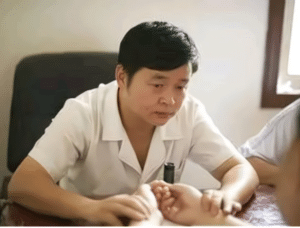
In the context of Traditional Chinese Medicine, “Excess Dampness” is commonly referred to as “excessive dampness” and can also be understood as a condition characterized by an excess of “damp pathogenic factors.”
The “dampness” referred to in Traditional Chinese Medicine is not exactly the same as humidity in the air; rather, it refers to a “heavy and turbid” state caused by impaired fluid metabolism within the body, leading to fluid stagnation. You can think of it as water that should have been expelled from the body but hasn’t been fully eliminated, causing it to become trapped inside—which makes a person feel heavy, sluggish, and sticky.
Common symptoms include the following:
Heaviness in the body: You constantly feel sluggish and weak all over, and when you wake up in the morning, it feels as if you haven’t had enough sleep.
Oily hair and face: Your hair and face tend to be oily, and you may also develop acne.
Poor digestion: You experience frequent bloating, and your stools tend to be sticky and loose, often sticking to the toilet bowl.
Thick, greasy tongue coating: The edges of the tongue may show tooth marks, and the coating may be white or yellow and relatively thick.
Prone to weight gain and water retention: You may feel slightly swollen, especially in the face or eyelids in the morning.
Reflections on Sweeping the Floor
When I was a child, our living conditions were poor; we lived in mud-brick and tile-roofed houses. In the fall, falling leaves would easily drift onto the roof and pile up in the roof gutters, blocking the drainage channels. Whenever it rained—even if the rain was just a little heavy—the roof wouldn’t drain properly, and the tile-roofed house would leak. Rainwater would drip steadily from the roof onto the floor inside the house. To keep the floor from getting wet, we had no choice but to place a basin to catch the water. However, even after the raindrops landed in the basin, they would still splash out, and the area around the basin would usually end up wet. So the first thing to do after the rain stopped was to dry the floor. My father’s most common method was to sprinkle wood ash from the stove onto the wet floor. The ash was very dry, and once scattered, it quickly absorbed the water on the floor. He would then sweep away the damp ash that had absorbed the moisture and sprinkle fresh, dry ash on top. After repeating this process several times, the damp floor would dry out quickly.
Later, when I studied traditional Chinese medicine under my great-grandfather, whenever I heard him discuss the mutual restraint of the Five Elements—especially that “Earth overcomes Water”—my first thought was always of my father using wood ash to dry the floor.
As I delved deeper into the theories of traditional Chinese medicine and gained more clinical experience, my understanding of the mutual restraint of the Five Elements grew increasingly profound, and I began to apply this principle more frequently in clinical practice. In the previous chapter, I used the story of raising a cat to illustrate the principle of mutual restraint. When the human body has an excess of dampness and water, leading to diseases caused by damp-pathogenic factors, regulating the spleen can be highly effective. Furthermore, in TCM theory, the kidneys govern water and are known as the “water organ.” When the kidneys malfunction and dampness and water accumulate in the body, regulating the spleen can also provide a cure. This is why there is also the saying that “the spleen governs dampness”!
To deeply understand the meaning of “using Earth to control Water,” we must first grasp what “Water” refers to in the human body and the specific manifestations of excess Water. Only by understanding what “excessive dampness” is and recognizing that “Earth can control Water” can we skillfully apply the principle of “using Earth to control Water.” Below, I will discuss the manifestations of dampness in the body from several perspectives.
I. One of the Major Manifestations of Damp Pathogenic Factors: Excessive Phlegm
“When damp phlegm accumulates internally and ascends to invade the lung system, the lungs lose their ability to disperse and descend, resulting in coughing with excessive phlegm; when damp phlegm stagnates in the stomach, the stomach loses its ability to harmonize and descend, leading to nausea and vomiting; when damp phlegm obstructs the flow of qi, causing qi stagnation, it results in a sensation of fullness and discomfort; when damp phlegm lingers, it causes heaviness and fatigue in the limbs; and when it obstructs the clear yang, it leads to dizziness and vertigo.”
Some elderly individuals suffer from prolonged coughing, wheezing, and excessive phlegm without a fever; Western medicine diagnoses this as chronic bronchitis in the elderly. In reality, such patients do not suffer from so-called inflammation, but rather from “spleen deficiency leading to impaired transport and transformation, with an internal accumulation of phlegm-dampness.” Simply suppressing the cough and resolving phlegm does not address the root cause of the problem. During the acute phase, when phlegm-dampness is more pronounced, symptoms can be alleviated by drying dampness, resolving phlegm, regulating qi, and harmonizing the middle jiao. In the later stages, treatment focuses on the spleen and stomach—nourishing the earth to control water—so that once spleen and stomach function is restored, the source of phlegm-dampness is naturally brought under control. Although this approach does not appear to treat phlegm directly, it is, in fact, the only effective remedy for phlegm.
Clinically, when I encounter such patients, I always use Erchen Decoction as the primary formula, modifying it according to the specific symptoms. The composition of Erchen Decoction consists of Pinellia, Aged Tangerine Peel, Poria, Licorice, and Ginger. Since Aged Tangerine Peel and Pinellia are most effective when aged, the formula is named “Erchen” (Two Aged).
With slight modifications to its composition, Erchen Decoction can be applied to treat a wide range of phlegm syndromes. To treat damp phlegm, Cangzhu and Houpo can be added to enhance its ability to dry dampness and transform phlegm; to treat heat phlegm, Danxing and Gualou can be added to clear heat and transform phlegm; to treat cold or cool phlegm, Ganjiang and Xixin can be added to warm and transform cold phlegm; to treat vertigo caused by wind-phlegm, Tianma and Jiangcan can be added to transform phlegm and subdue wind; To treat phlegm and food stagnation obstructing the channels, add Prunus mume and barley malt to aid digestion and resolve phlegm; to treat phlegm-qi stagnation and obstruction, add Cyperus, green tangerine peel, and Curcuma to relieve depression and resolve phlegm; to treat stubborn phlegm obstructing the meridians and forming scrofula or phlegm nodules, add Sargassum, kelp, and oyster shell to soften hard masses and resolve phlegm.
Once the pathogenic factors of phlegm-dampness have been alleviated, regulating the spleen and kidneys can restore the patient’s constitution. As the production of phlegm-dampness decreases, the disease can be controlled or even completely cured.
II. The Second Manifestation of Severe Dampness: Generalized Fatigue
The Huangdi Neijing states: “Clear yang emerges through the upper orifices, while turbid yin emerges through the lower orifices; pure yang manifests in the skin pores, while turbid yin flows to the five zang organs; pure yang sustains the four limbs, while turbid yin returns to the six fu organs.” The spleen is responsible for facilitating this distribution of pure yang throughout the body.
The spleen governs the ascension of pure substances; promoting the rise of the body’s pure yang is the spleen’s fundamental function. If the spleen is obstructed by dampness and its function is inhibited, the ascension of pure yang will be impaired, leading the person to exhibit various symptoms of discomfort.
Many patients often complain: “Doctor, I have no energy at all. My legs feel heavy and weak; it’s difficult to climb stairs—it’s as if I’m carrying a thousand jin of weight. My lower back feels as though I’m carrying a huge burden—it’s incredibly heavy—and my head feels foggy and dizzy.”
Fundamentally, these symptoms of fatigue stem from the fact that “dampness is heavy and turbid.”
Why is dampness heavy and turbid?
This is because dampness obstructs the spleen, impairing its ability to “raise the clear” and, in turn, disrupting the distribution of yang qi throughout the body.
These are the physiological laws of the human body; if these laws are violated, illness ensues. When clear yang cannot rise to the upper orifices and turbid yin cannot be expelled through the lower orifices, the result is “obstruction of the nine orifices, blockage of the ears and eyes, and difficulty with urination and defecation.” Therefore, Li Dongyuan stated: “ ‘When the spleen and stomach are deficient, the nine orifices become blocked.’”
The head is the convergence point of all yang energies. If clear yang cannot rise to the upper orifices, yang energy in the head will be insufficient, and the person will feel mentally foggy. Such patients feel as though the sky is gray and hazy from morning to night; their mental state is poor, and they feel depressed and despondent. All of this stems from the spleen’s failure to perform its function of raising the pure qi. This is also why Xiaoyao Pill, by soothing the liver and strengthening the spleen, is able to regulate emotional well-being: once the clear yang rises and the head is suffused with sufficient yang qi, the person naturally regains vitality and feels carefree and at ease.
If clear yang cannot rise to the skin pores, the pores become undernourished, leading to dry skin, peeling, and flaking; therefore, strengthening the spleen can also moisturize the skin.
If clear yang cannot nourish the limbs, the limbs feel sore, heavy, and weak. For such patients, after ruling out cerebrovascular accidents, treatments that strengthen the spleen and eliminate dampness often yield immediate results—hence the saying, “The spleen governs the limbs.”
Many theories in Traditional Chinese Medicine may seem unrelated at first glance, but they are in fact interconnected and interrelated. Once thoroughly understood, one can naturally integrate and apply them holistically.
III. The Third Manifestation of Excessive Dampness: Excessive Salivation
Excessive internal dampness can also overwhelm the five zang organs and six fu organs, filling the viscera and meridians. The five zang organs generate the five body fluids, which are then excreted in the form of these fluids, leading patients to exhibit an excess of these fluids. The Huangdi Neijing states: “The five zang organs generate body fluids: the heart produces sweat, the lungs produce nasal discharge, the liver produces tears, the spleen produces saliva, and the kidneys produce spittle; these are the five body fluids.”
Sweat is the fluid of the heart, nasal discharge is the fluid of the lungs, tears are the fluid of the liver, saliva is the fluid of the spleen, and spittle is the fluid of the kidneys.
In daily life, if you observe your surroundings closely, you will notice that many children often have thick nasal discharge, drool, or break out in a heavy sweat with even slight physical activity. Moreover, the heavier a child is, the more likely they are to experience these symptoms. Why is this?
Children often have an excess of liver energy and a deficiency of spleen energy. When the spleen is deficient, dampness pathogenic factors accumulate internally, making it very easy for an excess of the five fluids and excessive dampness to occur. To address these issues, regulating the spleen is key; by simultaneously taking the five zang organs into account, the problem can be resolved.
IV. The Fourth Manifestation of Excessive Dampness: Obesity
Many young women experience constant weight gain that cannot be controlled even through dietary restrictions. As one patient put it, “I gain weight just by drinking water.”
“Can drinking water really make you gain weight?” Of course not! What they’re actually gaining isn’t fat—it’s water! To illustrate this point, let’s look at a short story: the story of slaughtering the New Year’s pig.
A few years ago, when I returned home for the Spring Festival, my family happened to be slaughtering the New Year’s pig. My father hired a butcher, who boiled several large pots of water at home. Slaughtering the pig, draining the blood, scraping off the bristles, cutting open the abdomen… the butcher carried out each step methodically.
My mother chattered from the sidelines, “This pig has grown so fast—it really makes a difference when they’re fed ammoniated feed!”
“What is ammoniated feed?” I asked my father.
My father explained that ordinary straw feed has very low nutritional value, but when treated with ammoniation (using ammonia water or urea) under sealed conditions, the nutrients bound to lignin—such as cellulose and hemicellulose—are broken down through chemical reactions, increasing the nitrogen content. Nitrogen, in turn, promotes the rapid proliferation of microorganisms in the stomach, thereby greatly enhancing the nutritional value of the straw feed. However, this technology is still in the research phase, and the ammoniation process is quite intricate; in our village, we mainly use it on rice straw for cattle.
My father gave a thorough explanation of the concept of ammoniated feed and the current appropriate directions for its promotion.
“After hearing your dad talk about ammoniated feed, I secretly added some urea to the pigs’ feed. After eating, the pigs would often sleep, and they gained weight very quickly. Last year, that pig had only reached about 200 jin by this time of year, but this year, this one weighs 300 jin,” Mother said, watching the butcher pluck the pig’s hair as she spoke about ammoniated feed.
When they opened the pig’s abdomen, the situation wasn’t what they’d imagined. The pig’s fat layer wasn’t thick—in fact, it was rather thin—and the omentum was covered with water droplets. Looking at the droplets of varying sizes, Father scolded Mother: “You’ve been messing around! You believe everything you hear. It may have grown fast, but it’s all just water—what good is that?”
My mother was also deeply frustrated, regretting that she’d added urea to the feed. What was originally meant to be ammonia-treated cattle feed had ended up being used on the pig—what a waste of effort!
When I returned to work after the New Year, I encountered a middle-aged female patient who said she had been gaining weight too quickly. She had already been controlling her diet, but still felt as if even drinking water would make her gain weight.
After taking her pulse, I found that her right ulnar pulse was deep, thin, and weak, with stagnation at the Guan position—clear signs of spleen and kidney yang deficiency.
Thinking back to the water droplets I’d seen while slaughtering the New Year pig, and looking at the patient’s distended abdomen, I immediately understood the reason for her continuous weight gain!
Water accounts for approximately 65% of the human body’s weight, and the metabolism of body fluids is closely related to the lungs, spleen, and kidneys. When the functions of these three organs are impaired, the metabolism of body fluids becomes abnormal—resulting in weight gain in mild cases and edema in severe ones. For many people, weight gain isn’t caused by an increase in fat but rather by the retention of fluid within the body.
Later, when treating obese patients, I developed the habit of using a combination of Jishi, Atractylodes macrocephala, and Wood Fragrance for those with upper abdominal distension; for those with lower abdominal distension, I added Aconite, Fennel, and Lotus Leaf; and for those with heavy lower limbs and severe edema, I combined Astragalus, Motherwort, and Ligusticum chuanxiong.
After taking these formulas, patients quickly felt lighter and more comfortable, and their weight dropped significantly. This demonstrates that in the treatment of obesity, in addition to considering lipid-lowering measures, abnormalities in fluid metabolism are also very common.
In addition to the manifestations mentioned above, dampness pathogen can present in many other ways, such as frequent skin eczema, persistent swelling in the legs, and, in women, profuse, thin, and clear vaginal discharge.
Once these manifestations are recognized, and when treating conditions caused by dampness, one should keep in mind that “Earth overcomes Water” and that “the Spleen governs dryness.” Recalling the story of sweeping the floor mentioned earlier, regulating the Spleen will naturally come to mind!
When a pathogenic factor persists in the body for a long time, the treatment approach is not simply about expelling the pathogen; rather, it should start from the perspective of mutual restraint—nurturing the pathogen’s natural enemy and strengthening the weakened organs. Once the organs are robust, the disease can be brought under control.
V. The Application of the Five Elements’ Mutual Control Is Not Limited to Combating Damp Pathogenic Factors
This is true for damp pathogenic factors, but what about cold pathogenic factors?
Some patients suffer from chronic coughs that are immediately triggered by even the slightest exposure to cold. Some patients exaggerate, saying that they start coughing the moment even a single finger touches cold water.
Fire can ward off cold!
Such patients suffer from an insufficiency of the Fire that normally restrains cold pathogens within the body. The Heart governs Fire; the heart is like the sun in the sky. If the sun does not rise, the cold pathogens on earth cannot be fully dispelled. Patients with deficient Heart Fire are prone to such ailments; even the slightest contact with something cool can trigger a cough.
The practice of “treating winter diseases in summer” is currently popular. According to the Five Elements theory, summer corresponds to Fire; this approach harnesses nature’s Fire to dispel the cold within the body.
In fact, once one understands the principle of mutual restraint and focuses on nourishing Heart Yang to ensure the patient’s internal fire remains vigorous, the cough will naturally subside. This treatment can be administered year-round—why limit it to summer?
I once treated a patient from out of town who suffered from a chronic cough. The slightest chill would immediately worsen his condition, and he constantly felt a chill down his back. By winter, his hands and feet were ice-cold, and no amount of warm clothing could help. He had taken a host of both Chinese and Western medicines, but none had produced satisfactory results. Later, through a referral, he came to see me. Upon taking his pulse, I found that his left cun pulse was deep, slow, and faint, while his right cun pulse was floating, tight, and slippery—indicating deficient heart fire and the accumulation of cold phlegm in the lungs. Based on a comprehensive assessment of his symptoms, I recommended that he consume cinnamon porridge. After taking it continuously for half a month, the patient was completely cured.
Here’s how to make cinnamon porridge: Take one liang of high-quality cinnamon and grind it into an extremely fine powder. Mix 5 grams of the cinnamon powder with a bowl of plain white porridge and a small amount of white sugar, stirring until well blended. Consume once daily in the morning for 10 consecutive days.
Though this porridge may seem simple, it warms and invigorates heart yang, promotes blood circulation, and dispels cold pathogens, making it particularly effective for treating cold-induced coughs and wheezing.
Some patients experience cold hands and feet every winter that simply won’t warm up no matter what they do. In such cases, cinnamon porridge can also be taken; after a period of continuous use, their condition will improve significantly.
The principle behind this is actually quite simple: fire overcomes cold. Treating deficiency-cold conditions requires tonifying fire. Since the heart is associated with fire, once heart function is strengthened, the body will naturally be free of cold.
Some might ask: Can a single bowl of cinnamon porridge really cure deep-seated, chronic cold? What is the reasoning behind this?
To understand this principle, let’s look at the following story: the story of kerosene burning.