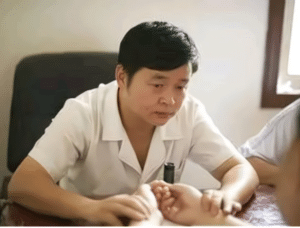
Insomnia is the standardized medical term for sleep disorders in Traditional Chinese Medicine (TCM), referring to a class of conditions characterized by a persistent inability to achieve normal sleep. TCM holds that the core pathogenesis lies in “Yang failing to enter Yin” and a disruption of the interaction between Yin and Yang; the primary location of the disorder is the Heart, though it also involves the Liver, Gallbladder, Spleen, Stomach, and Kidneys.
How Does Traditional Chinese Medicine View Insomnia?
Basic Definition: Insomnia is primarily characterized by insufficient sleep duration and depth; mild cases involve difficulty falling asleep or restless sleep, while severe cases result in being unable to sleep all night.
Etiology and Pathogenesis:
Emotional Imbalance: Stagnation of Liver Qi transforms into fire, disturbing the mind and spirit.
Improper Diet: Stagnation of undigested food leads to phlegm-heat rising to disturb the upper body.
Imbalance Between Work and Rest: Excessive worry damages the Heart and Spleen.
Post-Illness Debility: Prolonged illness leads to blood deficiency, causing the Heart to lack proper nourishment.
Reflections on a Mountain Cave
Behind the house in my hometown, there is a large mountain cave that the elders call “Egg Cave.” Once, I asked my great-grandfather why the cave on the mountain was called “Egg Cave.”
My great-grandfather explained that the cave stays warm in winter and cool in summer. In years past, whenever the summer heat set in, the eggs purchased by the town would spoil within a few days and could not be preserved. Later, they discovered that the cave remained cool in the summer, so they built a mountain path leading straight to it. They placed many large jars inside the cave specifically for storing eggs during the summer. That’s why everyone started calling it the “Egg Cave.” Although it hasn’t been used for that purpose in recent years, people have grown so accustomed to the name that they still refer to it as the “Egg Cave.”
I wasn’t entirely convinced by my great-grandfather’s story. To verify its truth, when summer came, I invited my friends to go play in the cave and see if it was really that cool inside.
It turned out exactly as my great-grandfather had described. Although it was sweltering outside the cave in summer, as soon as we stepped inside, we immediately felt a refreshing chill. The cave was very deep; standing inside and looking back, we could see wisps of mist rising from the entrance. Moisture from the ceiling had condensed into droplets that dripped down from time to time, making the floor feel very damp.
To observe what the cave was like in winter, during the Spring Festival, my younger brother and I specifically chose a cold, snowy day to climb the high hill behind our house and see if the Egg Cave was still cold. The situation was exactly the opposite: the cave was warm in winter. We only stayed inside for a short while before feeling hot and stuffy; both the floor and the ceiling were dry.
My great-grandfather was right—the cave truly is warm in winter and cool in summer!
After studying medicine, I came across a passage in the *Huangdi Neijing* that reads, “Nourish yang in spring and summer; nourish yin in autumn and winter.” I’d always been a bit puzzled by this: since the weather is warm in spring and summer, why is it necessary to nourish yang? And since the weather is already cold in autumn and winter, why must we nourish yin? Wouldn’t nourishing yang in spring and summer risk causing “internal heat,” and wouldn’t nourishing yin in autumn and winter risk aggravating dampness within the body?
Recalling my childhood adventures in caves, I began to understand the true meaning of the saying, “Nourish yang in spring and summer; nourish yin in autumn and winter.”
Traditional Chinese Medicine emphasizes the harmony between heaven and humanity; the human body is just like nature.
Although it’s hot outside in summer, caves are cold and damp; although heavy snow falls in winter, caves are dry and hot. Our bodies are just like caves: in summer, yang energy fills the body’s surface, while the interior lacks yang energy and is damp and cold; in winter, yang energy lies dormant within the body, easily causing yin fluids to evaporate, which is why people feel very dry.
The *Huangdi Neijing* states that we should nourish yang in spring and summer. If we observe a summer cave and reflect on the state of our five internal organs during that season, it becomes evident that nourishing yang energy is only natural; if we observe a winter cave and reflect on the state of our five internal organs during that season—which are also in a state of warmth and dryness—it becomes equally evident that nourishing yin energy is equally natural.
I. Principles of Health Preservation Across the Four Seasons: Nourish Yang in Spring and Summer; Nourish Yin in Autumn and Winter
Spring governs birth, and summer governs growth; birth and growth belong to Yang. The saying “nourish Yang in spring and summer” refers to nurturing life and growth. During spring and summer, the weather transitions from cold to warm and from warm to hot—this is when the body’s Yang energy grows, so the focus should be on nourishing Yang. Yang is the root of Yin; nourishing Yang in spring and summer is done to nourish Yin in autumn and winter. Furthermore, in spring and summer, Yang is abundant on the exterior but deficient internally, so it is also necessary to nourish the deficient Yang within.
Nourishing yang in spring emphasizes “birth.” Spring is the first of the four seasons and the beginning of renewal for all things. In terms of mental well-being, diet, daily routines, and exercise, spring health practices should align with the characteristics of spring—the emergence of yang energy and the birth of all things—paying attention to protecting yang energy and focusing on the concept of “birth.”
Nourishing yang in summer emphasizes “growth.” With scorching sun, rising ground heat, and abundant rainfall, summer is the season when all things in nature flourish and develop. Summer health practices should align with the characteristic of yang’s abundance on the exterior, focus on protecting yang energy, and emphasize the concept of “growth.”
Autumn is the season of gathering, and winter is the season of storing; gathering and storing belong to Yin. The saying “nourishing Yin in autumn and winter” refers to nurturing these processes of gathering and storing. During these two seasons, as the climate gradually cools, the body’s yang energy contracts inward and yin essence retreats internally; therefore, the primary focus should be on preserving yin essence. Yin serves as the foundation for yang; nourishing yin in autumn and winter is essential for nurturing the yang of the coming spring and summer. Moreover, in autumn and winter, while yin is abundant externally, it is deficient internally; thus, one should nourish the deficient internal yin.
Nourishing Yin in autumn emphasizes “gathering.” As the summer heat gradually subsides and the climate becomes cool and dry, yang energy gradually withdraws while yin energy gradually grows; this is the season when all things ripen and are harvested. Therefore, health preservation in autumn centers on nurturing this “gathering.”
Nourishing Yin in winter emphasizes “storing.” In winter, temperatures drop, the weather turns bitterly cold, and all things retreat into hibernation. At this time, yang energy is withdrawn and stored, making it easy for yin fluids to become depleted internally. Many animals hibernate to conserve their vitality and prepare for the burst of vitality in the coming spring. Humans should align even more closely with the laws of nature; therefore, winter health preservation should be guided by the principle of “storing,” with keeping warm and avoiding the cold as the primary methods, so that yin essence remains hidden within and yang energy does not leak outward.
II. Eating ice pops in summer and hot pot in winter are both forms of health preservation
Since we should nurture yang energy in spring and summer, why do people love to eat ice pops in summer—and feel so comfortable afterward? Does consuming these cold foods contradict the principles of health preservation?
The heart is like the sun, and the lungs are like the Earth’s atmosphere. Since lung qi communicates with the heavens, the intense heat of summer causes the heart fire and lung fire within the body to become excessive. When fire prevails in the upper burner, one feels restless and irritable, with a dry mouth and throat. Eating ice pops uses cold to counteract the heat, bringing a sense of relief. Does this contradict the principle of nurturing yang in spring and summer?
In summer, caves are cold and damp; from the body’s perspective, this corresponds to yang deficiency in the spleen and kidneys, with an excess of cold and dampness in the lower jiao. Nourishing yang in summer refers to nurturing the yang of the spleen and kidneys, not that of the heart and lungs. Consuming small amounts of cold beverages can clear heat from the upper jiao, but excessive indulgence in cold foods can easily lead to an increase in cold and dampness in the middle jiao. This is precisely why gastrointestinal disorders are so common in summer. To treat summer gastrointestinal disorders, I typically prescribe Huoxiang Zhengqi Water and Fuzhi Lizhong Pills to patients. Since abdominal pain and diarrhea result from spleen yang deficiency compounded by exposure to cold pathogens, the condition can be cured by warming and tonifying the spleen yang.
Since we nourish yin in the fall and winter, why do people love to eat hot pot in the winter? Hot pot contains many spicy and warming ingredients—why do people feel so warm and comfortable after eating it? Does this contradict the principle of “nourishing yin in autumn and winter”?
In the fall and winter, the Sun is farther from Earth than in summer, so temperatures on Earth are lower. As a result, less water evaporates, leading to lower humidity and drier air. This is why we often experience dry lips and skin, requiring moisturizers to hydrate our skin; otherwise, as moisture is lost from the skin, we feel as though we’re withering away.
“Nourishing yin in autumn and winter” means appropriately replenishing the body’s yin so that one does not feel excessively dry. But does nourishing yin always guarantee results? Not necessarily! Take winter, for example: when the air is dry, if it rains or snows a few times, will the air become moist? This depends on the sun. If it snows and is followed by bright sunshine, the humidity in the air will increase; if it only snows and the temperature does not rise, the air will remain dry. At the end of the previous chapter, I mentioned that “those skilled in nourishing yin must seek yin within yang; then yin is nourished by yang, and the wellspring never runs dry.” In other words, when nourishing yin in autumn and winter, do not forget to appropriately replenish yang energy. Only then can the body’s yin be elevated by yang energy, nourish the entire body, and ensure the wellspring never runs dry.
Only by understanding yin and yang in this way—and grasping the relationship between nourishing yin and nourishing yang—can one gain a deeper understanding. Once you understand the relationship between yin and yang, it becomes clear why eating hot pot in winter makes you feel warm and keeps your skin moisturized. This is because when you eat hot pot and drink the hot broth, you replenish both the body’s yin and its yang energy. Only under the warming influence of yang energy can yin fluids be transformed into qi to nourish the entire body. This is precisely the principle behind “when yin is nourished by yang, the wellspring never runs dry.”
But is it okay to eat hot pot with strong spicy flavors every day? Absolutely not. While hot pot can tonify yang, our purpose in eating it is to promote the tonification of yin. If we eat hot pot every day, it will actually damage yin, and the result will certainly be counterproductive, leading to a worsening of yin deficiency in the body.
Similarly, does “nourishing yin in autumn and winter” mean we should eat more yin-nourishing, cooling foods every day? That is also incorrect!
Some people, after reading the *Huangdi Neijing* (The Yellow Emperor’s Classic of Internal Medicine), learn about nourishing yin in autumn and winter and consequently eat several snow pears every day, drink cold beverages, and consume chilled yogurt. Over time, this can lead to a cold-damp constitution. Because yin cannot be propelled and transformed by yang energy, it becomes stagnant—like a pool of stagnant water—and will inevitably turn around to harm the body.
The principles mentioned above may seem a bit dry and difficult to grasp, so let’s use an example that everyone can understand.
There’s a proverb that goes, “Eat radishes in winter and ginger in summer, and you won’t need a doctor’s prescription.” What this actually means is that eating ginger in summer nourishes yang, while eating radishes in winter nourishes yin—this is the simplest practical application of the principle “nourish yang in spring and summer, nourish yin in autumn and winter.”
However, because winter is cold, while nourishing yin, one must also guard against catching a chill; and because summer is hot, while nourishing yang, one must also guard against heatstroke. Only by understanding the relationship between nourishing yin and nourishing yang through a dialectical approach can we avoid doing so blindly.
Furthermore, everyone’s constitution is different. Some people have a deficiency of yang and an excess of yin, making them prone to aching limbs, heaviness, and fatigue in the summer. In such cases, nourishing yang is particularly important. However, in winter—even when the air is dry—these individuals do not experience a deficiency of yin, so they do not need to excessively nourish yin; doing so might actually aggravate dampness in the body.
Some people are physically frail and prone to excess “fire” (heat); in summer, they actually need to nourish yin to prevent heatstroke, while nourishing yang is not as critical. In the fall and winter, nourishing yin becomes especially important; otherwise, such individuals will experience extreme dryness.
Climatic conditions also vary by region. In the south, where it is warm year-round, emphasis should be placed on nourishing yin; whereas in the north, where it is cold year-round, nourishing yang is necessary to resist cold pathogens.
Nourishing yang in spring and summer and nourishing yin in autumn and winter is a universal law of nature. While we should align with this law, we must also adjust our focus based on individual circumstances. This is what Traditional Chinese Medicine refers to as “health preservation and longevity should vary according to the season, the region, and the individual.” Only by truly understanding these principles can we apply health preservation and disease treatment in a flexible and targeted manner.
III. Insomnia Caused by Yin Deficiency
Yin represents the static, while Yang represents the driving force and energy. Only through the propulsion and warming transformation of Yang Qi can Yin fluids fulfill their functions. Only when “Yin is generated by Yang” can the source remain inexhaustible. This is not merely about health preservation and wellness; it is an art—it is the Dao!
As human beings live between Heaven and Earth, the circulation of Qi within our bodies is interconnected with the cosmos. Only by continually immersing ourselves in nature and learning from it can we gain an ever-deeper understanding and appreciation of health preservation.
If you still do not understand why we nourish yang in spring and summer and nourish yin in autumn and winter, I suggest you find a cave and visit it in both summer and winter to experience its summer dampness and winter dryness. Standing inside a cave is like standing within the viscera of Heaven and Earth—or within your own viscera.
Taiji gives rise to yang through movement; when movement reaches its peak, it becomes stillness; stillness gives rise to yin; and when stillness reaches its peak, it returns to movement.
For the human body, this is akin to the principle of Taiji (as systematically explained in my other book, *The Way of Medicine*). During the day, movement generates yang; the body’s yang energy is distributed outward, which is why people are active and radiant during the day, exuding a vigorous yang energy. Through the outward manifestation of this yang energy, we should recognize that the yang energy distributed to the body’s surface is derived from yin fluids, and maintaining this state requires the consumption of the body’s internal yin reserves. Yang is founded on Yin, and Yin manifests through Yang; all daytime activities consume the body’s Yin reserves.
When movement reaches its limit and Yin reserves are overconsumed, a person becomes fatigued and needs to quiet down and rest. Once the body enters a state of stillness or falls asleep, Yang energy begins to contract, consumption decreases, and this, in turn, promotes the generation of Yin. Only when Yin reserves are fully replenished can the body possess sufficient Yang energy the following day.
A person can survive for a week on water alone without food and still feel relatively well, but if a person is deprived of sleep day and night, they will break down within two or three days. Why is this? Because movement generates yang, and the generation of yang consumes yin. Prolonged consumption of yin leads to its depletion, and the body naturally cannot withstand it. The ultimate outcome is not “yin and yang in balance,” but rather “the separation of yin and yang.”
With this understanding, consider patients suffering from chronic insomnia: why are their faces lined with wrinkles? Why are the lines on their palms so chaotic? These are all manifestations of yin deficiency. Due to prolonged insomnia, yang fails to enter yin; yin energy cannot be generated, leading to a deficiency of yin fluids in the five zang organs and six fu organs.
So how should insomnia be treated? It’s quite simple: by guiding yang into yin, insomnia can be cured! First, let me analyze why yang fails to enter yin in patients; the situations generally fall into the following categories.
1. Qi Stagnation Transforming into Fire Type
Some patients often feel irritable. This is due to stagnation of liver qi within the body. An excess of qi manifests as fire; when qi stagnates and transforms into fire, it disturbs the mind and spirit, causing yang qi to be expelled outward and preventing it from entering yin.
For such patients, taking heat-clearing herbs combined with qi-regulating herbs will yield excellent results. For example, Gardenia and Lightly Fermented Black Bean Decoction combined with Four Reversals Powder.
2. Severe Cold-Dampness Type
Some patients have significant cold and dampness in their bodies. When yang qi enters the body, it is unable to dispel the large amount of cold and damp pathogenic factors, causing the person to feel very tired. They sleep restlessly and even have exhausting dreams. Some patients even describe feeling as though their legs are very heavy when walking in their dreams; upon waking in the morning, they feel as if they haven’t slept at all.
Such patients require warming and tonifying Yang to promote the circulation of Yin fluids. Once Yang is sufficient and its propulsive force is strong, sleep will feel more restful. Taking Fuzi Lizhong Pills can yield excellent results.
3. Yang Fails to Enter Yin Type
Some patients experience a dysfunction in the mechanism by which Yang enters Yin. The three Yang channels are Taiyang, Shaoyang, and Yangming, while the three Yin channels are Taiyin, Shaoyin, and Jueyin. The transition from Yang to Yin is a process moving from the exterior to the interior—that is, from Taiyang to Shaoyang, from Shaoyang to Yangming, from Yangming to Taiyin, from Taiyin to Shaoyin, and from Shaoyin to Jueyin. The saying, “When a person lies down, Qi and blood return to the Jueyin Liver,” illustrates this principle. The critical link in this process is the transition from Yangming to Taiyin—the pivotal point where Yang transforms into Yin. If an obstruction occurs at this stage, Yang Qi naturally cannot enter Yin, and the person will suffer from insomnia.
In the human body, the Yangming corresponds to the stomach, and the Taiyin corresponds to the spleen. The *Huangdi Neijing* states: “If the stomach is not harmonious, sleep is disturbed.” Because yang qi cannot pass through the Yangming (stomach) to enter the Taiyin (spleen)—and thus yang does not enter yin—sleep is disturbed!
Banxia Decoction is one of only ten formulas in the *Huangdi Neijing* specifically designed for insomnia. The original text records its composition, usage, and efficacy as follows: “Take eight sheng of water from a stream flowing more than a thousand li away; stir it ten thousand times; take five sheng of the clear liquid and boil it; cook it over a fire fueled by reed wood; when it comes to a boil, add one sheng of glutinous millet and five he of prepared Pinellia; simmer slowly until the volume is reduced to one and a half sheng; remove the dregs; drink one small cup of the liquid three times a day, gradually increasing the dose until relief is achieved. “Therefore, for those with a newly onset condition, after drinking the third cup, they will fall asleep, and the condition will be cured once they break a sweat; for those with a chronic condition, three doses will suffice.”
The key herb here is Pinellia. Pinellia refers to “the middle of summer.” The transition from summer to autumn is a process in which nature shifts from yang to yin. Pinellia grows in the middle of summer, when nature’s yang energy is at its peak—as the saying goes, “When yang reaches its peak, yin is born.” Pinellia belongs to the Stomach Meridian and possesses the inherent nature of “yang reaching its peak to give rise to yin,” making it the best herb for guiding yang into yin.
If a patient has severe liver fire, yang energy cannot enter the liver because the liver fire repels it. Even if Banxia is used to guide yang into yin, it can only bring yang energy into the realm of Shao Yin and Tai Yin. The patient may fall asleep, but the sleep will be shallow. Only after the liver fire has been thoroughly purged can the person enter a state of deep, restful sleep.
There is a medicinal herb called Hekucao (Eclipta prostrata), which grows during the height of summer’s heat and withers upon reaching maturity in late summer. While most plants turn yellow and wither only after autumn begins, this herb uniquely draws upon the energy of heaven and earth to wither early, bringing forward the austere and withering energy of late autumn. Therefore, it possesses the ability to clear liver fire and disperse stagnant blood. Once liver fire is cleared, yang energy can be drawn into the yin. Therefore, for patients with yang failing to enter the yin and hyperactive liver fire, the combination of Pinellia and Summer Dead Grass yields particularly excellent results.
The relationships between yin and yang and among the five zang organs are interconnected; we cannot view them in isolation. Only by deeply reflecting on their intrinsic relationships can we gain a more profound understanding of disease. To further illustrate this point, let’s consider another short story: the story of repairing an electric fan.