
Grand Tutor’s White Ointment,*Qianjin*, Volume 7.,For cold-induced throat discomfort, stiffness and pain in the head and neck, pain in the lower back, spine, and legs; for wind-induced arthralgia, dampness-induced swelling making it difficult to bend or stretch, and inability to walk; for dizziness, nasal congestion, polyps or sores caused by aconite, body rashes accompanied by itching, scrofula, andvarious malignant sores and ulcers, as well as saddle-shaped and ox-neck-shaped swellings; and chronic cold that has solidified in the heart, abdominal pain, chest obstruction, restlessness and fullness preventing sleep, difficulty eating and drinking, coughing, regurgitation, and shortness of breath, alternating chills and fever; postpartum complications in women, and various disorders of the ears, eyes, nose, and mouth.
Grand Tutor’s White Ointment
Disclaimer: These statements have not been evaluated by the Food and Drug Administration (FDA). This product is not intended to diagnose, treat, cure, or prevent any disease. All references in this article to TCM syndrome differentiation, herbal medicines, teas, and decoctions are intended to promote TCM culture and are provided solely for educational and reference purposes.
Formulas Name : Grand Tutor’s White Ointment
Chinese Name : 太傅白膏
Drug Formulation
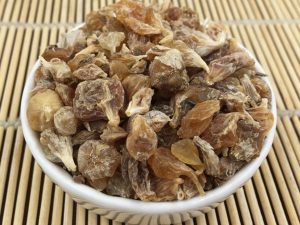
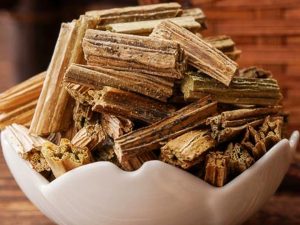
1 sheng of Sichuan pepper, 3 liang of aconite root, 1 sheng of Cimicifuga root (sliced), 30 zhu of croton seed, 30 zhu of Ligusticum root, 5 he of apricot kernels, 1.5 liang of civet cat bone, 1.5 liang of Asarum root, 0.5 liang of Angelica dahurica root, 2 liang of licorice root, and 6 liang of Atractylodes macrocephala (one formula uses 3 liang of Angelica sinensis).
Source
*Qianjin*, Volume 7.
Benefits
For cold-induced throat discomfort, stiffness and pain in the head and neck, pain in the lower back, spine, and legs; for wind-induced arthralgia, dampness-induced swelling making it difficult to bend or stretch, and inability to walk; for dizziness, nasal congestion, polyps or sores caused by aconite, body rashes accompanied by itching, scrofula, andvarious malignant sores and ulcers, as well as saddle-shaped and ox-neck-shaped swellings; and chronic cold that has solidified in the heart, abdominal pain, chest obstruction, restlessness and fullness preventing sleep, difficulty eating and drinking, coughing, regurgitation, and shortness of breath, alternating chills and fever; postpartum complications in women, and various disorders of the ears, eyes, nose, and mouth.
Instructions for Use
Coarsely crush the Aconite root, soak it in vinegar overnight, then simmer it with 4 jin of lard over low heat.First, peel one Aconite root, tie it with a string, and suspend it in the ointment. Wait until the ointment turns yellow and is fully prepared, then remove the residue. For cold-induced heart and abdominal masses, various wind-induced swellings, stiffness in the neck, waist, and spine, and hemiplegia with loss of sensation, rub the affected areas with this ointment once daily; for boils, malignant sores, fistulas, and scrofula, warm the ointment in your hands and rub it on the affected areas; for deafness, take an amount the size of a soybean and instill it into the ear.For eye pain caused by heat injury, where a faint, pearly-white opacity appears like a pearl over the pupil, preventing vision, take an amount the size of a glutinous rice grain, apply it to the white part of the eye, and have the patient cover it with their hand. It will be cured in a short while; then wash it off with water, and vision will return to normal. Avoid exposure to drafts; normal activities may resume after 30 days;For pain inside the nose, take an amount the size of a soybean and place it inside the nose, then rub the area; for toothache caused by decay, wrap an amount the size of a soybean in cotton, apply it to the aching tooth, and bite down on it; for stroke, resulting in a lopsided face, nose, or mouth, rub the affected area; if walking in the early morning or at night, to ward off frost and mist, or if eyebrows and eyelashes fall out, wash frequently with iron-infused water and rub the area with this ointment.
Copyright: Excerpt from *Qianjin*, Volume 7., Copyright belongs to the Original Author and all original sources, This article was shared by DeDe on August 31, 2026, Please credit the source and include a link to the original article when reposting.
Terminology Proofreading: [Cheng Bo] | August 31, 2026 Reviewed by: [Wang Zhongxiang, Associate Chief TCM Physician (China)] | August 31, 2026
Correct Content Errors: Errors may occur during the writing, editing, translation, and publication of website content. If you find any errors or inaccurate information in this article, please feel free to Contact Us to report them, and we will correct them promptly.
FDA Disclaimer: The descriptions of the efficacy of Chinese herbal medicines, herbal teas, decoctions, and formulas, as well as the content on Traditional Chinese Medicine (TCM) diagnostic theory and traditional TCM therapies contained on this site, are intended solely for the purpose of popularizing TCM culture and serving as an educational reference; they do not constitute medical diagnosis or treatment advice. Please do not attempt to use these products on your own without proper guidance. These statements have not been evaluated by the Food and Drug Administration. This product is not intended to diagnose, treat, cure, or prevent any disease. If you are experiencing any physical discomfort, please consult a licensed healthcare professional and seek treatment at a reputable medical institution. This platform assumes no responsibility for any consequences resulting from the use of herbs or formulas by any individual based on the information provided on this site. Please read Medical Disclaimer.
Grand Tutor’s White Ointment,For cold-induced throat discomfort, stiffness and pain in the head and neck, pain in the lower back, spine, and legs; for wind-induced arthralgia, dampness-induced swelling making it difficult to bend or stretch, and inability to walk; for dizziness, nasal congestion, polyps or sores caused by aconite, body rashes accompanied by itching, scrofula, andvarious malignant sores and ulcers, as well as saddle-shaped and ox-neck-shaped swellings; and chronic cold that has solidified in the heart, abdominal pain, chest obstruction, restlessness and fullness preventing sleep, difficulty eating and drinking, coughing, regurgitation, and shortness of breath, alternating chills and fever; postpartum complications in women, and various disorders of the ears, eyes, nose, and mouth.