
Tiger’s Liquid Ointment,From *Special Teachings on Ophthalmology*.,For internal eye disorders causing tearing in the wind or cold, photophobia, and blurred vision; or for pterygium covering the cornea, red and white opacities, and corneal ulcers; as well as acute conjunctivitis, or long-standing cloud-like opacities obscuring vision—where the patient cannot walk and sees only human silhouettes, such as a person in white clothing walking by—and cases where blood has accumulated and hardened on the cornea.
Tiger’s Liquid Ointment
Formulas Name : Tiger’s Liquid Ointment
Chinese Name : 虎液膏
Drug Formulation
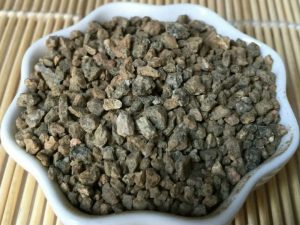
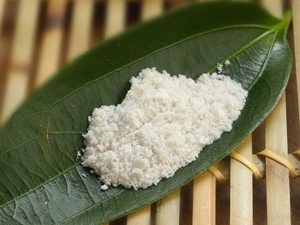
8 liang of high-quality sheep’s brain calamine (crushed to the size of a lotus seed, with 1 fen as the standard weight). Place it in a new copper pot filled with children’s urine, soak for 49 days, strain out the old urine, then add fresh children’s urine and simmer for the duration of one incense stick. When a salty-sour taste is detected, no further simmering is needed; do not overcook.Grind into a fine powder. Place the medicine on a large piece of earthenware shard and calcine over a hard charcoal fire for the duration of one incense stick. The zinc oxide will gradually turn the color of pine pollen; remove it carefully).
Source
From *Special Teachings on Ophthalmology*.
Processing
Take one portion of the above medicine, boil it three times in ginger juice, let it dry, grind it finely, sift it, and store it in a porcelain jar; ensure no air escapes.
Benefits
For internal eye disorders causing tearing in the wind or cold, photophobia, and blurred vision; or for pterygium covering the cornea, red and white opacities, and corneal ulcers; as well as acute conjunctivitis, or long-standing cloud-like opacities obscuring vision—where the patient cannot walk and sees only human silhouettes, such as a person in white clothing walking by—and cases where blood has accumulated and hardened on the cornea.
Instructions for Use
Apply topically to the eyes.

Tiger’s Liquid Ointment,For internal eye disorders causing tearing in the wind or cold, photophobia, and blurred vision; or for pterygium covering the cornea, red and white opacities, and corneal ulcers; as well as acute conjunctivitis, or long-standing cloud-like opacities obscuring vision—where the patient cannot walk and sees only human silhouettes, such as a person in white clothing walking by—and cases where blood has accumulated and hardened on the cornea.