
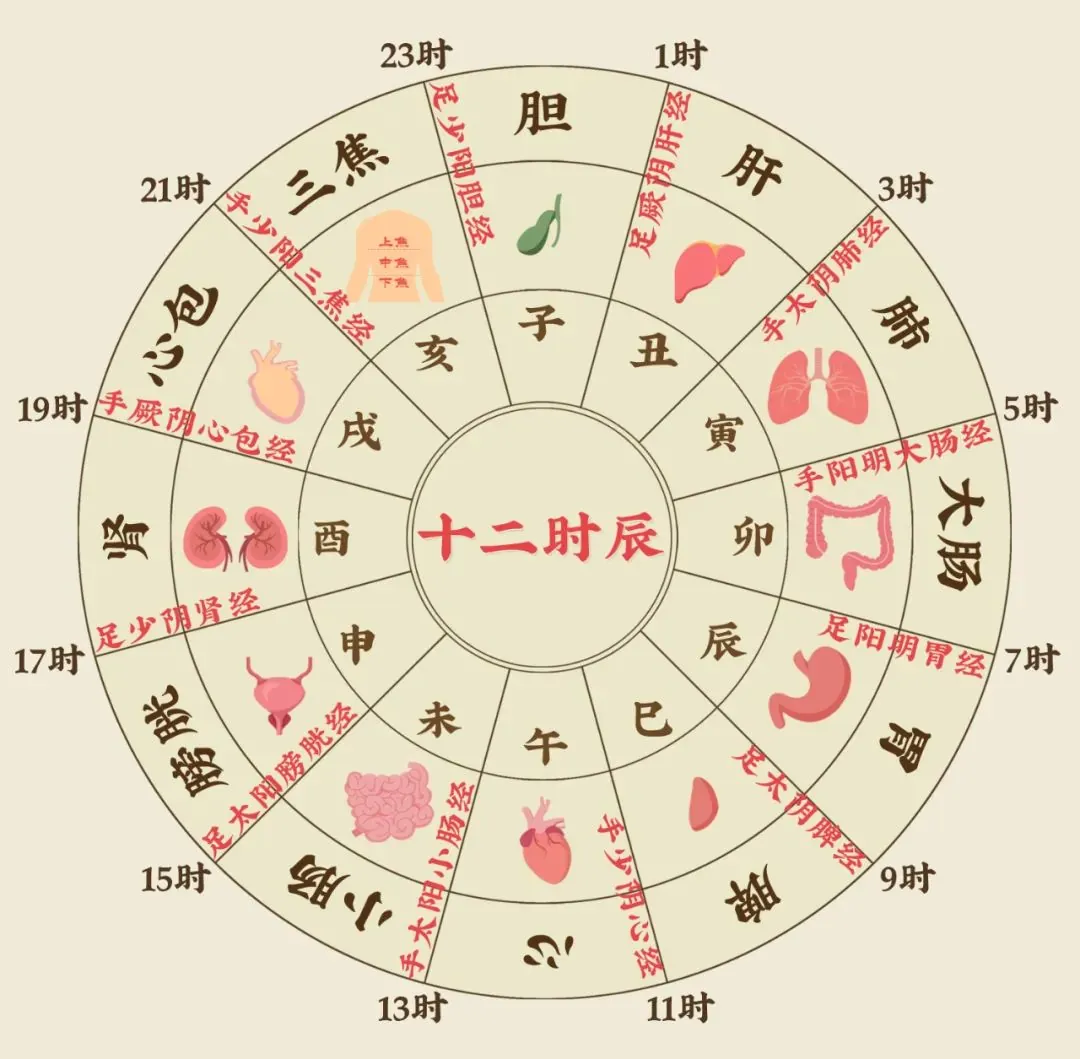
Chinese body clock, The human body is like a precisely functioning biological clock; the twelve hours of the day correspond to the patterns of qi and blood circulation within the body’s meridians and internal organs. At the core of the wisdom of the Zi-Wu Flow in Traditional Chinese Medicine lies the concept of “harmony between heaven and humanity”—living in harmony with the seasons and following the body’s natural rhythms is the simplest and most effective way to maintain health.
The ancient principle of “rising with the sun and resting with its setting” represents the ultimate embodiment of this law. Each hour is governed by a specific meridian that directs the circulation of qi and blood within the internal organs. By making slight adjustments to one’s daily routine, diet, and self-care to align with the body’s natural rhythm, one can harmonize qi and blood, nourish the internal organs, and strengthen vital energy, thereby maintaining the body in a consistently stable and healthy state.
This 12-Hour Wellness Guide breaks down the key wellness principles for each hour of the day. The tips are simple and easy to follow, and sticking with them over the long term will yield significant health benefits.
Zi Hour–Yin Hour (11:00 PM–5:00 AM)
Deep Sleep in the Middle of the Night: Nourishing Yang and Protecting the Organs
This period marks the key time when the body’s yang energy first emerges and the internal organs undergo repair. Deep sleep is the core principle of health preservation; only through restful sleep can the gallbladder, liver, and lungs successfully complete the transformation and circulation of qi and blood, as well as detoxification and repair.
Zi Hour (11:00 PM–1:00 AM)
The Gallbladder Meridian is Active: Nourish Yang and Foster Growth
Physical Condition: The Gallbladder Meridian governs the circulation of qi and blood; yang energy begins to emerge, and the body officially enters a phase of self-repair.
Key Practice: Maintain deep sleep to allow gallbladder qi to flourish peacefully, thereby storing vital energy for the body.
Helpful Tip: Put away electronic devices before 10:30 PM, dim the lights, and create a quiet, comfortable sleeping environment to guide your body into rest mode.
Chou Hour (1:00–3:00 AM)
Liver Meridian Dominates: Storing Blood and Detoxifying
Physical Condition: The liver begins the process of storing blood and eliminating toxins; this is the prime time for the internal organs to metabolize toxins and purify the blood.
Key Practice: Maintain a deep sleep to allow the liver to function efficiently without external interference. Long-term irregular sleep patterns can easily lead to issues such as a dull complexion, dry eyes, and emotional stagnation.
Helpful Tip: Avoid eating late-night snacks before bed to reduce the digestive burden on your internal organs; soak your feet in warm water before bed to promote the return of qi and blood, which supports liver health.
Hour of the Tiger (3:00–5:00)
The Lung Meridian is Active, Distributing Qi and Blood
Physical Condition: The Lung Meridian governs the distribution of qi and blood throughout the body, delivering clear, nourishing blood to every part of the body. This is a crucial period for the lungs’ self-repair.
Key Practice: Maintain a peaceful, deep sleep to ensure the smooth flow of qi and blood.
Helpful Tip: Keep your bedroom well-ventilated and avoid direct exposure to cold drafts; if you happen to wake up, calm your mind and regulate your breathing. Perform the “Red Dragon Stirring the Sea” exercise to generate body fluids, moisten the lungs, and nourish lung qi.
Mao Hour–Si Hour (5:00–11:00)
Rise with the Sun: Eliminate Impurities and Replenish Energy
As daylight breaks, the body’s yang energy gradually rises, and the internal organs enter “working mode.” The focus at this time is on eliminating metabolic waste, replenishing nutrients, and allowing the body to store energy for the day’s activities.
Mao Hour (5:00–7:00)
The Large Intestine Meridian is active; eliminate waste and promote bowel movement
Physical Condition: The Large Intestine Meridian is abundant in qi and blood, making this the optimal time for the body to eliminate metabolic waste accumulated overnight.
Key Practices: Drink a glass of warm water upon waking, develop a regular bowel movement routine, promptly eliminate waste, and maintain intestinal regularity.
Helpful Tip: Place a low stool under your feet while using the restroom; this aligns with the physiological structure of the intestines and makes elimination easier; Consistently going to the bathroom at the same time each day helps establish a natural bowel rhythm.
Chen Hour (7:00–9:00)
The Stomach Meridian is Active: Enjoy a Nutritious Breakfast
Physical Condition: The spleen and stomach’s transport and transformation functions reach their peak, and the stomach’s digestive and absorptive capacity is at its strongest.
Key Practice: Eat a balanced, nutritious breakfast on time to replenish energy for the day’s work and daily activities.
Helpful Tip: Focus on warm foods for breakfast; choose gentle options such as millet congee, hot soy milk, eggs, and multigrain buns to nourish the yang energy of the spleen and stomach. Limit consumption of raw, cold, or greasy foods to avoid damaging the stomach’s yang energy.
Si Hour (9:00–11:00)
The Spleen Meridian is Active: Transporting and Transforming Qi and Blood
Physical Condition: The Spleen Meridian governs the transformation and transportation of food and drink, converting the subtle nutrients from breakfast into qi, blood, and body fluids, which are then distributed throughout the body.
Key Practice: Drink an appropriate amount of water and engage in moderate physical activity to support the spleen and stomach’s transformative functions.
Helpful Tip: Get up and move around during breaks from work or study to avoid damaging the spleen through prolonged sitting; simple stretches, chest expansions, and standing on tiptoes can all promote the circulation of qi and blood in the body and enhance the efficiency of the spleen and stomach’s transformative functions.
Noon – Wei Hour (11:00–15:00)
Midday Breathing Exercises: Nourish the Heart and Strengthen the Spleen
Noon is the time of day when yang energy is at its peak and marks a critical juncture in the alternation of yin and yang. The focus at this time is on nourishing the heart and calming the mind, while also allowing the small intestine to smoothly complete nutrient absorption, bridging the previous and following phases to ensure the proper functioning of the internal organs.
Wu Hour (11:00–13:00)
The Heart Meridian Reigns: Nourish the Heart with a Short Nap
Physical Condition: The Heart Meridian is dominant; yang energy reaches its peak and then begins to gradually subside, making this a crucial time for nourishing the heart and calming the mind.
Key Practices: Eat lunch on time, followed by a 15–30-minute nap to restore energy and soothe the mind.
Helpful Tips: Eat until you are about 70–80 percent full at lunch; focus on light, nutritionally balanced meals to reduce the burden on your digestive system. When napping, lie flat as much as possible to avoid putting pressure on your heart and eyes.
Wei Hour (1:00 PM–3:00 PM)
Small Intestine Meridian is Active: Separating the Clear from the Turbid
Physical Condition: The small intestine receives the food and fluids from the stomach and begins the process of “separating the clear from the turbid,” fully absorbing essential nutrients while passing waste downward.
Key Practices: Drink an appropriate amount of water and engage in gentle physical activity to promote intestinal digestion and nutrient absorption.
Helpful Tip: After waking from your nap, do not engage in strenuous activity immediately; rise slowly; Gently massage your abdomen in a clockwise direction to help the Small Intestine Meridian better carry out its transport and transformation functions.
Shen Hour – You Hour (3:00 PM – 7:00 PM)
Nourish Vitality in the Afternoon; Detoxify and Strengthen the Kidneys
In the afternoon, the body’s yang energy gradually withdraws inward. At this time, the Bladder Meridian takes the lead in detoxification, while the Kidney Meridian begins to store essence and energy. The focus is on accelerating metabolism, protecting kidney energy, and storing energy for the body.
Shen Hour (15:00–17:00)
The Bladder Meridian is Active; Drink Water to Detoxify
Physical Condition: The Bladder Meridian serves as a vital detoxification channel for the body. Metabolic efficiency is high during this period, making it the optimal time for detoxification throughout the day.
Key Practices: Drink plenty of water and urinate promptly to accelerate the elimination of metabolic waste through urine.
Helpful Tip: This is a highly productive time for work and study. Set an alarm to remind yourself to drink water regularly; never hold in urine to prevent the buildup of metabolic waste that could damage your internal organs. It’s best to drink lukewarm water in small sips throughout the day.
You Hour (5:00 PM–7:00 PM)
The Kidney Meridian is Active; Storing Essence and Qi
Physical Condition: The Kidney Meridian is active, and the kidneys begin to store essence and qi. As the foundation of one’s innate constitution, nurturing the kidneys at this time directly impacts the body’s reserves of vital energy.
Key Practice: Eat a light, easily digestible dinner to reduce physical exertion, ease the burden on the internal organs, and support the kidneys in storing essence and energy.
Helpful Tip: You may incorporate black-colored ingredients such as black rice, black beans, black wood ear mushrooms, and black sesame seeds into your dinner. According to Traditional Chinese Medicine, “black enters the kidneys,” which helps nourish kidney energy. Avoid overeating at dinner to prevent your digestive system from still being active before bedtime.
Xu Hour – Hai Hour (7:00 PM – 11:00 PM)
Relax as Night Falls; Calm the Organs and Prepare for Sleep
The energy of heaven and earth returns to tranquility, the body’s yang energy further withdraws inward, and yin energy gradually becomes dominant. At this time, the focus is on relaxing the body and mind, soothing the emotions, and enabling the five viscera and six bowels to gradually enter a state of rest, preparing for deep sleep at night.
Xu Hour (7:00 PM–9:00 PM)
The Pericardium Meridian is Active; Regulate Emotions
Physical Condition: The Pericardium Meridian serves as the “outer guardian” of the heart, responsible for protecting the heart and regulating emotions. Emotional fluctuations during this period directly affect heart function.
Key Practices: Relax both body and mind, maintain a calm and joyful state of mind, and avoid negative emotions such as tension, irritability, and anxiety.
Helpful Tip: Take a slow walk outdoors, sit quietly at home to meditate, or have a relaxed chat with family members. Avoid strenuous exercise and extreme emotional reactions; reduce time spent scrolling on your phone or using electronic devices to allow your mind to gradually settle.
Hai Hour (9:00 PM–11:00 PM)
The Triple Energizer Meridian is Active, Nourishing All Meridians
Physical Condition: The Triple Energizer Meridian channels qi throughout the body, circulates bodily fluids, and connects the five zang organs and six fu organs. During this period, when the Triple Energizer Meridian is active, it is a crucial time for nourishing all the meridians of the body.
Key Practice: Calm your mind in preparation for sleep, allowing your body and mind to relax completely, laying the groundwork for the initial rise of yang energy during the Zi Hour.
Helpful Tips: Soak your feet in warm water for 10–15 minutes and massage the Yongquan acupoint on the soles of your feet to direct fire downward, calm the mind, and promote sleep. Put away all electronic devices; you may listen to soothing music or read a light book to guide your body into a state of readiness for sleep.
Living in harmony with the seasons has never been about rigid rules, but rather a healthy lifestyle that aligns with nature and respects the body. There’s no need to deliberately pursue complicated wellness practices; simply make minor adjustments to your daily routine, diet, and emotions to align with your body’s 24-hour rhythm. By maintaining this consistently over the long term, you can ensure the smooth flow of qi and blood, the harmony of your internal organs, and an abundance of vital energy. May we all learn to read our Chinese body clock and, through our daily meals and the changing seasons, cultivate a state of vitality, well-being, and harmony.