
Introduction to Traditional Lung-Supporting Soup
Luo Han Guo (Siraitia grosvenorii) stewed pig lung is a classic traditional food widely popular in the Lingnan region. Combining the sweet, moistening nature of Luo Han Guo with the nourishing properties of pig lung, it serves as both a flavorful soup and a support for respiratory wellness. This soup has a long history, deeply rooted in Cantonese soup culture, and is often used traditionally as a daily wellness-supporting diet during the dry autumn and winter seasons or after hazy weather.
Luohanguo (monk fruit, *Siraitia grosvenorii*) is honored as the “immortal fruit”. It supports the body’s natural cooling and respiratory moisture, and encourages digestive regularity. Pig lung, according to the traditional principle of organ support, can nourish lung function and soothe occasional cough. When simmered together, the soup is clear and transparent, with a naturally sweet yet non-greasy taste, suitable for all ages. This soup is not only a home-style delicacy on the dining table but also embodies the traditional Chinese health wisdom of “food and nourishment sharing the same origin” and “imbuing nourishment in food.”
Benefits of Traditional Soup
The main benefit of Luo Han Guo (Siraitia grosvenorii / Monk Fruit) stewed with pig lung is to support respiratory comfort and maintain moisture balance. Luo Han Guo is rich in mogrosides, which are 300 times sweeter than sucrose but do not raise blood sugar, and also have properties that promote cooling and support throat comfort. Pig lung can help maintain respiratory vitality and moisture. The combination of the two can help soothe occasional dry throat and occasional cough due to dryness.
Additionally, this traditional soup supports digestive wellness and immune function. The dietary fiber in *Siraitia grosvenorii* (monk fruit) supports digestive movement and helps the body’s natural cooling processes; pig lung provides protein and various trace elements, which support respiratory tissue health and the body’s natural defenses. For individuals who are long-term smokers, work in dusty environments, or frequently use their voice, regular consumption of this soup can positively contribute to respiratory wellness and throat comfort.
The Role of Traditional Chinese Medicine
Analysis of TCM Principles
From the perspective of Traditional Chinese Medicine theory, Luo Han Guo (Siraitia grosvenorii, Monk Fruit) is sweet in flavor and cool in nature, supporting the body’s natural cooling and respiratory moisture, as well as encouraging digestive regularity. Its sweet and cool nature allows it to both support the body’s cooling processes and nourish respiratory tissues, making it a valued herb for respiratory support. Pig lung is sweet in flavor and neutral in nature, supporting the respiratory system, with the function of nourishing lung function and soothing occasional cough. Following the principle of organ support, it directly nourishes the respiratory system.
When used in combination, one supports cooling while the other nourishes: *Siraitia grosvenorii* (monk fruit) promotes cooling and supports respiratory ease, while pig lung nourishes respiratory vitality and moisture. This approach supports without overwhelming, and nourishes without imbalance. The decoction as a whole embodies a balanced compatibility principle, making it especially suitable for seasonal wellness support when respiratory comfort is needed. For conditions such as occasional throat dryness due to environmental factors, this soup provides the dual effects of cooling and nourishing, supporting overall respiratory well-being.
Recommended For
Luo Han Guo (Siraitia grosvenorii, monk fruit) stewed with pig lung is especially suitable for individuals experiencing occasional cough, dry throat, or respiratory discomfort. When symptoms such as dry throat, hoarse voice, or thirst are present, consuming this soup can support cooling, soothe the throat, and help maintain clear breathing. Long-term smokers, those with occasional throat discomfort, and individuals frequently working in dusty or oily smoke environments may benefit from drinking this soup once or twice per week to support respiratory wellness.
In addition, individuals experiencing occasional dryness due to seasonal changes or indoor heating, as well as professionals who rely heavily on their voices—such as teachers, livestreamers, and singers—can benefit from this soup to nourish respiratory moisture and soothe the throat. For older adults whose respiratory function gradually declines, moderate consumption of Luo Han Guo (Siraitia grosvenorii) stewed with pig lung can help support natural defenses, promote overall vitality, and maintain respiratory comfort, provided there is no acute respiratory discomfort.
Precautions
Individuals with occasional digestive sensitivity or loose stools should consume Luo Han Guo (Momordica grosvenori) stewed with pig lung with caution. Luo Han Guo is cool in nature, and although pig lung is neutral, the overall soup tends to be cooling and moistening. In those with a tendency toward digestive discomfort, consumption may occasionally aggravate such symptoms. People who frequently feel cold or have cold extremities may also wish to avoid long-term or excessive intake.
This soup is not recommended for those experiencing acute respiratory symptoms with chills, as the cool and moistening nature of Luo Han Guo (Siraitia grosvenorii, monk fruit) may not be appropriate. For individuals managing blood sugar levels, although Luo Han Guo has extremely low sugar content, the pork lung soup may produce some fats and purines during the simmering process. It is recommended to consume with discretion under the guidance of a healthcare professional and to pay attention to total caloric intake.
Ingredient formula proportions
The standard recipe for making Siraitia grosvenorii (Monk Fruit) and Pig Lung Soup is as follows: 500 g fresh pig lung, 1/2 to 1 whole Siraitia grosvenorii (approximately 10–15 g), 10 g South Apricot Kernel (Prunus armeniaca var. ansu), 5 g North Apricot Kernel (Prunus armeniaca L. var. ansu Maxim. / Prunus sibirica L.), 3 g Tangerine Peel (Pericarpium Citri Reticulatae), 5 slices fresh ginger (Zingiber officinale), and 2 honey dates (Ziziphus jujuba). This formula yields 3–4 servings. The soup is sweet, moistening, and smooth in flavor, with a balanced and mild nature.
If occasional respiratory congestion is more pronounced, you may appropriately increase Luo Han Guo (Siraitia grosvenorii, Monk fruit) to one whole fruit (approx. 20g), and add Bai He (Lilium brownii, Lily bulb) 15g to support respiratory moisture. If throat discomfort is more noticeable, combine with 2 pieces of Pang Da Hai (Sterculia lychnophora, Boat-fried Sterculia seed) and decoct together. Special caution: both southern and northern apricot kernels (Prunus armeniaca, Apricot seed) are slightly toxic; dosage must be strictly controlled and the decoction time must be sufficient to destroy the toxins. All herbs can be obtained from reputable sources; it is recommended to select dry, mold-free, high-quality ingredients.
Preparation method
Preparation
Processing the pig lung is the key to the success of this traditional soup. Place the pig lung’s trachea over a faucet, repeatedly fill it with water and squeeze until the lung turns white and no blood seeps out, thoroughly removing blood impurities and foam. Then cut it into pieces about 5 cm long and 3 cm wide, blanch in boiling water for 3 minutes, remove and rinse under clean water, and drain. Wash the Luo Han Guo (Siraitia grosvenorii) and crack it open to remove the pulp (the shell can also be added to the soup). Soak the Chen Pi (tangerine peel) in warm water in advance until soft, and scrape off the white pith.
Cooking steps
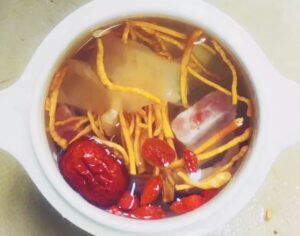
Take an earthenware or ceramic soup pot and add approximately 2500 ml of water. Place the prepared pig lung pieces, Luo Han Guo (Siraitia grosvenorii, including shell and pulp), sweet apricot kernels (Prunus armeniaca), bitter apricot kernels (Prunus armeniaca var. ansu), tangerine peel (Citri Reticulatae Pericarpium), fresh ginger slices, and honey dates (Ziziphus jujuba) into the pot. Bring to a boil over high heat, then skim off any foam that rises to the surface. Reduce the heat to low and gently simmer for 1.5 to 2 hours, until the pig lung is tender, the broth turns thick and milky white, and the aroma is rich. Before turning off the heat, season with a small amount of salt (note: Luo Han Guo is naturally sweet, so use only a little salt). Stir well, then ladle out and serve.
Drinking Tips
1. Siraitia grosvenorii (monk fruit) and Pig Lung Soup is recommended to be taken warm one hour after meals, 200 to 250 ml per serving, 2 to 3 times per week. The pig lung in the soup may be consumed with the meal, but not in excess, as pig lung is relatively high in cholesterol; individuals with hyperlipidemia should reduce their intake accordingly.
2. This soup is cool in nature and should not be consumed on the same day with cold-natured foods such as mung bean, bitter gourd, or crab, to avoid excessive cooling effect. Adding 3 to 5 slices of Astragalus (Huangqi, *Astragalus membranaceus*) or a few Red Dates (Hongzao, *Ziziphus jujuba* ) to the soup can help balance its nature and support vitality, making it suitable for those seeking energy support.
3. The remaining soup should be refrigerated and consumed within 24 hours. When reheating, bring it to a full boil, but avoid repeated heating multiple times to prevent loss of active constituents. If symptoms worsen, such as increased coughing or persistent fever, discontinue use immediately and seek medical attention. This soup should not be relied upon as a substitute for medical treatment.
I’ve always been curious about using monk fruit in savory soups—this sounds like such a comforting recipe for dry weather! My grandmother used to make similar lung-nourishing broths, but she added snow fungus. Definitely trying this twist with luo han guo. Thanks for sharing the TCM wisdom!
I love that this soup uses monk fruit instead of sugar—such a smart way to get natural sweetness with lung benefits. My grandma always made a similar version when we had coughs. Does it work well for dry coughs too, or more for phlegm? Definitely trying this recipe this weekend!
I’ve always loved luo han guo for its natural sweetness, but never thought to pair it with pig lung. This sounds like a perfect remedy for the dry cough I’ve been dealing with! Can’t wait to give it a try.
モンクフルーツと豚肺のスープ、初めて聞きました!肺のケアに良いなら試してみたいです。漢方の知恵って奥深いですね。味も気になるのでレシピを見て作ってみます。
I’ve always been curious about TCM soups but never tried pig lung before. This recipe sounds surprisingly comforting—especially the way monk fruit balances the richness. Perfect timing for the dry season here! Anyone have tips on sourcing fresh pig lung?