
Introduction to Medicinal Cuisine (Yaoshan)
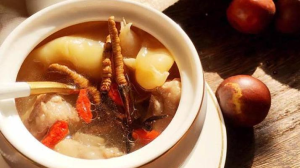
Cordyceps, Tremella, and Lotus Seed Soup is a classic nourishing health-promoting soup originating from the traditional Chinese medicinal dietary culture. Its core ingredients are Ophiocordyceps sinensis (Cordyceps), Tremella fuciformis (Yin’er), and Nelumbo nucifera (Lotus Seeds). These three are all superior substances that are both food and medicinal ingredients. After scientific combination, the soup has a clear broth and a sweet, moist taste, offering dual value in dietary support and support for the body’s natural balance. This soup is especially suitable for consumption during dry autumn-winter seasons or when the body feels run-down. It gently supports the health of the five major organ systems (Wu Zang) without being heavy, making it a representative example of the “clear-nourishing” (Qing Bu) approach praised by health cultivators throughout history.
From a food property perspective, Cordyceps sinensis (Dongchongxiacao) is sweet in flavor and neutral in nature, entering the Lung and Kidney Meridians, and is a valuable substance that supports balanced nourishment of Yin and Yang. Tremella fuciformis (Yin’er), also known as “white fungus,” is sweet and bland in flavor with a neutral nature, and is known for its ability to support Yin and moisten the Lungs. Nelumbo nucifera seeds (Lianzi) are sweet and astringent in flavor, neutral in nature, and help support the Spleen in maintaining normal bowel function, as well as support Kidney health and the preservation of essential substances. The combination of these three ingredients forms a classic “Mutual Generation of Metal and Water, Harmonious Regulation of Spleen and Kidney” formula structure, which addresses the core needs of Lung-Kidney Yin nourishment while also supporting the Spleen and Stomach in their digestive and transformative functions, allowing for a nourishing effect without causing stagnation, and a moistening effect without inducing coldness.
Health Benefits of Herbal Cuisine
This soup primarily supports the functions of nourishing Lung Yin and moistening the Lungs, as well as tonifying Kidney Essence and benefiting vitality. It helps maintain respiratory comfort for occasional dry cough with minimal phlegm, throat dryness or itchiness, and hoarseness associated with Lung Yin Deficiency. Additionally, it promotes healthy lower back and knees, supports clear-headedness and auditory comfort, and helps maintain normal nighttime urinary frequency related to Kidney Essence deficiency. Regular consumption may also help maintain skin hydration, hair vitality, and overall youthful vitality from within.
Additionally, Cordyceps sinensis (Dongchongxiacao), Tremella fuciformis (Yin’er), and Lotus Seed Soup is also notable for its traditional use in supporting Heart health and promoting a calm spirit (known in TCM as “nourishing the Heart and calming the Shen”). The liensinine from lotus seeds and tremella polysaccharides work synergistically to help with occasional restlessness and sleep disturbances (such as difficulty falling asleep, excessive dreaming, and easy awakening) that may be associated with internal heat due to Yin Deficiency. The rich collagens and amino acids in this soup also help support immune function, aid in recovery during convalescence or after surgery, and help maintain energy levels, reducing occasional fatigue. Modern research has confirmed that cordycepin from Cordyceps sinensis and tremella polysaccharides have properties that help helps maintain oxidative stress, support a healthy inflammatory response, and modulate immune activity.
Functions of Traditional Chinese Medicine
From the perspective of TCM organ theory, Cordyceps sinensis (Chongcao) enters the Lung Meridian (LU) and Kidney Meridian (KI). It simultaneously nourishes Lung Yin and supports Kidney Yang, making it a rare substance that gently harmonizes both Yin and Yang. Tremella fuciformis (Yin’er) specifically enters the Lung Meridian (LU); its gelatinous texture helps maintain Lung moisture and supports normal fluid secretion, akin to applying a hydrating film to the Lungs. Nelumbo nucifera (Lotus seed) targets the Heart (HT), Spleen (SP), and Kidneys (KI) simultaneously, and is particularly adept at promoting the harmonious communication between the Heart and Kidneys. This allows Kidney water to ascend to the Heart and Heart fire to warm the Kidneys, thereby supporting restful sleep and a comfortable internal temperature when the Heart and Kidneys are not in harmony.
The three medicinal ingredients form a synergistic effect of “mutual reinforcement between upper and lower”: Cordyceps sinensis (Dongchongxiacao) and Tremella fuciformis (Yin’er) moisten the Lung from the Upper Jiao and promote fluid production from the Middle Jiao, while Nelumbo nucifera (Lianzi) strengthens the Spleen from the Middle Jiao and secures the Kidney from the Lower Jiao. This three-dimensional pathway of action enables the entire formula to help maintain balance in cases of Lung-Kidney Yin Deficiency presenting with “upper dryness and lower deficiency” signs (such as dry mouth and lower back discomfort), as well as to support Middle Jiao harmony in cases of Spleen Deficiency with Dampness (such as poor appetite and loose stools). Therefore, the core therapeutic principle of this soup is to “moisten the Lung and nourish the Kidney, strengthen the Spleen and calm the Spirit,” which is a specific application of the TCM principles “for deficiency wellness, tonify the mother” and “Metal and Water mutually generate.”
Key Points of Formula Analysis
Among them, Cordyceps sinensis (Dongchongxia Cao) serves as the sovereign herb, leading the formula’s support for overall vitality; Tremella fuciformis (Yin’er) acts as the minister herb, enhancing the effect of helping maintain normal Lung function and fluid balance; Nelumbo nucifera (Lianzi) plays the role of assistant and envoy herb, supporting Spleen and Kidney health as well as the harmonious interaction between Heart and Kidney energies. These three herbs work together to help maintain balance of both Yin and Yang and support the harmonious functioning of the five Zang organs, making the formula particularly suitable for individuals with complex constitutional patterns such as “upper heat and lower cold” or “Yin Deficiency with Dampness.”
Suitable For
– For those with Lung and Kidney Yin Deficiency: signs of imbalance include dry cough without phlegm or scanty sticky phlegm, dry mouth and nose, night sweats, a feeling of heat in the palms, soles, and chest, as well as soreness and weakness of the lower back and knees. This pattern is especially suitable for long-term smokers or those who experience occasional throat or respiratory discomfort.
– For those experiencing occasional difficulty falling asleep, light sleep, frequent dreaming with easy awakening, accompanied by irritability, dry mouth, and warmth in the palms and soles—signs of a Yin Deficiency pattern with internal heat—this soup is designed to support the harmonious interaction between the Heart and Kidney, and to encourage a calm, settled state of mind.
Individuals in the recovery phase (e.g., post-wellness or convalescent periods) who may experience Qi and Blood Deficiency, weakened constitution, poor appetite, and fatigue due to bodily depletion—this soup provides nutritional support and helps promote the body’s natural self-repair abilities, supporting vitality during the recovery period.
– For middle-aged and menopausal women: As age increases, signs of imbalance of Yin Deficiency aging such as skin sagging, increased wrinkles, osteoporosis, hot flashes, and sweating may appear. Long-term consumption may help support healthy aging and maintain internal environment balance.
Contraindicated Populations
– For those with externally contracted Wind-Cold or Wind-Heat: when signs of imbalance such as common cold, fever, productive cough with copious sputum (especially yellow sputum), and acute sore throat are present, it is not advisable to consume nourishing medicinal foods, as this may “shut the door and detain the intruder,” making it difficult for the external pathogen to be expelled.
– For individuals with internal damp-heat pattern: manifestations include yellow greasy tongue coating, sticky sensation in the mouth, sticky and uncomfortable stools or loose stools, abdominal distension and fullness, and a heavy sensation in the body. Nourishing medicinal foods may contribute to dampness and are not recommended, as they could disrupt the body’s natural equilibrium.
– Excess Heat patterns and allergic individuals: Not suitable for those with hyperactive Stomach Fire (manifesting as bad breath, swollen gums, constipation) or hyperactive Liver Fire (headache, red eyes, irritability); contraindicated for those allergic to Cordyceps sinensis (Dongchongxiacao) or Tremella fuciformis (Yin’er); not recommended for infants and young children whose digestive systems are not fully developed.
Ingredient Formula Ratio
*Ophiocordyceps sinensis* (Dongchongxiacao / Cordyceps): 3–5 g (approximately 3–5 medium-sized specimens). Choose wild or high-quality cultivated Cordyceps that have not been sulfur-fumigated and have an intact body (with complete fruiting body and caterpillar). Specimens with a plump body and solid cross-section are preferred.
Tremella fuciformis (Snow Fungus, dried): 15 g. It is recommended to choose high-quality tremella that is pale yellow, with large and thick fruiting bodies, and free from sulfur fumigation. After soaking, its volume can expand 3–4 times.
– Nelumbo nucifera (Lianzi) (dried): 20 grams. Lotus seeds with the germ removed are preferred; those with the germ have a bitter taste but have a stronger effect in promoting a calm mind, so choose according to body constitution.
– Rock sugar: 10–15 grams (adjust according to personal taste). Rock sugar is neutral in nature and helps support digestive harmony and respiratory comfort. Do not substitute with white sugar or brown sugar, as this may reduce its intended benefits.
– Clear Water: 800–1000 ml. It is recommended to use purified water or mountain spring water. The hardness or softness of the water directly affects the taste of the soup and the extraction rate of its beneficial components.
Cooking Method
Preparation Stage
Step 1: Soak Tremella fuciformis (Silver Ear Fungus) in cold or warm water (not exceeding 40°C) for 2 to 3 hours until fully rehydrated. Remove the yellow root base, tear into small florets, and rinse repeatedly until clean. Soak Nelumbo nucifera (Lotus Seeds) in cold water for 1 hour in the same way; check and remove any remaining bitter plumules, then rinse and drain. Gently brush the surface of Cordyceps sinensis (Caterpillar Fungus) with a soft brush to remove sediment; avoid prolonged rinsing with water to preserve beneficial compounds.
Simmering Stage
Step 2: Take a clay pot or ceramic stewing jar, add the soaked Tremella fuciformis (Yin’er) and Nelumbo nucifera (Lianzi), then pour in 800 ml of clean water. Bring to a boil over high heat, then reduce to low heat and simmer slowly for 40 minutes, until the Tremella becomes thick and gelatinous and the Lotus seeds become soft and tender. Stir frequently during the process to helps maintain sticking.
Step 3: After the Tremella and lotus seed soup base has been simmered to completion, add the cleaned Cordyceps (Dongchongxiacao). Continue simmering on low heat for 15–20 minutes. Note that Cordyceps should not be cooked for too long, as this may destroy its active components. Finally, add rock sugar and stir until dissolved, then turn off the heat.
Step 4: While the soup is still hot, ladle it into bowls. You may sprinkle a small amount of Lycium barbarum (Goji berry) on top as a garnish (optional, not required). Allow the soup to cool to a warm temperature before drinking for the best flavor.
Tips for Drinking
1. Optimal Consumption Time and Frequency: It is recommended to consume warm on an empty stomach in the morning or one hour before bedtime for better absorption. Drinking 2–3 times per week is sufficient to support general well-being. Do not consume continuously for more than three weeks; a one-week interval may be taken before resuming.
2. Utensil Selection and Heat Control: Always use earthenware (sand pot), ceramic stewing pot, or glass pot. Avoid metal cookware such as iron or aluminum pots to helps maintain chemical reactions that may affect the efficacy of the herbs. Maintain a low simmer throughout the process; avoid high heat, as it can damage the gelatinous components and active ingredients.
3. Flexible adjustment and storage: If you find the broth bland, you may add a small amount of Ziziphus jujuba (Hongzao, 3–5 pieces) or Dimocarpus longan (Longyanrou, longan aril) to simmer together, which adds a sweet aroma and supports blood nourishment. Any leftover soup should be stored in a sealed container in the refrigerator, and consumed within 24 hours without repeated heating. If you experience occasional loose stools or digestive upset, reduce the amount of Nelumbo nucifera (Lianzi, lotus seed) or temporarily discontinue its use.

I’ve been looking for a natural way to support my lungs and kidneys—this soup sounds perfect! I love that it uses cordyceps and tremella together. Will definitely try making it. Do you have any tips for sourcing good quality cordyceps?
冬虫夏草と銀耳、蓮子のスープ、気になってました!肺と腎を養うって嬉しいですよね。寒い季節にぴったりな薬膳スープ、私も作ってみようかな。レシピも教えてほしいです!
This soup sounds amazing! I love how traditional Chinese medicine combines food and healing. Cordyceps and tremella are such powerhouse ingredients—perfect for the colder months. Definitely adding this to my wellness routine. Thanks for sharing!
This sounds like such a comforting and nourishing soup! I love how Traditional Chinese Medicine combines everyday ingredients for deep health benefits. Cordyceps and tremella are both powerhouse ingredients—great for lung support and skin too. Definitely saving this recipe for chilly evenings. Thanks for sharing!
Klingt richtig lecker und gesund! Cordyceps und Silberohr sind ja echt wertvolle Zutaten in der TCM.