Mimosa, a name in traditional Chinese medicine. It refers to the dried whole herb of the legume plant Mimosa pudica L. It is primarily distributed in East China, South China, and Southwest China. It has the effects of clearing heat, promoting urination, resolving phlegm, relieving coughs, calming the mind, and alleviating pain. It is primarily used to treat colds, high fever in children, acute conjunctivitis, bronchitis, gastritis, diarrhea, and urinary tract stones.
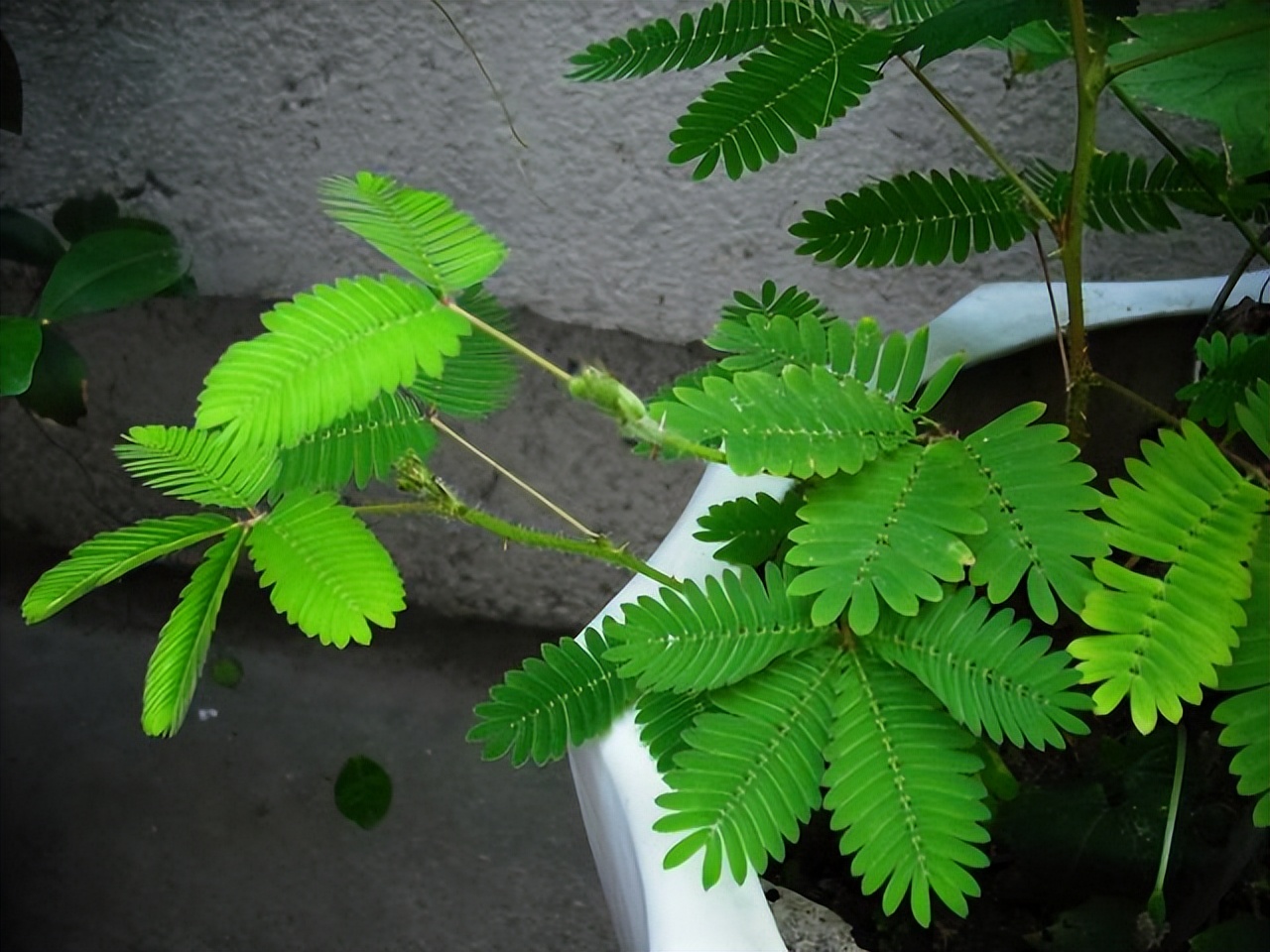
Sensitive Plant
Mimosa, a name in traditional Chinese medicine. It refers to the dried whole herb of the legume plant Mimosa pudica L. It is primarily distributed in East China, South China, and Southwest China. It has the effects of clearing heat, promoting urination, resolving phlegm, relieving coughs, calming the mind, and alleviating pain. It is primarily used to treat colds, high fever in children, acute conjunctivitis, bronchitis, gastritis, diarrhea, and urinary tract stones.
Chinese Name : 含羞草
Latin Name : Mimosa pudica L.
Aliases : Shy Grass, Shy Plant, Hehu Grass, Shy-Ugliness Grass, Wangjiangnan, Fear-of-Wife Grass, Sensitive Grass
Authentic Producing Area : Eastern China, Southern China, Southwest China
Nature, Flavor & Meridian Tropism : Sweet and astringent in taste; slightly cold in nature; enters the Heart, Liver, Stomach, and Large Intestine meridians
Benefits & Efficacy
Benefits
Clears heat and promotes urination; resolves phlegm and relieves cough; calms the mind and alleviates pain.
Indications
Used for the common cold, high fever in children, acute conjunctivitis, bronchitis, gastritis, diarrhea, and urinary tract stones.
Usage and Dosage
15–30 g.
Precautions
This product has anesthetic effects; do not exceed the recommended dosage when taken internally. Contraindicated for pregnant women.
Chemical Constituents
It primarily contains mimosa alkaloids, mimosa glycosides, proteins, tannins, 2-O-rhamnosyl-huperzine, and 2-O-rhamnosyl-isohuperzine; it also contains 5,3,4-O-β-D-glucoflavanol carbon glycoside.
Pharmacological Actions
1. Expectorant effect: Exhibits antitussive and mild expectorant effects. 2. Antimicrobial activity: Exerts strong inhibitory effects on Staphylococcus aureus, Staphylococcus albus, and Haemophilus influenzae; also inhibits Asian influenza A virus and rhinovirus type 17. 3. Antispasmodic effects: It counteracts histamine-induced bronchospasm in guinea pigs and acetylcholine-induced spasms in isolated rabbit intestines.
Relevant Discussions
1. *Essentials of the Properties of Raw Herbs*: Relieves pain and reduces swelling.
2. *The Origin of Materia Medica*: Applied topically to sores.
3. *Record of Medicinal Plant Collection in Lingnan*: Treats eye inflammation and pain.
4. *Nanning Medicinal Plant Compendium*: Clears liver fire; treats childhood malnutrition and liver fire rising excessively; used topically to treat painful sores and ulcers.
5. *Manual of Common Chinese Herbal Medicines* (Guangzhou Military Region): Calms the mind and induces sedation.
6. *Practical Chinese Herbal Medicines*: Clears heat and drains dampness. Treats deep abscesses, enteritis, gastritis, hernias, and malnutrition in children.
Applications
Clinical Applications
1. For acute hepatitis: 15–60 g of the whole mimosa plant, decocted in water and taken orally. (*Selected Compendium of Guangxi Materia Medica*)
2. For acute diarrhea: 60 g of mimosa, decocted in water and taken orally. (*Qingdao Handbook of Chinese Herbal Medicine*)
3. For gastroenteritis and urinary tract stones: 15 g of mimosa, 10 g of akebia, 10 g of sea sand, and 15 g of plantain herb; decoct in water and take orally. (*Chronicle of Sichuan Chinese Medicinal Herbs*)
4. For neurasthenia and insomnia: 9 g of mimosa and 30 g of night-blooming cereus; decoct in water and take orally. (*Anhui Chinese Medicinal Herbs*)
Processing & Preparation
Harvesting & Processing
Harvest in summer and fall; remove impurities, cut into sections, wash thoroughly, and sun-dry.
Storage Methods
Store in a dry place. Protect from mold and insect infestation.
Crude Drug Identification
Identification
1. The powder of this product is brownish-yellow or yellowish-green. Spines are unicellular, colorless or yellowish-brown, 120–850 μm long, and 30–65 μm in diameter. The cells on the underside of the leaves have undulating transverse walls. Stomata are paracytic. Fibers are mostly bundled; the surrounding parenchyma cells are relatively thick and contain calcium oxalate rhomboids, forming crystalline fibers.The vessels are bordered-porous vessels, 11–35 μm in diameter.
2. Take 3 g of the powdered sample, add 80 mL of water, bring to a boil, and simmer gently for 30 minutes. Filter; extract the filtrate twice with ethyl acetate (20 mL each time). Combine the ethyl acetate solutions, evaporate to dryness, and dissolve the residue in 1 mL of ethyl acetate to prepare the test solution.Separately, take 2 g of the reference material (Mimosa pudica) and prepare a reference solution using the same method. Perform testing according to the thin-layer chromatography method (General Rules 0502, 2015 Edition of the Chinese Pharmacopoeia). Pipette 5 μL of each of the two solutions and apply them separately onto the same silica gel G thin-layer plate. Develop using the lower phase of the trichloromethane–acetone-methanol-water (7:3:3:3) lower phase (10 mL plus 0.1 mL formic acid) as the developing agent, develop the plate, remove it, air-dry, spray with a 5% vanillin-sulfuric acid solution, and heat at 90°C until the spots become clearly visible.In the chromatogram of the test sample, spots of the same color appear at positions corresponding to those in the chromatogram of the reference herbal material.
Properties of Crude Drugs
This product consists of irregular segments. The roots are slender and elongated, with numerous fibrous roots; their surface is brownish-black, they are hard in texture, difficult to break, and their cross-section is yellowish-white. The stems are cylindrical, 0.2–1 cm in diameter; their surface is yellowish-brown to brownish-black, with scattered backward-pointing bristles and hooked spines; they are hard in texture, easy to break, and their cross-section is yellowish-white; some are hollow.The leaves are mostly shriveled, pale green to yellowish-green; when unfolded, they are twice-pinnate compound leaves with an even number of leaflets. There are 1–2 pairs of pinnae, arranged palmately at the tip of a long petiole, which is spiny; there are 7–24 pairs of leaflets, arranged pinnately. The pods are flattened, brown or brownish, with 3–5 nodes, each containing a single seed.It has a faint odor and a slightly bitter, astringent taste.
Botanical Information
Botanical Classification
Mimosa, a member of the Fabaceae family.
Morphological Characteristics
A spreading, subshrubby herb reaching up to 1 m in height. It bears scattered, downward-curving hooked spines and appressed bristles. Leaves are opposite; the pinnae are usually 4, arranged in a digit-like pattern at the apex of the petiole; the petiole is 1.5–4 cm long; stipules are lanceolate, 5–10 mm long, and bristly.There are 10–20 pairs of leaflets, which close and droop upon touch; the leaflets are linear-oblong, 8–13 mm long, with an acute apex, a nearly rounded base that is slightly oblique, and sparsely bristly margins. The capitula are long-stalked, solitary or in groups of 2–3 in the leaf axils, approximately 1 cm in diameter;Flowers are small and pale red; bracts are linear, with bristly hairs along the margins; the calyx is funnel-shaped, extremely small, and short-toothed; the corolla is bell-shaped, 4-lobed at the top, with triangular lobes and short soft hairs on the outer surface; there are 4 stamens, fused at the base, extending beyond the petals; the ovary is short-stalked and glabrous, with a filiform style and a small stigma.The pod is flat and curved, approximately 14 mm long, with a beak at the apex; it has 3–4 segments, each containing one seed; the pod margin is wavy and bearing spiny hairs; the pod segments fall off upon maturity. The seeds are broadly ovate. Flowering occurs from March to April, and fruiting from May to November.
Distribution Area
It is mainly distributed in East China, South China, and Southwest China.
Growth Habits
It prefers a warm, humid, and sunny environment. It can grow in general soils found on hillsides and in flat plains.
Propagation Methods
Propagated by seed.
Cultivation Techniques
In Sichuan, sowing takes place from March to April. On prepared land, create 1.3-meter-wide raised beds. Dig holes with row and plant spacing of approximately 33 cm each, about 7 cm deep, ensuring the holes are large, with level bottoms, and loose soil. Before sowing, apply liquid manure made from human and animal waste, then evenly scatter 10–15 seeds per hole and cover with a layer of wood ash approximately 1 cm thick.
After sowing, water as needed during dry weather to keep the soil moist. When the seedlings reach about 7 cm in height, thin them out and replant where necessary, leaving 4–5 seedlings per hole, and then weed and apply fertilizer once. In May–June, cultivate the soil to remove weeds and apply fertilizer again. Livestock manure water is generally used as fertilizer.
Pest and Disease Control
Pests include slugs; these can be controlled by sprinkling fresh lime powder in the morning.