Nettle is the name of a traditional Chinese medicine. It refers to the whole plant of the following species in the genus Urtica of the family Urticaceae: broad-leaved nettle (Urtica laetevirens Maxim.), nettle (Urtica fissa Pritz.), narrow-leaved nettle (Urtica angustifolia Fisch. et Hornem), and hemp-leaved nettle (Urtica cannabina L.).It has the therapeutic effects of dispelling wind and unblocking the meridians, calming the liver and alleviating convulsions, eliminating food stagnation and promoting bowel movements, and detoxifying. It is primarily used to treat rheumatic arthralgia, postpartum convulsions, infantile convulsions, sequelae of poliomyelitis, hypertension, indigestion, constipation, urticaria, trauma from falls and blows, and insect and snake bites.
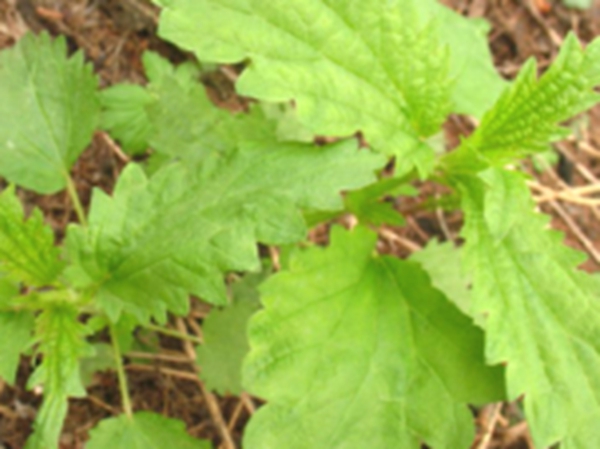
Nettle
Nettle is the name of a traditional Chinese medicine. It refers to the whole plant of the following species in the genus Urtica of the family Urticaceae: broad-leaved nettle (Urtica laetevirens Maxim.), nettle (Urtica fissa Pritz.), narrow-leaved nettle (Urtica angustifolia Fisch. et Hornem), and hemp-leaved nettle (Urtica cannabina L.).It has the therapeutic effects of dispelling wind and unblocking the meridians, calming the liver and alleviating convulsions, eliminating food stagnation and promoting bowel movements, and detoxifying. It is primarily used to treat rheumatic arthralgia, postpartum convulsions, infantile convulsions, sequelae of poliomyelitis, hypertension, indigestion, constipation, urticaria, trauma from falls and blows, and insect and snake bites.
Chinese Name : 荨麻
Latin Name : Herba Urticae
Aliases : Stewed Herb, Scorpion Grass
Nature, Flavor & Meridian Tropism : Bitter and pungent in taste; warm in nature; enters the Liver meridian
Benefits & Efficacy
Benefits
Dispels wind and unblocks the meridians; calms the liver and alleviates convulsions; eliminates food stagnation and promotes bowel movements; detoxifies.
Indications
Rheumatic arthralgia, postpartum convulsions, infantile convulsions, sequelae of poliomyelitis, hypertension, indigestion, constipation, urticaria, trauma from falls or blows, and insect or snake bites.
Usage and Dosage
1. Internal use: Decoct 5–10 g in water. 2. External use: Apply an appropriate amount; crush to extract juice and rub on the affected area; or crush into a paste and apply as a poultice; or decoct in water for washing.
Precautions
Do not exceed the recommended dosage for internal use; those with weak spleen and stomach should use with caution.
Chemical Constituents
The whole plant of Urtica leaf contains various vitamins, tannins, linalool, and apigenin. The stem bark contains formic acid and butyric acid.
Pharmacological Actions
This herb possesses anti-inflammatory, analgesic, and anticoagulant effects.
Relevant Discussions
1. *Illustrated Compendium of Materia Medica*: “Treats snake venom.”
2. *Compendium of Materia Medica*: “For the initial stages of hives, apply this topically.”
3. *Study on the Properties of Medicinal Herbs*: “Effective for treating snake bites; apply topically or use in a bath for hives.”
4. *Supplement to the Compendium of Materia Medica*: “For wind-induced rashes, harvest the plant, boil it to extract the juice, and use it for washing.”
Applications
Notes
Patients requiring treatment with traditional Chinese medicine should first consult a licensed TCM hospital, where a TCM practitioner will conduct a professional pattern differentiation and issue a prescription.
Processing & Preparation
Harvesting & Processing
Harvest in summer or fall; cut into sections and sun-dry.
Crude Drug Identification
Properties of Crude Drugs
1. Broad-leaved Nettle: Cut into short segments of varying lengths; stems are 1.4–3.8 cm long and 1.5–4 mm in diameter, green to reddish-purple in color, with blunt ridges, sparsely covered with stinging hairs and short soft hairs; opposite leaves are present at the nodes; the leaves are green, wrinkled, and brittle.Inflorescences are spicate, shriveled, with several axillary spikes bearing short peduncles. Achenes are densely clustered, broadly ovate, slightly flattened, and approximately 1.5 mm long. The plant is light in weight and soft in texture. It has a faint odor and a bland, slightly pungent taste.
2. Stinging Nettle: Distinguished from the previous species by leaves that are palmately shallowly lobed into 5–7 pairs of lobes, with the lobes bearing coarse, triangular teeth.
3. Narrow-leaved Nettle: The rhizome is slender and elongated, light brown, hard yet brittle, and easily broken; the cross-section is off-white. The fibrous roots are slender, curled, and yellowish-brown. The stem is quadrangular, 50–150 cm long, brownish-green to brownish-green, usually solitary, and bearing stinging hairs.Leaves are wrinkled or fragmented; when unfolded, they are lanceolate or narrowly ovate, 5–12 cm long and 1.2–2.8 cm wide, with coarse serrations along the margins. The upper surface is dark green to brownish-green, densely covered with punctate stalactites and short hairs, with distinct trifurcated veins; the lower surface is grayish-green. The leaves are brittle and break easily. They have a faint odor and a slightly bitter taste.
Botanical Information
Botanical Classification
Plants of the genus Urtica in the family Urticaceae: broad-leaved nettle, common nettle, narrow-leaved nettle, and nettle-leaved nettle.
Morphological Characteristics
1. Broad-leaved nettle: A perennial herb. Stems 40–100 cm tall. Sparsely covered with stinging hairs and fine pubescence; unbranched or branched. Leaves opposite; petioles 1–3 cm long; stipules 4 per node, free, sometimes more or less fused in the upper part, lanceolate;leaf blades narrowly ovate to broadly ovate, 4–9 cm long, 2.5–4.5 cm wide, apex short acuminate to long acuminate, base broadly cuneate or rounded, margin sharply toothed or serrate, both surfaces sparsely covered with prickles and fine rough hairs, nectaries short-stalked, sometimes punctate; 3 basal veins.Monoecious; male inflorescences arise from the axils of upper stem leaves, up to 8 cm long; perianth segments 4, stamens 4; female inflorescences arise from the axils of lower leaves, shorter; perianth segments 4, with fine rough hairs, stigma brush-like. Achenes ovate, slightly flattened, up to 1.5 mm long. Flowering period: March–May; fruiting period: May–August.
2. Nettle: A perennial herb with a stem 60–100 cm tall. Bears stinging hairs and recurved fine pubescence. Leaves are opposite; petioles are 1–7 cm long; stipules are fused and ovate;leaf blades are broadly ovate or nearly pentagonal, 5–12 cm long and wide, with an acuminate apex, a rounded or shallowly cordate base, and shallowly palmate lobes; the lobes are triangular with irregular teeth, the underside is finely pubescent, and stinging hairs are present along the veins. The plant is monoecious or dioecious; male inflorescences are up to 10 cm long, sparsely branched, and, in monoecious plants, borne below the female inflorescences;Male flowers are about 2 mm in diameter, with 4 perianth segments; female inflorescences are shorter, with extremely short branches; female flowers are small, about 0.4 mm long, with a brush-like stigma; achenes are nearly spherical, flattened, and finely pubescent. Seeds bear fine yellow dots. Flowering period: September–October; fruiting period: October–November.
3. Narrow-leaved Nettle: A perennial herb, growing up to 150 cm tall.Stems are erect, four-angled, and covered with stinging hairs. Simple leaves are opposite; petioles are 8–17 mm long; stipules are linear and separate; leaf blades are oblong-lanceolate or lanceolate, 4–12 cm long and 1.2–2.8 cm wide, with an acuminate apex, a rounded base, and coarsely serrate margins, with the serration tips pointing toward the apex of the leaf.Dioecious; inflorescences up to 4 cm long, highly branched; male flowers about 2 mm in diameter, with 4 perianth segments; 4 stamens; female flowers smaller than male flowers, with 4 perianth segments that enlarge during fruiting; ovary oblong, stigma brush-like. Achenes ovate, about 1 mm long, enclosed within the persistent perianth. Flowering period: July–August; fruiting period: August–October.
4. Hemp-leaved Nettle: A perennial herb with stems up to 150 cm tall. The stems are ribbed and covered with stinging hairs and appressed fine pubescence.Leaves are opposite; petioles are 2–8 cm long; stipules are free, narrowly triangular; leaf blades are pentagonal, 4–12 cm long and 3.5–12 cm wide, deeply 3-lobed or fully 3-divided, with the primary lobes further deeply pinnately lobed; both surfaces are sparsely covered with short soft hairs, and the underside is sparsely covered with stinging hairs. The plant is monoecious or dioecious;Inflorescences up to 12 cm long; male inflorescences highly branched; male flowers approximately 2 mm in diameter, with 4 perianth segments and 4 stamens; in female flowers, perianth segments enlarge after flowering, reaching up to 2.5 mm in length, bearing short soft hairs and a few stinging hairs; stigma brush-like. Achenes ovate, flattened, approximately 2 mm long, smooth. Flowering period: July–August; fruiting period: August–September.
Distribution Area
1. Broad-leaved Nettle: Distributed in Northeast China, North China, and regions including Shaanxi, Gansu, Qinghai, Shandong, Hubei, Hunan, Sichuan, Yunnan, and Tibet. 2. Common Nettle: Found in Shaanxi, Gansu, Anhui, Zhejiang, Fujian, Henan, Hubei, Hunan, Guangxi, Sichuan, Guizhou, Yunnan, and other regions. 3. Narrow-leaved Nettle: Found in Northeast China, North China, and other regions. 4. Hemp-leaved Nettle: Found in Northeast China, North China, Northwest China, as well as Sichuan, Yunnan, and other regions.