Dianthus is a commonly used medicinal herb for promoting urination and relieving urinary obstruction. It consists of the dried aerial parts of Dianthus superbus L. and Dianthus chinensis L., both belonging to the genus Dianthus in the family Caryophyllaceae. It has the effects of promoting urination, relieving urinary obstruction, invigorating blood circulation, and regulating menstruation. It is primarily used to treat heat-induced urinary disorders, blood-induced urinary disorders, stone-induced urinary disorders, difficulty urinating, painful and scanty urination, and amenorrhea due to blood stasis.
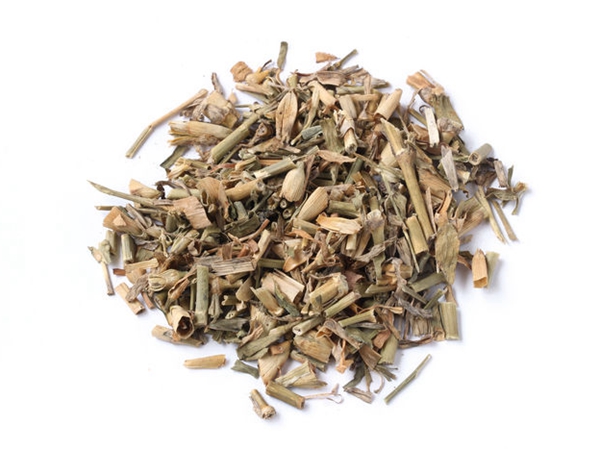
Dianthus
Dianthus is a commonly used medicinal herb for promoting urination and relieving urinary obstruction. It consists of the dried aerial parts of Dianthus superbus L. and Dianthus chinensis L., both belonging to the genus Dianthus in the family Caryophyllaceae. It has the effects of promoting urination, relieving urinary obstruction, invigorating blood circulation, and regulating menstruation. It is primarily used to treat heat-induced urinary disorders, blood-induced urinary disorders, stone-induced urinary disorders, difficulty urinating, painful and scanty urination, and amenorrhea due to blood stasis.
Chinese Name : 瞿麦
Latin Name : Dianthi Herba
Aliases : Juju Mai, Da Lan, Shan Qu Mai, Qu Mai Sui, Nan Tian Zhu Cao, Mai Ju Jiang, Jian Rong Hua, Long Xu, Sheng Long Cao Zi
Authentic Producing Area : Mainly produced in Hebei and Liaoning
Nature, Flavor & Meridian Tropism : Bitter in taste, cold in nature; enters the Heart and Small Intestine meridians
Benefits & Efficacy
Benefits
Promotes urination and relieves dysuria; breaks up blood stasis and regulates menstruation.
Indications
Used to treat heat-induced dysuria, blood-induced dysuria, calculous dysuria, difficulty urinating, painful and scanty urination, and amenorrhea due to blood stasis.
Usage and Dosage
Internal use: Decocted as a soup, 9–15 g.
Precautions
Contraindications for combination with other Chinese herbs: Su Cao and Mu Dan act as its assistants. It is incompatible with Sang Piaoxiao.
Chemical Constituents
Main constituents include essential oils: eugenol, phenethyl alcohol, phenyl benzoate, benzyl salicylate, etc.; triterpene saponins: Dianthus saponins A, B, etc.
Pharmacological Actions
A decoction of Lycopodium has diuretic effects, with the spikes being more potent than the stems; it also stimulates the intestines, inhibits cardiac function, lowers blood pressure, and affects renal blood volume; it inhibits both bacilli and staphylococci; it has significant abortifacient and fetal-lethal effects during implantation, early pregnancy, and mid-pregnancy, with these effects increasing as the dose rises.
Relevant Discussions
1. *The Classic of Herbal Medicine*: “Treats various types of urinary obstruction and dysuria, urinary retention, removes thorns, resolves abscesses and swellings, clears the eyes and removes corneal opacities, induces abortion in pregnant women, and expels stagnant blood.”
2. *Rihua Zi Bencao*: “Induces labor; treats amenorrhea; breaks up blood clots; expels pus.”
3. *Bencao Beiyao*: “Reduces heart fire; promotes small intestine function; expels pathogenic heat from the bladder; serves as a key herb for treating dysuria.”
Applications
Clinical Applications
1. For treating dysuria, it is particularly suitable for heat-type dysuria. It is often used in combination with Polygonum aviculare, Akebia trifoliata, and Plantago seed, as in the Ba Zheng San (Formulae of the Bureau of Harmonious Preparations).
2. For treating dysuria with blood in the urine, it is used in combination with Gardenia and licorice, as in the Li Xiao San (Formulae of the Bureau of Harmonious Preparations).
3. For the treatment of stone dysuria, it is combined with Shiwei, Talc, and Winter Mallow Seeds, as in the Shiwei Powder (from *Compendium of Symptoms and Treatments*).
4. For the treatment of amenorrhea and irregular menstruation, it is particularly suitable for cases caused by blood heat and blood stasis. It is often used in combination with Peach Kernel, Safflower, Salvia Root, and Red Peony Root.
Related Compatibility
1. Ephedra combined with Sea Sand: Ephedra excels at promoting diuresis and relieving urinary obstruction; Sea Sand excels at relieving urinary obstruction and dissolving stones. When used together, these two herbs have the function of relieving urinary obstruction, promoting diuresis, and dissolving stones, and are used to treat pain during urination and hematuria associated with heat-induced urinary obstruction or stone-induced urinary obstruction.
2. Lycopodium combined with Gardenia: Lycopodium excels at promoting urination and relieving dysuria; Gardenia excels at cooling the blood and promoting urination. When used together, these two herbs have the function of clearing heat, cooling the blood, and promoting urination. They are used to treat symptoms such as frequent, painful, and hot urination, as well as hematuria caused by damp-heat in the lower jiao.
Medicinal Identification
Lycopodium and Akebia: Both are diuretic and urinary-tract-clearing herbs; they are bitter and cold in nature and enter the Heart and Small Intestine meridians. They can both promote diuresis and relieve urinary dysuria, and are used for conditions such as urinary dysuria with painful, scanty, and difficult urination; they can also activate blood circulation and regulate menstruation, and are used for amenorrhea and similar conditions.Qu Mai also enters the Bladder Meridian and is a specialized herb for treating dysuria; it is effective at promoting urination, relieving dysuria, and alleviating pain. It can be used for various types of dysuria, and is particularly suitable for heat-type dysuria and blood-type dysuria. However, Mu Tong clears heart heat and relieves restlessness, unblocks the meridians, and promotes lactation; it is used to treat heart fire rising upward, causing sores in the mouth and on the tongue, as well as heart fire descending to the Small Intestine, resulting in restlessness, red urine, damp-heat arthralgia, and insufficient lactation.
Related Medicines
Qinglin Granules.
Related Prescriptions
Ba Zheng San (from *He Ji Ju Fang*).
Medicinal Diet Therapy
A medicinal dish related to Lycopodium is the Lycopodium Vegetable and Fruit Juice.
1. Effects: Promotes urination and relieves urinary obstruction; invigorates blood circulation and regulates menstruation.
2. Ingredients: 50 g apple, 15 g adzuki bean sprouts, 10 g lotus seeds, 5 g Lycopodium, 350 ml water, and fructose to taste.
3. Preparation: Rinse the lotus seeds and Lycopodium and soak them in a pot for 30 minutes, then bring to a boil over low heat. After about 15 minutes, turn off the heat, strain the herbal decoction, and let it cool. Wash and dice the apple; wash and chop the mung bean sprouts. Place all ingredients, fructose, and the herbal decoction into a blender, blend until smooth, pour into a glass, and serve.
4. Usage: Consume as desired.
Notes
Patients requiring treatment with Chinese herbal medicine should first consult a licensed Traditional Chinese Medicine (TCM) hospital, where a TCM practitioner will conduct a professional pattern differentiation and prescribe an herbal formula.
Processing & Preparation
Harvesting & Processing
Harvest during the flowering and fruiting seasons in summer and fall; remove impurities and dry.
Processing Methods
Remove impurities, wash thoroughly, moisten slightly, cut into sections, and dry.
Storage Methods
Store in a dry container in a well-ventilated, dry place.
Crude Drug Identification
Properties of Crude Drugs
1. Lycopodium: The stem is cylindrical, branched toward the upper part, and 30–60 cm long; the surface is pale green or yellowish-green, smooth and glabrous, with distinct, slightly swollen nodes; the cross-section is hollow. Leaves are opposite, often shriveled; when flattened, they are linear to linear-lanceolate. Flowers and fruits are borne at the branch tips; the calyx is tubular, 2.7–3.7 cm long;bracts number 4–6, broadly ovate, approximately 1/4 the length of the calyx tube; petals are brownish-purple or brownish-yellow, curled, and deeply lobed into filamentous tips. The capsule is long and cylindrical, equal in length to the persistent calyx. Seeds are minute and numerous. Odor is faint; taste is bland.
2. Dianthus: The capsule tube is 1.4–1.8 cm long, and the bracts are approximately half the length of the calyx tube; the tips of the petals are shallowly toothed.
Properties of Processed Slices
See “Characteristics of Medicinal Materials.”
Botanical Information
Botanical Classification
Plants of the genus Dianthus in the family Caryophyllaceae, including Lycopodium and Dianthus.
Morphological Characteristics
1. Lycopodium: A perennial herb reaching up to 1 m in height. Stems are tufted, erect, glabrous, dichotomously branched in the upper part, with distinct nodes. Leaves are opposite, linear or linear-lanceolate, 1.5–9 cm long, 1–4 mm wide, with an acuminate apex; the base forms a short sheath enclosing the stem; margins are entire; both surfaces are glabrous.Flowers are bisexual; they are solitary or arranged in sparse, dichotomously branched panicles; pedicels are up to 4 cm long; bracteoles number 4–6, arranged in 2–3 whorls; the calyx is cylindrical, pale purplish-red, up to 4 cm long, 5-lobed at the apex, with lanceolate lobes that have membranous margins and are finely hairy;petals 5, pale red, white, or pale purplish-red, deeply lobed into fine lines at the apex, with a long claw at the base; stamens 10; ovary superior, unilocular, with 2 slender styles. The capsule is oblong, nearly as long as the persistent calyx. Seeds are black. Flowering period: August–September; fruiting period: September–November.
2. Dianthus: Similar to the previous species, but distinguished primarily by the following characteristics: bracts are ovate to leaf-like lanceolate, spreading, half the length of the calyx tube, and tapering to a tail-like point at the apex; the calyx tube is 2–2.5 cm long, with broadly lanceolate lobes; petals are usually purplish-red, with markings and sparse bristly hairs at the throat, and shallowly lobed into a serrated edge at the apex.Flowering period: April–August; fruiting period: May–September.
Distribution Area
1. Lycopodium: Distributed throughout most regions of China. 2. Dianthus: Distributed throughout most regions of China.
Growth Habits
Cold-hardy, prefers moist conditions, and is intolerant of drought. Sandy loam or clay loam soils are best.
Propagation Methods
Propagate by seed or division.
Cultivation Techniques
1. Propagation by seed: Sow in April–May. Make shallow furrows for row sowing, spaced 15–21 cm apart and 1.5–3.0 cm deep. Scatter the seeds evenly in the furrows, cover with 0.6–0.9 cm of soil, lightly tamp down, and water immediately. Sowing rate: 15–22.5 kg per hectare.
2. Propagation by division: In March–April, dig up the roots and divide them into clumps of 5–6 plants each. Plant immediately after division. Dig furrows with a row spacing of 24–30 cm and a depth of 6 cm. Plant one clump every 6–10 cm, cover with soil, firm the soil around the roots, and water.
Pest and Disease Control
1. Black powdery mildew: Prevent its spread by practicing crop rotation, saving disease-free seeds for planting, and removing diseased plants.
2. Root rot: Plant in elevated, well-drained areas or raised beds. During the rainy season, ensure proper drainage by digging ditches and sprinkle wood ash around diseased plants.