White-backed Maple is the name of a traditional Chinese medicine. It consists of the whole plant of narrow-leaved buddleja (Buddleja asiatica Lour.), a species of the genus Buddleja in the family Loganiaceae. It is distributed in Fujian, Taiwan, Hubei, Guangxi, Guangdong, Sichuan, Yunnan, and other provinces and regions. It has the effects of dispelling wind and draining dampness, as well as regulating qi and promoting blood circulation.It is primarily used to treat postpartum headaches in women, stomach pain caused by cold, rheumatic joint pain, trauma, and fractures; when applied topically, it treats itchy skin conditions, scrotal eczema, and unexplained swellings and abscesses.
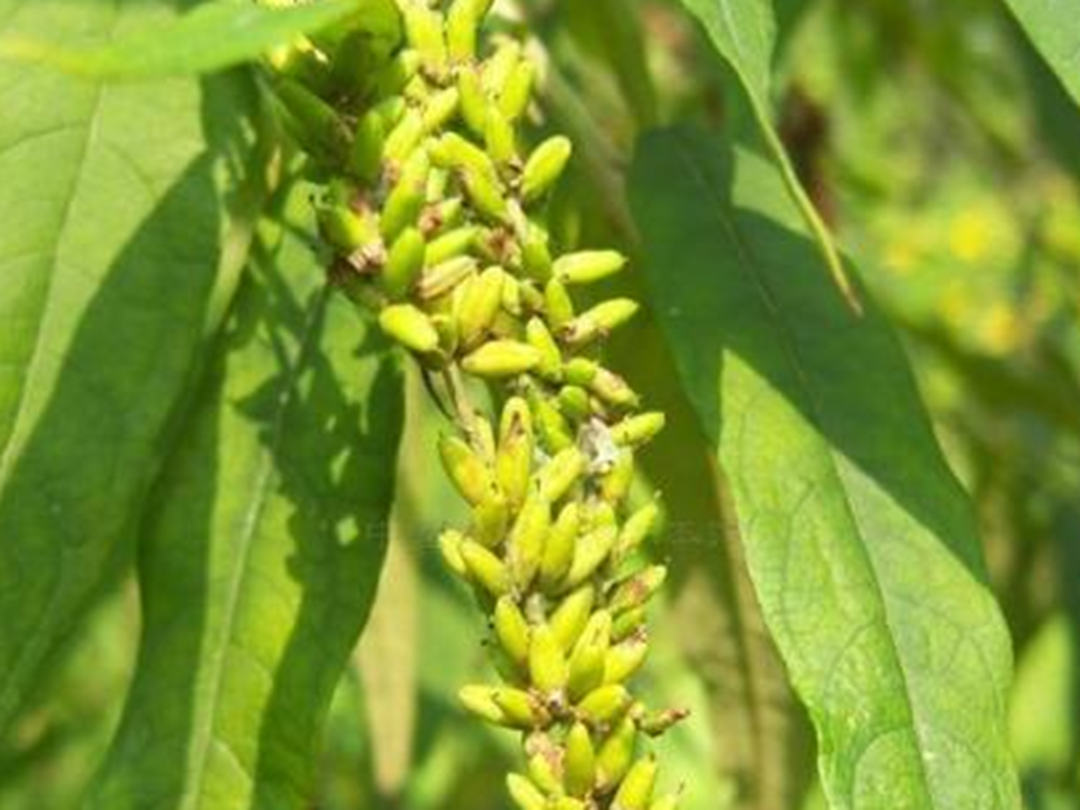
White-backed Maple
White-backed Maple is the name of a traditional Chinese medicine. It consists of the whole plant of narrow-leaved buddleja (Buddleja asiatica Lour.), a species of the genus Buddleja in the family Loganiaceae. It is distributed in Fujian, Taiwan, Hubei, Guangxi, Guangdong, Sichuan, Yunnan, and other provinces and regions. It has the effects of dispelling wind and draining dampness, as well as regulating qi and promoting blood circulation.It is primarily used to treat postpartum headaches in women, stomach pain caused by cold, rheumatic joint pain, trauma, and fractures; when applied topically, it treats itchy skin conditions, scrotal eczema, and unexplained swellings and abscesses.
Chinese Name : 白背枫
Aliases : Bogu Dan, Narrow-leaved Drunken Fish Grass, White-backed Leaf, Water Yellow Flower
Nature, Flavor & Meridian Tropism : Pungent and bitter in taste; warm in nature
Benefits & Efficacy
Benefits
Dispels wind and drains dampness; promotes the flow of qi and activates blood circulation.
Indications
Postpartum headaches in women, stomach pain caused by cold, rheumatic joint pain, trauma from falls or blows, and fractures; for external use, treats itchy skin, scrotal eczema, and unexplained swellings and abscesses.
Usage and Dosage
Internal use: 9–15 g. External use: Decoct an appropriate amount in water and wash the affected area.
Precautions
Patients requiring treatment with Chinese herbal medicine should first consult a licensed Traditional Chinese Medicine (TCM) hospital, where a TCM practitioner will conduct a professional pattern differentiation and prescribe an herbal formula.
Applications
Related Prescriptions
1. Bruises, swelling, pain, and fractures: 12–15 g of White-backed Maple root, decocted with equal parts wine and water, taken orally; apply a poultice of crushed fresh leaves externally.
2. Itchy skin and scrotal eczema: An appropriate amount of White-backed Maple, ground into powder, decocted in water, and used to wash the affected area.
3. Postpartum headaches in women: 15 g of White-backed Maple, decocted in water and taken orally.
Notes
References for this entry: 1. *Compendium of Chinese Herbal Medicines*. 2. *Encyclopedia of Guangxi’s Traditional Chinese Medicine Resources*. 3. *800 Color Illustrations from the *Compendium of Materia Medica***.
Processing & Preparation
Harvesting & Processing
Can be harvested year-round; dry in the sun for later use or use fresh.
Crude Drug Identification
Botanical Information
Botanical Classification
Narrow-leaved Drunken Fish Grass, a plant of the genus Drunken Fish Grass in the family Strychnaceae.
Morphological Characteristics
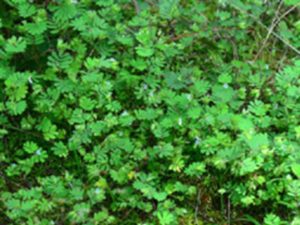
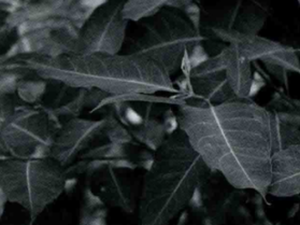
An evergreen shrub, 1–1.5 meters tall. Branches in the upper part, densely covered with white tomentum; young stems are quadrangular. Simple leaves are opposite, with short petioles up to 6 mm long; leaf blades are lanceolate, about 12 cm long, with a narrow, long, acuminate apex and a narrow cuneate base; margins are entire or sparsely serrate; upper surface is green, lower surface is grayish-white and densely covered with tomentum.White, fragrant flowers bloom in summer and fall. The spike-like inflorescences are terminal and subterminal axillary, forming conical clusters covered with yellowish-gray tomentum; the calyx is bell-shaped and 4-lobed at the apex; the corolla is tubular and 4-lobed; there is a single stamen; the ovary is 2-chambered, with multiple ovules in each chamber. The capsule is elliptical, about 6 mm long.The seeds are very small.
Distribution Area
It is distributed in Fujian, Taiwan, Hubei, Guangxi, Guangdong, Sichuan, Yunnan, and other provinces and regions.