Rumex Leaves, a name in traditional Chinese medicine. These are the stems and leaves of Rumex acetosa L., a plant in the Polygonaceae family. It is distributed throughout most regions of China. It has the effects of clearing heat, promoting bowel movements, promoting urination, cooling the blood to stop bleeding, and detoxifying. It is commonly used to treat constipation, difficulty urinating, bleeding from internal hemorrhoids, sores and abscesses, erysipelas, scabies, eczema, and burns.
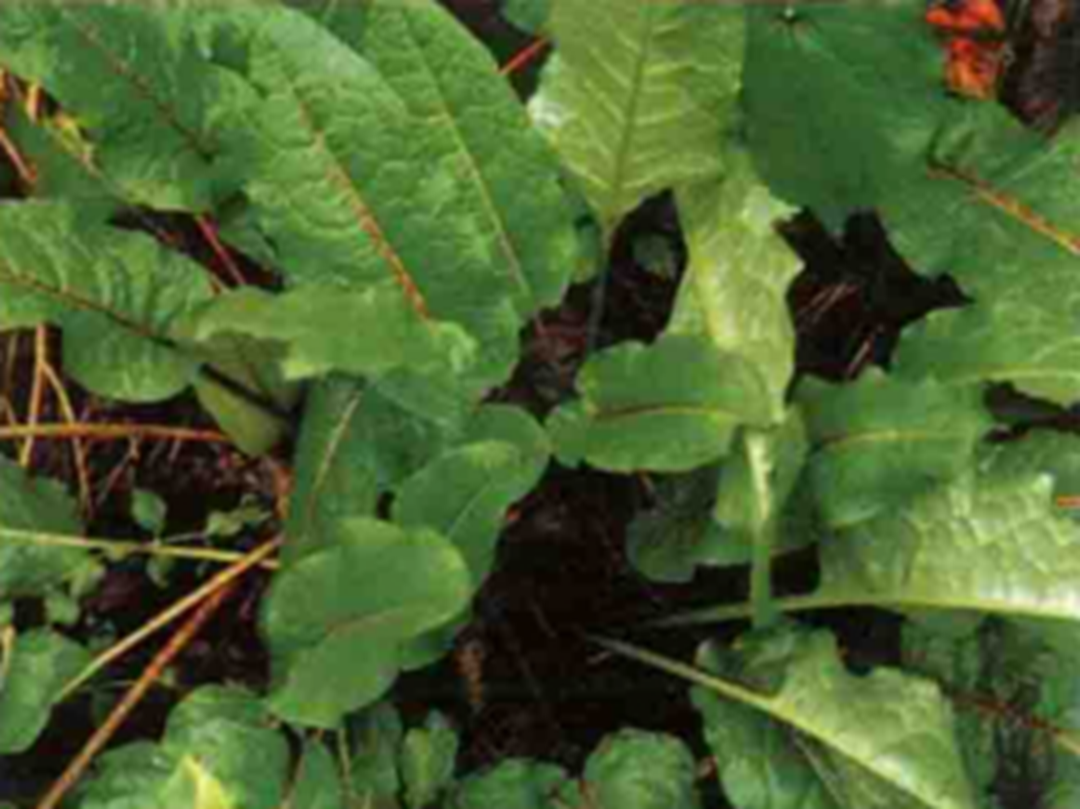
Sorrel Leaves
Rumex Leaves, a name in traditional Chinese medicine. These are the stems and leaves of Rumex acetosa L., a plant in the Polygonaceae family. It is distributed throughout most regions of China. It has the effects of clearing heat, promoting bowel movements, promoting urination, cooling the blood to stop bleeding, and detoxifying. It is commonly used to treat constipation, difficulty urinating, bleeding from internal hemorrhoids, sores and abscesses, erysipelas, scabies, eczema, and burns.
Chinese Name : 酸模叶
Nature, Flavor & Meridian Tropism : Taste: sour, slightly bitter; nature: cold. Enters the Stomach and Spleen meridians
Benefits & Efficacy
Benefits
Clears heat and promotes bowel movements; promotes urination; cools the blood and stops bleeding; detoxifies.
Indications
Constipation, difficulty urinating, bleeding from internal hemorrhoids, skin ulcers, erysipelas, scabies, eczema, and burns.
Usage and Dosage
Internal use: Decoct 15–30 g. External use: Apply an appropriate amount as a poultice after pounding; or mix the powder with a carrier and apply as a paste.
Precautions
Use with caution in patients with spleen and stomach deficiency-cold.
Pharmacological Actions
Anticancer effects.
Relevant Discussions
*Collection of Folk Remedies and Medicinal Herbs of Guizhou*: “For external use, it reduces swelling and treats toxic sores and scabies.”
Applications
Related Compatibility
1. For bleeding from internal hemorrhoids: 30–60 g of fresh whole Achyranthes plant. Pound into a paste to extract the juice, mix with 30–60 g of white sugar, and take orally. (*Compendium of Chinese Herbal Medicines*)
2. For treating skin eczema, scalds, and burns: 60 g each of the whole plant of Rumex and white bark of Toona sinensis, 30 g of eucalyptus leaves, and 30 g of Houttuynia cordata leaves. Grind all ingredients into a fine powder and mix with oil for topical application. (*Formulas for Common Chinese Herbal Medicines*)
Processing & Preparation
Harvesting & Processing
Harvest in summer, wash thoroughly, and use fresh or sun-dry.
Crude Drug Identification
Properties of Crude Drugs
The leaves are mostly shriveled. When a complete leaf is flattened, the basal leaves have long petioles, up to about 15 cm in length; the cauline leaves are sessile or clasping the stem; the leaf blade is ovate-oblong, 5–15 cm long and 2–5 cm wide, with a blunt or slightly pointed apex, a sagittate or nearly lanceolate base, and entire or slightly wavy margins; the leaf surface is not very smooth and is dull green;The stipule sheath is membranous and obliquely truncate. It has a faint odor and tastes bitter, sour, and astringent.
Botanical Information
Morphological Characteristics
A perennial herb, growing up to 1 m tall. The roots are fleshy fibrous roots, yellow in color. The stem is erect, usually unbranched, glabrous or slightly hairy, longitudinally grooved, and hollow.Simple leaves are alternate; leaf blades are ovate-oblong, 5–15 cm long, 2–5 cm wide, with a blunt or acute apex, a sagittate or nearly lanceolate base, entire margins, sometimes slightly undulate, glabrous above, and often bearing papillate projections on the underside and margins; leaves on the upper part of the stem are narrower and smaller, lanceolate, with short petioles, or sessile and clasping the stem;basal leaves have long petioles; stipule sheaths are membranous, tubular, and ruptured. Flowers are unisexual, with separate male and female plants; inflorescences are terminal, narrowly conical, sparsely branched, with several flowers clustered together; male flowers have 6 perianth segments, elliptical, arranged in two whorls, with the inner whorl segments about 3 mm long and the outer whorl segments slightly narrower;There are 6 stamens with very short filaments; in female flowers, the outer perianth segments are reflexed downward and closely adnate to the pedicel, while the inner perianth segments are erect; after flowering, they enlarge to enclose the fruit, reaching a diameter of about 5 mm, round, entire, and each bearing an inconspicuous tuberculate projection; the ovary is trigonal, with 3 brush-like stigmas that are purplish-red. The achenes are trigonal, black, and glossy.Flowering period: May–June; fruiting period: July–August.
Distribution Area
It is found in most parts of the country.