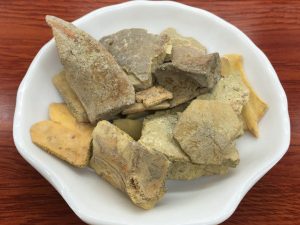
Bear Bone, a name for a traditional Chinese medicinal material. It consists of the bones of the black bear (Selenarctos thibetanus G. Cuvier) and the brown bear (Ursus arctos Linnaeus) of the bear family. It has the effects of dispelling wind, removing dampness, and calming convulsions. It is primarily used to treat rheumatic swelling and pain in the joints, as well as infantile convulsions.
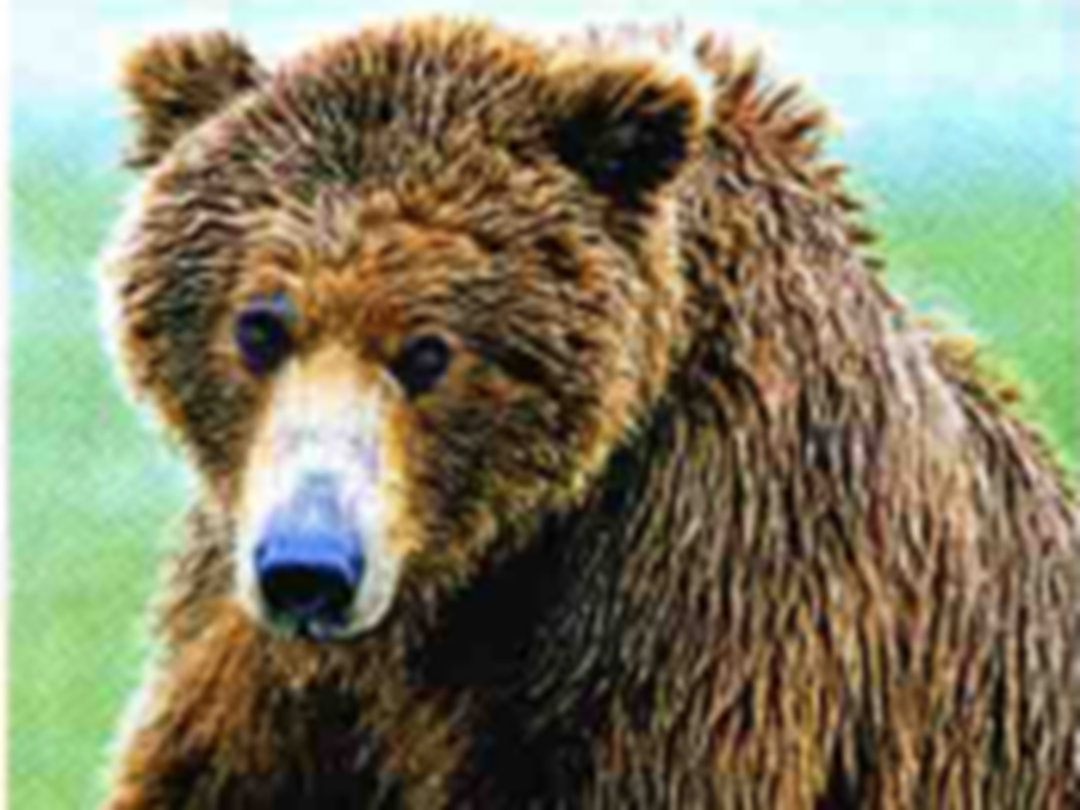
Bear Bone
Bear Bone, a name for a traditional Chinese medicinal material. It consists of the bones of the black bear (Selenarctos thibetanus G. Cuvier) and the brown bear (Ursus arctos Linnaeus) of the bear family. It has the effects of dispelling wind, removing dampness, and calming convulsions. It is primarily used to treat rheumatic swelling and pain in the joints, as well as infantile convulsions.
Chinese Name : 熊骨
Nature, Flavor & Meridian Tropism : Taste: salty, slightly pungent; Nature: warm
Benefits & Efficacy
Benefits
Dispels wind, removes dampness, and calms convulsions.
Indications
Rheumatic swelling and pain in the joints; infantile convulsions.
Usage and Dosage
Internal use: Decoct 15–30 g in water; or steep in wine. External use: Use an appropriate amount; decoct and use the liquid for washing. Crush before use.
Relevant Discussions
1. *Dietary Therapy Materia Medica*: “Boil in water for a bath; effective for rheumatic arthritis and infantile convulsions.”
2. *Chronicle of Sichuan Chinese Medicinal Herbs* (1960 edition): “It can eliminate wind-dampness and treat rheumatic diseases characterized by joint pain.”
Applications
Processing & Preparation
Processing Methods
1. Bear Bone: Take the raw material, soak it in clean water for 1–2 weeks, scrape off the flesh and tendons, wash thoroughly, and air-dry.
2. Blanching Bear Bones: Place sesame oil in a wok; heat over high heat until hot, then add the cleaned bear bones. Stir constantly and fry until the surface turns yellow; remove and let cool.
3. Wine-Soaked Bear Bones: Take the sesame-fried bear bones and, while still hot, immerse them in a measured amount of wine. Rinse to remove any sand, then remove and dry. Use 20 kg of wine for every 100 kg of cleaned bear bones.
Storage Methods
Store in a dry container in a cool, dry place to prevent insect infestation.
Crude Drug Identification
Properties of Crude Drugs
The bones of the limbs are generally used. The shaft of the humerus in the forelimbs is slightly twisted, 33–34 cm long, with a diameter (at the mid-section) of approximately 3 cm. The surface is pale yellowish-white, slightly rough, and appears oily. Above the mid-section, there are three tubercles; the lower end is relatively wide and pulley-shaped, with no small holes near the annulus (i.e., no “phoenix eyes”).The bone is hard and relatively heavy; the cross-section is irregularly polygonal. The compact bone layer is 2–5 mm thick, and the circular medullary cavity accounts for approximately 2/5 of the bone’s cross-sectional diameter. The marrow is reticulated and honeycomb-like, yellowish-brown in color, and possesses a distinctive bear-like odor.
The femur of the hind limb is curved, 35–40 cm long, and 3–4 cm in diameter. The hemispherical protrusion on the medial aspect of the upper end is the “femoral head,” which forms an angle of approximately 110° with the shaft; the articular surface is smooth with a relatively deep fossa, and the femoral head is higher than the contralateral greater trochanter. On the anterior aspect of the lower end is a broad, shallow tibial fossa, and on the posterior aspect is a nearly rhomboidal groove.The cross-section is roughly circular, yellowish-white, and slightly rough; the compact bone is 6–9 cm thick, and the medullary cavity has a diameter of approximately 17 mm, occupying about half of the cross-sectional area. The medullary reticulum is indistinct; the bone marrow is brownish-yellow and has a strong fishy odor.
The tibia of the hind limbs is flattened and round, with longitudinal ridges. The patella is oblong and bears a tongue-shaped ligament. The palms of both the forelimbs and hind limbs are broad, each bearing five claws; the claws are black, and the surrounding fur is black or brown.
The skull has a long, pointed muzzle and a short nasal bone; the frontal bone is wider at the front and narrower at the back, with a downward indentation where the left and right frontal bones meet; the crown is relatively wide, and the sagittal crest is short and inconspicuous. The teeth are brown; the upper jaw contains 3 pairs of incisors, 1 pair of canines, and 7 pairs of molars, with the posterior molars being large, approximately twice as long as they are wide. The ribs are flattened.
Botanical Information
Morphological Characteristics
1. Black Bear: Large in build, measuring 1.5–1.7 m in length and weighing approximately 150 kg. The head is broad and rounded. The muzzle is short and pointed; the tip of the nose is bare, and the eyes are small; the ears are relatively long and covered with long hair, extending beyond the sides of the head. The neck is short and thick, with particularly long hair on both sides. There is an inverted V-shaped white patch on the chest. The tail is very short. The coat is uniform, lacquer-black, and glossy.The limbs are thick and sturdy; both front and hind feet have five toes. The carpal pad on the front feet is broad and connected to the palmar pad, while the plantar pad on the hind feet is also broad and thick, wider at the front and narrower at the back, with a hairless partition in the middle of the inner side. It has claws. Except for the brown nose and face, the white lower jaw, and the inverted V-shaped white patch on the chest, the entire body is glossy black.2. Brown Bear: Larger in size, measuring about 2 m in length and weighing 200–300 kg. The head is broad and round, with a relatively long muzzle and a broad nose; the tip of the nose is bare and slightly flared to the sides.The ears are small and mobile, covered with fur both inside and out. The shoulders are prominent, the loin is robust, and the tail is short. All four limbs are sturdy; both front and hind feet have five toes, with the claws on the front feet being longer than those on the hind feet. The claws are laterally flattened and curved, and are dark brown in color. The entire body ranges in color from dark brown or nearly black to very pale silvery-gray, brownish-yellow, or reddish-brown. Adult bears lack white markings on the chest.
Distribution Area
1. Black Bear: Extremely widespread, found in Northeast China, North China, Southwest China, South China, as well as Shaanxi, Gansu, Qinghai, Anhui, Zhejiang, Jiangxi, Fujian, Taiwan, and Tibet. 2. Brown Bear: Found in Northeast China, as well as Gansu, Qinghai, Xinjiang, Sichuan, Guizhou, and Tibet.