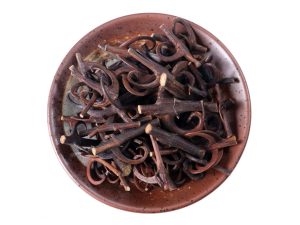
Rhododendron Root, a name in traditional Chinese medicine. It is the root of Rhododendron dauricum L., a plant in the Ericaceae family. It is distributed in Heilongjiang, Jilin, Inner Mongolia, and other regions. It has the efficacy of stopping dysentery. It is commonly used for enteritis and dysentery.
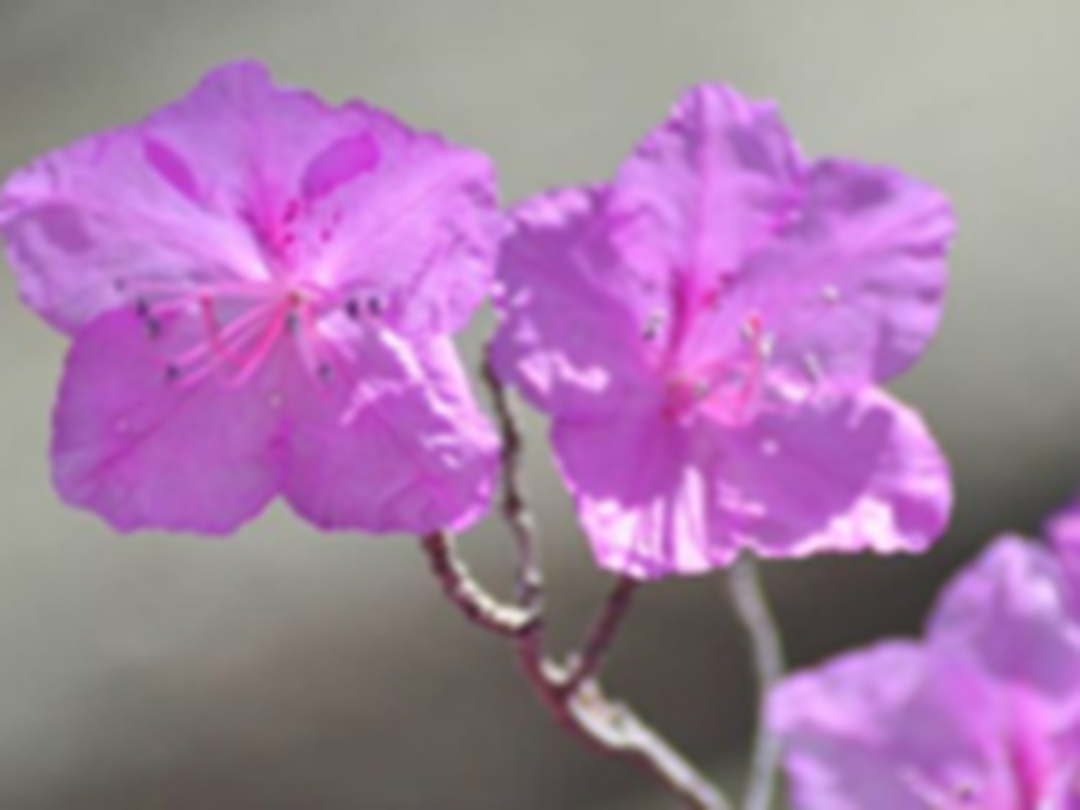
Manshanhong Root
Rhododendron Root, a name in traditional Chinese medicine. It is the root of Rhododendron dauricum L., a plant in the Ericaceae family. It is distributed in Heilongjiang, Jilin, Inner Mongolia, and other regions. It has the efficacy of stopping dysentery. It is commonly used for enteritis and dysentery.
Chinese Name : 满山红根
Latin Name : Rhododendron dauricum L.
Authentic Producing Area : Heilongjiang, Jilin, Inner Mongolia
Nature, Flavor & Meridian Tropism : Pungent and slightly sweet in taste; cold in nature; enters the Lung meridian
Benefits & Efficacy
Benefits
Treats dysentery.
Indications
Enteritis, dysentery.
Usage and Dosage
9–15 g.
Precautions
Not yet established.
Applications
Related Compatibility
1. For acute bacterial dysentery: Take half a jin of fresh Rhododendron dauricum root (washed and sliced), add 1,500–2,000 milliliters of water, and decoct for 1–2 hours to extract the juice. Adults take 150–200 milliliters, and children (ages 3–5) take 50 milliliters, both three times daily. (Zao Zhuang City, *Compilation of Medical and Health Science and Technology Data*)
2. Enteritis and dysentery: Take 15 g of Man Shan Hong root, decoct in water, and drink the decoction.
Processing & Preparation
Harvesting & Processing
In summer and fall, harvest the whole plant, trim off the fibrous roots, and sun-dry.
Crude Drug Identification
Botanical Information
Botanical Classification
*Mangjianghong*, a plant of the Mangjianghong family.
Morphological Characteristics
Manjianghong, also known as Hongpiao (*Flora of Fujian*). A small floating plant. Round or triangular in shape, approximately 1 cm in diameter. The rhizome is slender and weak, growing horizontally with pinnate branching; fibrous roots extend downward and hang in the water.Leaves are small, sessile, and alternate, arranged in two overlapping rows like roof tiles; they are ovate or nearly oblong, about 1 mm long and about half as wide as they are long, with a rounded or truncate apex. The base is fused with the rhizome; the margins are entire but usually split into two lobes, upper and lower;The upper lobe is green, fleshy, and floats on the water surface; it turns red after autumn. Its margin is membranous, with papillate projections on the upper surface and a cavity on the lower surface containing a gelatinous substance, within which nitrogen-fixing cyanobacteria and Nostoc form a symbiotic relationship; the lower lobe is membranous, scale-like, and sinks beneath the water. Spore fruits (pods) occur in pairs on the submerged lobes at the base of the branches;The megaspore cases are small and oblong, each containing a single megaspore sac with one megaspore; the microspore cases are large and spherical, each containing numerous microspore sacs, each with 64 microspores. The spore cases mature from September to November.
Distribution Area
It is distributed in Heilongjiang, Jilin, Inner Mongolia, and other areas.