Petaurista, a name in traditional Chinese medicine. It refers to the entire body of the brown flying squirrel (Petaurista petaurista Pallas) of the family Petauridae. It has the effects of inducing labor and relieving pain. It is primarily used to treat difficult labor, postpartum lower back pain, joint pain, and headaches.
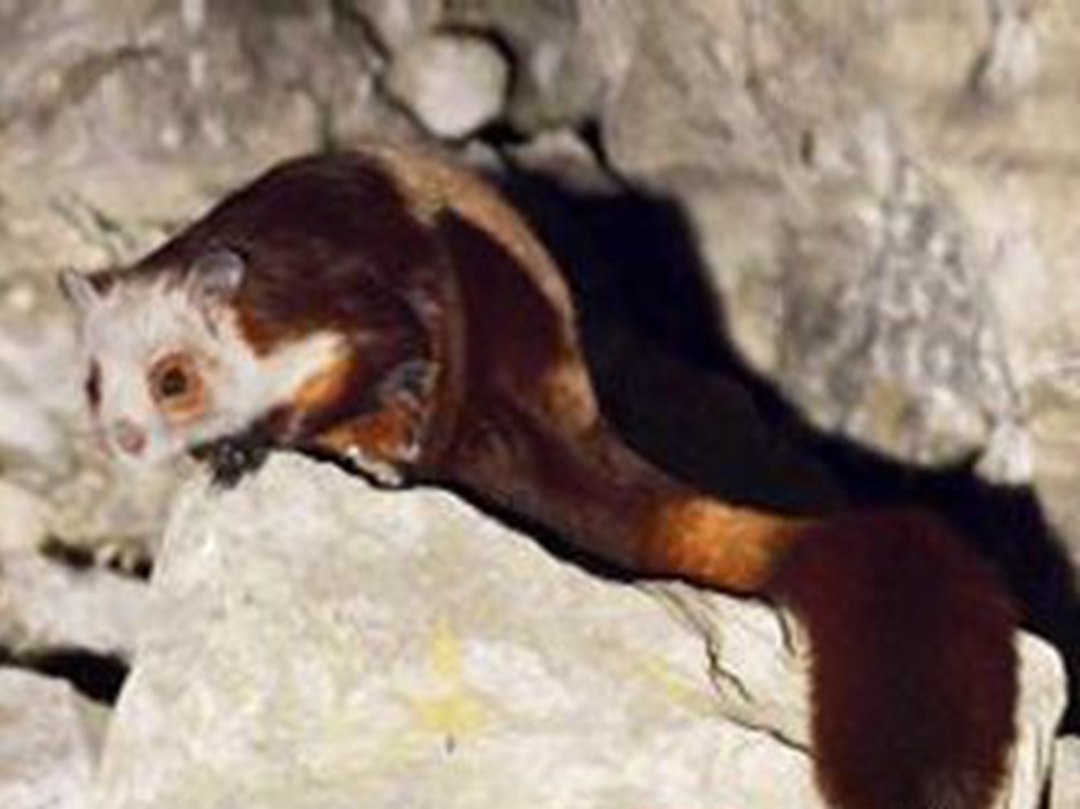
Petaurista
Petaurista, a name in traditional Chinese medicine. It refers to the entire body of the brown flying squirrel (Petaurista petaurista Pallas) of the family Petauridae. It has the effects of inducing labor and relieving pain. It is primarily used to treat difficult labor, postpartum lower back pain, joint pain, and headaches.
Chinese Name : 鼺鼠
Aliases : Ear Rat, Flying Squirrel, Yiyou, Flying Mouse, Feisheng, Feisheng Insect, Feisheng Bird, Feihu, Pine Cat, Large Flying Squirrel
Nature, Flavor & Meridian Tropism : Sweet in taste, warm in nature
Benefits & Efficacy
Benefits
Induces labor; relieves pain.
Indications
Difficult labor, postpartum lower back pain, joint pain, headaches.
Usage and Dosage
Internal use: Take as a wine infusion, 15–30 g.
Precautions
*Medicinal Animals of Guangxi*: “Contraindicated for individuals with blood deficiency without blood stasis; use with caution during pregnancy.”
Relevant Discussions
1. *The Classic of Herbal Medicine*: “Induces abortion and facilitates childbirth.”
2. *Medicinal Animals of Guangxi*: “Treats aching pain in the lower back and shoulders, joint pain, postpartum lower back pain, and headaches.”
Applications
Related Compatibility
To induce labor: One Feisheng, 14 Sophora japonica seeds, and 14 feathers from an old crossbow arrow. Pound together into pills the size of a tung seed. Take two pills with wine. (From *Illustrated Compendium of Materia Medica*, citing *Xiaopin Fang*)
Processing & Preparation
Harvesting & Processing
Capture in spring or autumn; kill immediately after capture, remove the fur and internal organs, and use the fresh meat and bones.
Crude Drug Identification
Botanical Information
Morphological Characteristics
Body length: 30–47 cm; weight: 400–1,000 g. No slender tufts of hair around the base of the ears. The snout is round and short. The head is blunt and rounded. The eyes are large; the ears are small.The tail is 35–48 cm long, significantly exceeding the body length. The dorsal coloration is uniform, appearing reddish-brown, chestnut-brown, brownish-yellow, tea-brown, or tea-yellow; the ventral surface is brownish-yellow or orange-yellow; the lower neck is blackish-brown, with brown longitudinal stripes extending downward to the chest.The dorsal surface of the flight membrane is the same color as the back, though slightly darker; the ventral surface is reddish, with a very distinct boundary between the two. The eyes are ringed with black. The dorsal surface of the ear flap bears one black spot. The tail is the same color as the back, but specimens from Sichuan and Guizhou often have black mottling, with the tip of the tail turning entirely black.
Distribution Area
It is distributed in Fujian, Taiwan, Guangdong, Hainan, Guangxi, Sichuan, Guizhou, Yunnan, and other areas.