Ligusticum is a commonly used herb for dispelling wind-cold. It consists of the dried rhizomes and roots of Ligusticum sinense Oliv. or Ligusticum jeholense Nakai et Kitag., plants belonging to the genus Ligusticum in the Apiaceae family. It has the effects of dispelling wind, dispersing cold, removing dampness, and relieving pain. It is primarily used to treat wind-cold colds, pain at the crown of the head, and rheumatic arthralgia.

Ligusticum
Ligusticum is a commonly used herb for dispelling wind-cold. It consists of the dried rhizomes and roots of Ligusticum sinense Oliv. or Ligusticum jeholense Nakai et Kitag., plants belonging to the genus Ligusticum in the Apiaceae family. It has the effects of dispelling wind, dispersing cold, removing dampness, and relieving pain. It is primarily used to treat wind-cold colds, pain at the crown of the head, and rheumatic arthralgia.
Chinese Name : 藁本
Latin Name : Ligustici Rhizoma et Radix
Aliases : Gaojí, Guīqīng, Dìxīn, Shānzāi, Wèixiāng, Wéijīng, Gāobǎnbǎn
Authentic Producing Area : Mainly produced in Sichuan, Hubei, and Shaanxi
Nature, Flavor & Meridian Tropism : Pungent in taste, warm in nature; enters the Bladder Meridian
Benefits & Efficacy
Benefits
It has the effects of dispelling wind, dispersing cold, removing dampness, and relieving pain.
Indications
Mainly used to treat wind-cold colds, pain at the crown of the head, and rheumatic arthralgia.
Usage and Dosage
Internal use: Decoction, 3–10 g.
Precautions
1. Do not use simultaneously with Lüru, as combining the two may reduce therapeutic efficacy. 2. Avoid using with Qinghuazi, as adverse reactions may occur.
Chemical Constituents
This product primarily contains phthalide compounds, such as 3-butylphthalide and cnidic acid lactone; organic acids, such as ferulic acid; as well as terpenes, allylbenzenes, coumarins, and essential oils.
Pharmacological Actions
This product has antipyretic, analgesic, anti-inflammatory, hypoxic tolerance-enhancing, antidiarrheal, and antithrombotic effects.
Relevant Discussions
1. *Shennong Bencao Jing*: Treats hernias and masses in women, cold in the genital area, swelling and pain, abdominal cramping, and relieves wind-induced headaches.
2. *Yixue Qiyuan*: Treats headaches, chest pain, and toothaches.
3. *Ben Cao Zheng Yi*: Gaoben has a pungent, warm nature; it ascends and disperses. It specifically treats cold, wind, and dampness in the Taiyang and Taiyin channels, and can also resolve stagnation in the Jueyin channel. Its functions are similar to those of Xixin, Chuanxiong, and Qianghuo.
Applications
Clinical Applications
1. For Taiyang wind-cold invading the meridians, presenting with headache, nasal congestion, and severe pain at the crown of the head, it is often combined with wind-dampness-expelling and pain-relieving herbs such as Qianghuo, Cangzhu, and Chuanxiong, as in the Shen-Shu Powder (*He Ji Ju Fang*);In cases of exogenous wind-cold combined with dampness, where there is marked pain in the head and body, it is often combined with herbs such as Qianghuo, Duhuo, and Fangfeng to dispel wind, disperse cold, eliminate dampness, and relieve pain, as in the Qianghuo Shengshi Decoction (*Treatise on Distinguishing Confusions in Internal and External Injuries*).
2. For treating the combined effects of wind and dampness causing widespread pain throughout the body, it is often combined with herbs that dispel wind and dampness—such as Qianghuo, Fangfeng, and Cangzhu—as in the Removing Wind and Dampness Qianghuo Decoction (*Treatise on Distinguishing Confusions in Internal and External Injuries*).
Related Compatibility
1. Gaoben combined with Qianghuo: Both herbs can release the exterior, dispel cold, eliminate wind and dampness, and relieve pain. When combined, their therapeutic effects are significantly enhanced. This combination is commonly used to treat wind-cold colds, wind-cold-damp colds, as well as wind-cold-damp bi syndrome and pain in the limbs and joints.
2. Gaoben combined with Chuanxiong: Gaoben functions to release the exterior, dispel cold, eliminate wind and dampness, and relieve pain; Chuanxiong ascends to the head and eyes and excels at dispelling wind and relieving pain. When combined, they ascend to the crown of the head to dispel wind, dispel cold, and relieve pain. This combination is commonly used to treat wind-cold exogenous pathogens, headaches at the crown of the head, and headaches caused by wind-induced disorders.
3. Gaobin combined with Cangzhu: Gaobin has an ascending nature and taste, capable of dispelling cold and overcoming dampness; Cangzhu excels at drying dampness, strengthening the spleen, and stopping diarrhea. When combined, this pairing is commonly used to treat conditions caused by cold and dampness obstructing the middle jiao, resulting in impaired spleen function, failure of clear yang to rise, and persistent diarrhea.
Medicinal Identification
Gaoban, Qianghuo, Bai Zhi, and Xixin: Gaoban, Qianghuo, Bai Zhi, and Xixin are all pungent, warm, aromatic, and drying herbs. They can all release the exterior to dispel cold, dispel wind, and relieve pain, with particularly effective analgesic effects. Among them, Qianghuo, Bai Zhi, and Gaoban are also effective at overcoming dampness.All four are commonly used to treat wind-cold colds or colds complicated by wind-cold and dampness, particularly those with severe head and body pain, as well as wind-cold-damp bi syndrome characterized by pain in the limbs and joints. Because Bai Zhi and Xi Xin have aromatic properties that can both disperse wind-cold and clear the nasal passages, they are especially suitable for wind-cold colds presenting with nasal congestion and rhinorrhea.At the same time, Angelica dahurica and Asarum are also frequently used for nasal congestion, runny nose, and headaches associated with nasal disorders such as chronic sinusitis, making them excellent remedies for such conditions. The difference lies in the fact that Ligusticum chuanxiong has a nature and flavor that are both ascending, reaching the crown of the head, and is particularly effective for treating external wind-cold invasion accompanied by severe headaches at the crown.Qianghuo has a strong, pungent aroma; it relieves exterior syndromes, dispels cold, expels wind, and overcomes dampness, with a potent analgesic effect. In treating bi pain, because it effectively enters the Foot Taiyang Bladder Meridian, it excels at alleviating pain in the head, neck, shoulders, and back; therefore, it is particularly frequently used for wind-cold-damp bi syndrome affecting the upper body, as well as pain in the shoulders, back, and joints.Bai Zhi (Angelica dahurica) penetrates the Foot Yangming Stomach Meridian, making it particularly useful for treating headaches in the forehead and temples associated with this meridian, as well as swollen and painful gums; it also dries dampness to stop leukorrhea, reduces swelling, and expels pus. It can also be used for leukorrhea caused by cold and dampness, as well as abscesses and toxic swellings. Additionally, Bai Zhi dispels wind-dampness and relieves itching, making it suitable for treating itchy skin conditions caused by wind-dampness.Xixin has a pungent and aromatic nature that moves rapidly through the body, reaching both the exterior and the interior; it possesses strong cold-dispelling properties and can be used for both exterior and interior cold syndromes. It can also warm the lungs and transform phlegm, making it suitable for yang-deficiency with exogenous pathogens, characterized by aversion to cold, fever, absence of sweat, and a deep pulse; it is also used for Shaoyin-type headaches, unilateral or bilateral headaches, toothaches, and coughing and wheezing due to lung cold.
Related Medicines
Chuanju Shangqing Pills, Zhennaoning Capsules, Qiangli Tianma Duzhong Capsules.
Related Prescriptions
Qianghuo Shengshi Decoction (*Discourse on Distinguishing Confusions in Internal and External Injuries*), Qianghuo-Chuanxiong-Gaoli Decoction (*Shenshi Yaohan*), and Shen-Shu Powder (*Formulas of the Bureau of Harmonious Medicines*).
Notes
Patients requiring treatment with Chinese herbal medicine should first consult a licensed Traditional Chinese Medicine (TCM) hospital to receive a prescription following a professional TCM differential diagnosis.
Processing & Preparation
Harvesting & Processing
Harvest in the fall when the stems and leaves have withered, or in early spring when new shoots emerge; remove dirt and sand, then sun-dry or oven-dry.
Processing Methods
Remove impurities, wash thoroughly, moisten thoroughly, cut into thick slices, and sun-dry.
Storage Methods
Store in a dry container, tightly sealed, in a cool, dry place. Protect from moisture and insect infestation.
Crude Drug Identification
Properties of Crude Drugs
1. Angelica dahurica: The rhizome is irregularly nodular and cylindrical, slightly twisted, with branches, 3–10 cm long, and 1–2 cm in diameter. The surface is brownish or dark brown, rough, with longitudinal wrinkles; the upper side retains several sunken, circular stem bases, while the lower side has numerous dot-like protrusions from root scars and residual roots.It is light in weight, relatively hard in texture, and breaks easily; the fracture surface is yellow or yellowish-white and fibrous. It has a strong, fragrant aroma and a pungent, bitter, and slightly numbing taste.
2. Liaoning Ligusticum: Smaller in size, the rhizome is irregularly tuberous or cylindrical, 1–3 cm long and 0.6–2 cm in diameter. It has numerous slender, curved roots.
Properties of Processed Slices
1. Angelica Root Slices: This product consists of irregular, thick slices. The outer surface is brownish-black to blackish-brown and rough. The cross-section is yellowish-white to light yellowish-brown, with fissures or pores, and has a fibrous texture. It has a strong, fragrant odor and a pungent, bitter, and slightly numbing taste.
2. Liaoning Angelica Slices: The outer surface shows root scars and residual root projections resembling bristles, or may contain remnants of old stems in the form of decayed cavities. The cross-section of the woody part exhibits radial patterns and fissures.
Botanical Information
Botanical Classification
Plants of the genus Angelica in the family Apiaceae, specifically Angelica sinensis and Angelica dahurica.
Morphological Characteristics
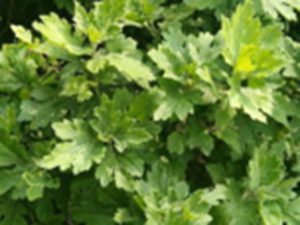
1. Angelica: A perennial herb. Grows up to 1 m tall. The rhizome is well-developed and bears swollen nodules. The stem is erect, cylindrical, hollow, and has longitudinal grooves. Basal leaves have long petioles, up to 20 cm long; the leaf blades are broadly triangular in outline, 10–15 cm long and 15–18 cm wide.They are twice-ternately pinnately compound; the first-order pinnae are oblong-ovate, 6–10 cm long and 5–7 cm wide, with the lower pinnae bearing petioles 3–5 cm long and slightly swollen at the base;the ultimate segments are ovate, approximately 3 cm long and 2 cm wide, with an acuminate apex, shallowly toothed margins bearing small points, glabrous on both surfaces except for short soft hairs along the veins; the terminal lobes have an acuminate to caudate apex; the middle stem leaves are larger; the upper stem leaves are nearly sessile, with the base swollen into an ovate, clasping sheath. The inflorescence is a compound umbel, terminal or lateral;bracts 6–10, linear to pinnately finely lobed, ca. 6 mm long; rays 14–30, up to 5 cm long, quadrangular, with short rough hairs;The umbellules bear about 10 small bracts, linear or narrowly lanceolate, 3–4 mm long; flowers small, without calyx teeth; petals white, obovate, slightly concave at the apex, with a small, inward-curving tip; stamens 5; style base raised, style long, curved outward.The double schizocarp is oblong-ovate, approximately 4 mm long and 2–2.5 mm wide, narrowing at the apex; the dorsal ridge of the mericarps is prominent, and the lateral ridges are expanded into wing-like structures. The dorsal ridge groove contains 1–3 oil tubes, the lateral ridge grooves contain 3 oil tubes, and the intermericarpal surface contains 4–6 oil tubes; the ventral surface of the endosperm is flat.Flowering period: July–September; fruiting period: September–October.
2. Liaoning Angelica: A perennial herb, 30–80 cm tall. The rhizome is relatively short; the roots are conical, branched, and dark brown on the surface. The stem is erect, cylindrical, hollow, with longitudinal striations on the surface, and often tinged with purple.Leaves are petiolate; basal leaf petioles are up to 19 cm long, gradually shortening upward; leaf blades are broadly ovate in outline, 10–20 cm long and 8–16 cm wide, with two to three orders of trifoliate pinnate dissection. The first-order lobes number 4–6 pairs, with the lowest pair having relatively long petioles 2–5 cm long;second-order lobes are usually sessile; terminal lobes are ovate to rhombo-ovate, 2–3 cm long and 1–2 cm wide, with a cordate to fully cuneate base; margins are often shallowly lobed into 3–5 segments, with serrated lobes bearing small pointed tips; upper surfaces are rough-hairy along the midvein, while lower surfaces are smooth; upper stem leaves are smaller, with sheathing petioles.Compound umbels are terminal or lateral, 3–7 cm in diameter; bracts 2, linear, ca. 1 cm long, rough-haired, with narrowly membranous margins, early deciduous; rays 8–16, 2–3 cm long;small bracts 8–10, awl-shaped, 3–5 mm long, covered with rough hairs; umbellules bearing 15–20 flowers; calyx teeth indistinct; petals white, oblong-obovate, with a small, inward-folded lobe; style base raised, hemispherical; style long, curving downward during fruiting.The double schizocarp is elliptical, 3–4 mm long and 2–2.5 mm wide; the dorsal ridge of the mericarps is prominent, the lateral ridges are narrowly wing-like, and the ridges contain 1 (rarely 2) oil tubes; there are 2–4 fusion surfaces; the ventral surface of the endosperm is flat. Flowering period: July–September; fruiting period: September–October.
Distribution Area
1. Angelica sinensis: Distributed in Zhejiang, Jiangxi, Henan, Hubei, Hunan, Sichuan, Shaanxi, and other regions. 2. Angelica dahurica: Distributed in Hebei, Shanxi, Liaoning, Jilin, Shandong, and other regions.
Growth Habits
Prefers a cool, moist climate; is cold-tolerant but sensitive to waterlogging. Not particularly demanding regarding soil, but grows best in sandy loam with a deep, loose, fertile topsoil layer and good drainage; not suitable for cultivation in clay soils or barren, dry areas. Avoid continuous cropping.
Propagation Methods
Propagated by rhizomes.
Cultivation Techniques
During harvest in September–October, select disease-free, plump rhizomes; cut off any remaining stems and remove slender lateral roots. Cut the knobby rhizomes into small sections along the buds, ensuring each section has 2–3 nodes. Plant immediately after cutting. Dig holes with row and plant spacing of approximately 33 cm each, 10–13 cm deep.Place 1–2 segments of rhizome in each hole. After applying liquid manure made from human or animal waste, cover with a handful of mixed organic fertilizer or wood ash, then cover with soil until level with the bed surface.Liaoning Angelica is also propagated by rhizomes. In early spring (late March, before bud break) or late fall (late October, after the aboveground parts have withered), dig up the roots and divide each clump into 3–4 separate plants, each with a bud. Plant in holes, placing one small clump per hole, with a spacing of 30 cm × 30 cm between holes. For spring planting, cover the soil to 3 cm above the root buds; for fall planting, cover to a depth of 3–4.5 cm.