Goose Blood, a name in traditional Chinese medicine. It is the blood of the domestic goose (Anser cygnoides domestica Brisson) of the Anatidae family. Goose farming is more common in East and South China. It has the effects of detoxifying, promoting blood circulation, and dissolving hard masses. It is commonly used to treat dysphagia, regurgitation, and drug poisoning.
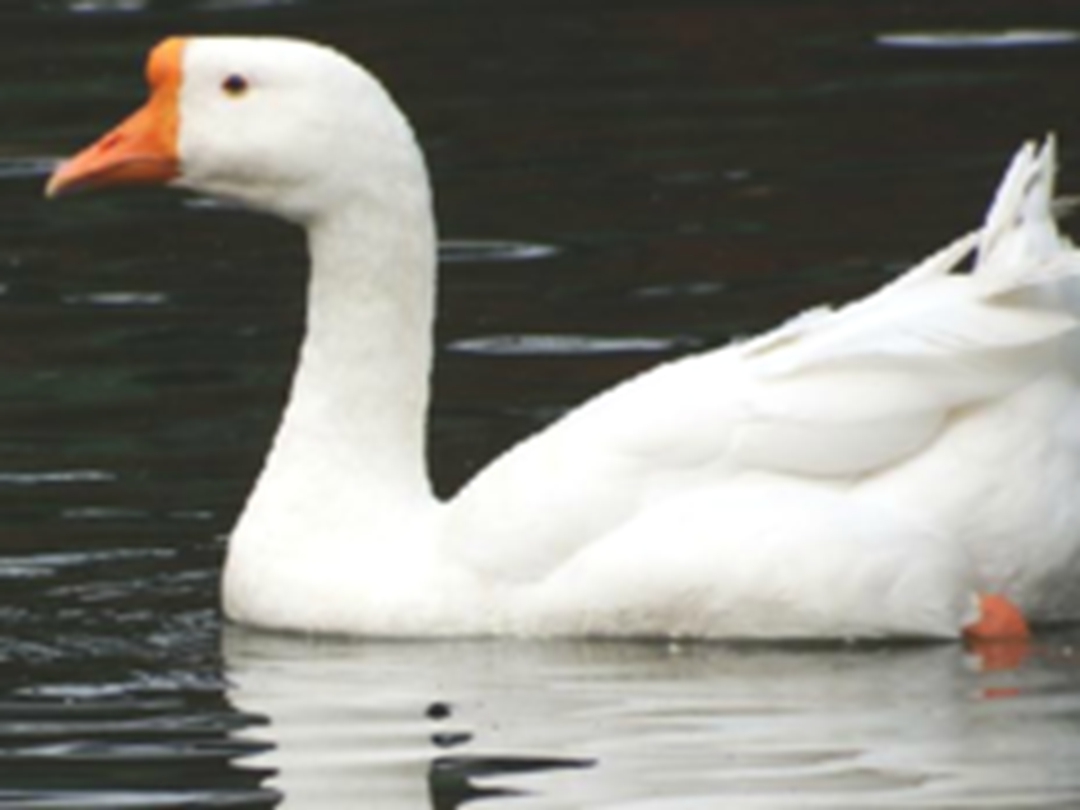
Goose Blood
Goose Blood, a name in traditional Chinese medicine. It is the blood of the domestic goose (Anser cygnoides domestica Brisson) of the Anatidae family. Goose farming is more common in East and South China. It has the effects of detoxifying, promoting blood circulation, and dissolving hard masses. It is commonly used to treat dysphagia, regurgitation, and drug poisoning.
Chinese Name : 鹅血
Aliases : Goose Wangzi
Nature, Flavor & Meridian Tropism : Salty in taste, neutral in nature; enters the Liver meridian
Benefits & Efficacy
Benefits
Detoxifies, promotes blood circulation, and softens hardened masses.
Indications
Dysphagia, regurgitation, and drug poisoning.
Usage and Dosage
Oral use: Drink 100–200 ml while still hot; or take as a syrup or tablet.
Precautions
1. Use in appropriate amounts; may be consumed cooked or fresh, though it is generally recommended to eat it cooked. 2. Patients requiring treatment with traditional Chinese medicine should first consult a licensed TCM hospital, where a TCM practitioner will conduct a professional pattern differentiation and prescribe a formula.
Pharmacological Actions
1. General pharmacological effects: Promotes gastrointestinal motility. 2. Antitumor pharmacological effects: Inhibits tumor cells. Goose blood exerts a significant inhibitory effect on tumors in tumor-bearing mice by interfering with the transition from the S phase to the G2 and M phases of the cell cycle, causing cells to arrest in the S phase.
Relevant Discussions
On the Use of Goose Blood to Treat Dysphagia and Vomiting: Zhang Shiwan: “Drink raw goose blood while it is still hot; it is immediately effective for all cases of dysphagia and vomiting.It should be understood that although dysphagia and vomiting stem from blood deficiency in the stomach, if there is no stagnation within the stomach, how could food be blocked from entering? Therefore, by harnessing the principle that ‘like attracts like’ (goose blood), it can be expelled in one surge, leaving no residue—truly an excellent method that combines tonification with purgation. In detail, goose blood can stimulate the elimination of stagnant food in the stomach; the general principle is to use blood to treat blood, without the risk of harsh purgation damaging the stomach.” (Zhang’s Comprehensive Treatise on Medicine)
Applications
Clinical Applications
This product can be used to treat various types of tumors. It can be taken as a single herb, combined with rice wine or Chinese chive juice for oral administration, or formulated into a preparation for ingestion; all methods yield proven therapeutic effects. This product has a clear therapeutic effect on leukopenia in cancer patients following chemotherapy or radiation therapy.
In addition, this product can also treat conditions such as hepatosplenomegaly and ascites associated with advanced schistosomiasis.
Related Prescriptions
For the treatment of advanced schistosomiasis: Take half a cup of raw goose blood, add a small amount of warm yellow wine, and drink the mixture 1–2 times daily. Continuous use improves clinical signs, eliminates ascites, and reduces the size of the liver and spleen. (From *Food, Chinese Herbal Medicine, and Simple Remedies*)
Notes
[1] Xu Hongxi, Feng Yibin, Zhu Guofu, eds. Modern Research and Clinical Application of Antitumor Chinese Herbal Medicines [M]. Shanghai: Shanghai Science and Technology Press, 2018: 724–725. [2] Editorial Committee of *Chinese Materia Medica*, State Administration of Traditional Chinese Medicine. *Chinese Materia Medica*: Vol. 9 [M]. Shanghai: Shanghai Science and Technology Press, 1999. [3] Si Youqi, Editor-in-Chief; Su Yiming, Zhang Chengming, Yang Yingke, Si Lanqing, Associate Editors. *Qiannan Materia Medica: Volume 2* [M]. Guiyang: Guizhou Science and Technology Press, 2015: 973.
Processing & Preparation
Harvesting & Processing
Collect the blood when slaughtering a goose; use it fresh.
Crude Drug Identification
Botanical Information
Morphological Characteristics
Domestic goose, also known as goose, shuyan, or domestic goose. Body length is approximately 60–80 cm. The beak is flat and broad; there is a fleshy protuberance on the forehead, which is enlarged in males and is yellow or dark brown. The neck is long. The body is broad and sturdy, with a long keel and a full chest. The tail is short. The plumage is white or gray.The feet are large and webbed, yellow or dark brown. When standing, the body stands tall and proud.
Distribution Area
It is commonly raised in eastern and southern China.