Alpine Celery Root, a name in traditional Chinese medicine. It is the root of the plant Coelopleurum saxatile (Turcz.) Drde, belonging to the Apiaceae family. It is distributed in the Changbai Mountains region of Jilin Province. It has the therapeutic effects of regulating qi and strengthening the stomach, and is used to treat abdominal distension, poor appetite, and indigestion.
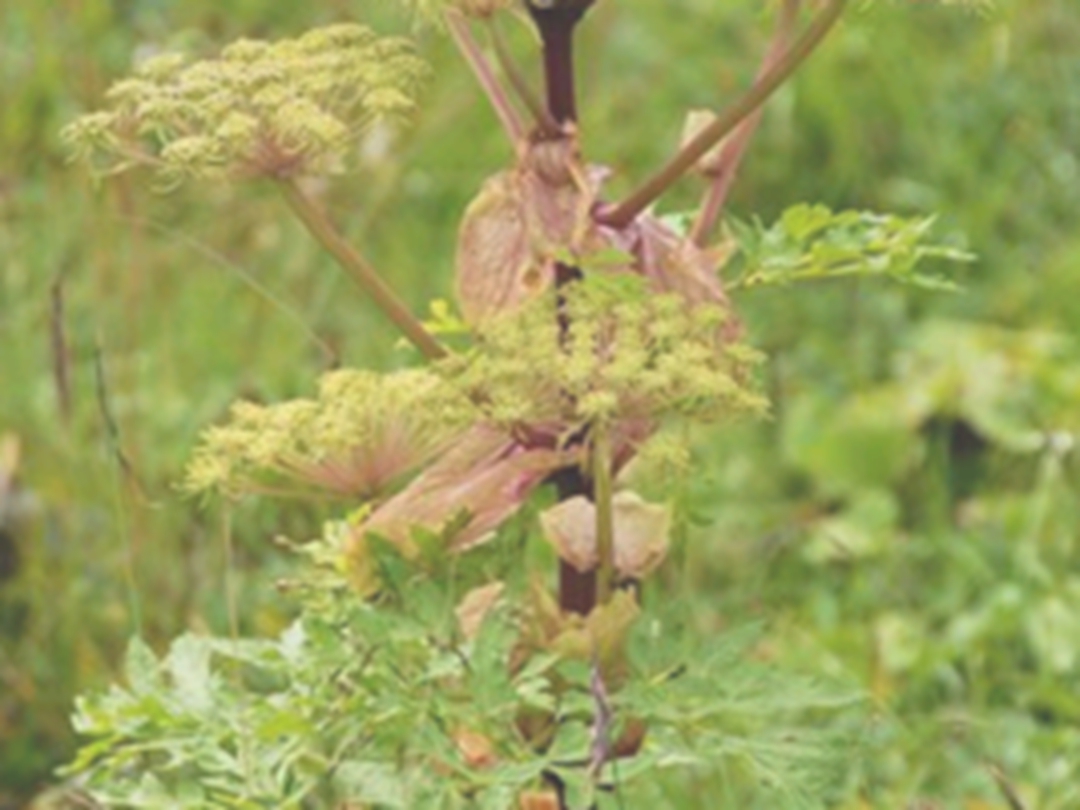
Alpine Celery Root
Alpine Celery Root, a name in traditional Chinese medicine. It is the root of the plant Coelopleurum saxatile (Turcz.) Drde, belonging to the Apiaceae family. It is distributed in the Changbai Mountains region of Jilin Province. It has the therapeutic effects of regulating qi and strengthening the stomach, and is used to treat abdominal distension, poor appetite, and indigestion.
Chinese Name : 高山芹根
Nature, Flavor & Meridian Tropism : Pungent, cold
Benefits & Efficacy
Benefits
Regulates qi and strengthens the stomach.
Indications
Used for abdominal distension, poor appetite, and indigestion.
Usage and Dosage
Internal use: Decocted as a soup, 3–9 g.
Relevant Discussions
*Compendium of Medicinal Plants of Changbai Mountain*: “Stomach-strengthening.”
Applications
Processing & Preparation
Harvesting & Processing
Harvested in summer and fall; remove stems and leaves, wash thoroughly, and sun-dry.
Crude Drug Identification
Botanical Information
Botanical Classification
Apiaceae family, genus *Alpine Parsley* (*Alpine Parsley*).
Morphological Characteristics
A biennial herb, 60–80 cm tall. The root is cylindrical, brown, approximately 2 cm in diameter, with transverse wrinkles on the upper part. The stem is sparsely covered with short hairs, often purplish, hollow, and shallowly grooved. Basal and lower stem leaves have long petioles and wither during flowering; middle stem leaves have short petioles, with the lower half of the petiole forming a broad sheath and the margins membranous;Leaves are twice- or thrice-ternately compound; terminal segments are rhombo-ovate or oblique-ovate, with or without petioles, tapering to a point at the apex, wedge-shaped or nearly rounded at the base, with margins densely double-serrate with single teeth; both surfaces are glabrous; upper leaves are reduced to broad sheaths, with the apex twice-ternately compound.The compound umbel of the main umbel is usually without bracts; the rays are densely covered with short hairs and inclined upward; there are 7–8 small bracts, long-conical, usually longer than the pedicels, with short hairs along the margins; the pedicels are covered with short, rough hairs; the calyx teeth are inconspicuous; the petals are white; the style base is flattened.The schizocarp is elliptical, with fruit ridges forming relatively thick triangular wings; the lateral ridges are wider, with 1 oil tube in the ridge groove and 2 oil tubes on the fused surface. Flowering period: July–August; fruiting period: August–September.
Distribution Area
Changbai Mountain region, Jilin Province.