Qi Snake, a name in traditional Chinese medicine. It is the dried body of the sharp-snouted viper (Agkistrodon acutus (Güenther)), a species of the genus Agkistrodon in the family Viperidae. It has the effects of dispelling wind, unblocking meridians, and relieving spasms. It is primarily used to treat stubborn rheumatic arthralgia, hemiplegia due to stroke, infantile convulsions, tetanus, leprosy, and scabies.
Qi Snake
Qi Snake, a name in traditional Chinese medicine. It is the dried body of the sharp-snouted viper (Agkistrodon acutus (Güenther)), a species of the genus Agkistrodon in the family Viperidae. It has the effects of dispelling wind, unblocking meridians, and relieving spasms. It is primarily used to treat stubborn rheumatic arthralgia, hemiplegia due to stroke, infantile convulsions, tetanus, leprosy, and scabies.
Chinese Name : 蕲蛇
Latin Name : Agkistrodon
Aliases : White-flowered Snake, Nose-curling Snake, Qizhou White-flowered Snake, Flower Snake, Five-Step Snake, Hundred-Step Snake, Coiled Snake, Checkered Snake, Five-Step Jumper, Dragon Snake, Plowman, Deaf-Old-Woman Snake (common name)
Nature, Flavor & Meridian Tropism : Taste: sweet and salty; nature: warm; enters the Liver meridian
Benefits & Efficacy
Benefits
Dispels wind, unblocks the meridians, and relieves spasms.
Indications
1. Intractable rheumatic arthralgia and hemiplegia due to stroke: This herb possesses a penetrating and dispersing nature; its warm nature unblocks the meridians. It can penetrate inward to the viscera and outward to the muscle surface, penetrating the bones to expel wind, thereby eliminating wind pathogens from both the interior and exterior. It is an essential herb for cutting off wind;It also unblocks the meridians and is suitable for all cases of rheumatic arthralgia; it is particularly effective in treating chronic, intractable rheumatic arthralgia, meridian obstruction, numbness, and stiffness, as well as stroke-induced facial asymmetry and hemiplegia. 2. Infantile convulsions and tetanus: This herb enters the Liver meridian, capable of both dispelling external wind and calming internal wind. Once the wind is dispelled, convulsions and spasms subside on their own, making it a commonly used remedy for treating convulsions and spasms. 3. Leprosy, Scabies, and Ringworm: This herb penetrates to the skin’s surface to dispel wind and relieve itching, while also employing the principle of “using poison to counter poison.” Therefore, it is commonly used for conditions where pathogenic wind-toxin is congested in the skin and muscles. 4. By employing the principle of “using poison to counter poison,” this herb can treat scrofula, syphilis, and malignant sores.
Usage and Dosage
Internal Use: Decoct 3–9 g; grind into a powder and swallow 1–1.5 g at a time, 2–3 times daily. Alternatively, it may be soaked in wine, boiled into a paste, or incorporated into pills or powders for oral administration.
Precautions
Contraindicated for those with yin deficiency and internal heat.
Chemical Constituents
This product contains three toxic proteins: AaT-I, AaT-II, and AaT-III, each composed of 18 amino acids. It also contains hyaluronidase.
Pharmacological Actions
Qi Snake exhibits sedative, hypnotic, and analgesic effects; its injectable solution has a significant hypotensive effect; its aqueous extract activates the fibrinolytic system; and its ethanol extract enhances the phagocytic capacity of macrophages, significantly increasing the clearance rate of carbon particles.
Relevant Discussions
1. *Kaibao Bencao*: “Mainly used for stroke, rheumatic arthralgia with loss of sensation, stiffness of tendons and meridians, facial paralysis, hemiplegia, joint pain, severe skin conditions such as scabies and tinea, sudden-onset severe itching, and weakness in the legs preventing prolonged standing.”
2. *Compendium of Materia Medica*: “It penetrates the bones to expel wind, stops convulsions, and calms spasms. It is an essential medicine for wind-arthralgia, convulsions, leprosy, and malignant sores, as it travels internally to the viscera and externally to the skin, reaching every part of the body.”
Applications
Clinical Applications
1. For treating chronic, deep-seated rheumatic arthralgia, blocked meridians, numbness, and stiffness, as well as stroke-induced facial asymmetry and hemiplegia, it is often combined with Fangfeng, Qianghuo, and Danggui, such as in Bai Hua She Jiu (from *Binhu Jianfang*).
2. To treat acute and chronic convulsions in children, as well as convulsions and spasms caused by tetanus, it is often used in combination with Wushao Snake and Centipede, as in the Dingming Powder (from *Shengji Zonglu*).
3. For the treatment of leprosy, it is often combined with Rheum palmatum, Cicada Shed Skin, and Gleditsia thorn, as in the Zhui Feng San (from *Secretly Transmitted Formulas for Leprosy*); for the treatment of scabies and tinea, it can be used with Schizonepeta, Mentha, and Gastrodia, as in the Qu Feng Gao (from *Medical Fortress: The Supreme Commander*).
Related Compatibility
1. Combining Qi Snake with Fangfeng: Qi Snake has a nature that moves swiftly and penetrates deeply; it possesses a potent ability to dispel wind and is effective at unblocking meridians and activating collaterals. Fangfeng is pungent and warm, with dispersing properties; both its aroma and nature ascend, making it highly effective in treating wind-related conditions. It not only dispels wind-pathogens from the muscle-skin layer but also removes retained dampness from the meridians and collaterals, demonstrating excellent pain-relieving effects.When combined, these two herbs can dispel wind, unblock the meridians, eliminate dampness, and relieve pain. This combination is suitable for treating intractable rheumatic arthralgia, numbness of the limbs, stiffness of tendons and meridians, as well as stroke-induced facial paralysis and hemiplegia.
2. Qi Snake combined with Realgar: Qi Snake excels at dispelling wind and relieving itching; at the same time, due to its toxicity, it also employs the principle of “using poison to counter poison.” Realgar is pungent, warm, and toxic, possessing excellent detoxifying properties. When combined, these two herbs can expel wind, neutralize toxins, and relieve itching. They are suitable for treating leprosy, numbness in the hands and feet, and skin itching.
3. Qi Snake Combined with Ephedra: Qi Snake clears wind-toxin from the meridians; Ephedra dispels wind-cold. When combined, they have the effect of clearing wind, dispelling cold, and relieving pain. If Cinnamon Twig is added to warm the yang and unblock the meridians, the efficacy in clearing wind, alleviating arthralgia, and relieving pain is further enhanced. This combination is suitable for joint pain and limb numbness caused by wind-dampness obstructing the meridians.
4. Qi Snake combined with Cicada Shedding: Qi Snake expels wind-toxin from the blood and directs it outward to the skin and subcutaneous tissue; Cicada Shedding, with its pungent and cool nature, dispels wind-heat and relieves itching. When combined, these two herbs exhibit remarkable efficacy in dispelling wind, clearing heat, and relieving itching. This combination is suitable for skin itching caused by urticaria, scabies, and chronic tinea.
5. Qi Snake Combined with Centipede: Qi Snake moves swiftly and penetrates deeply, capable of expelling wind pathogens, penetrating joints, unblocking meridians, and stopping convulsions; Centipede moves with fierce intensity, capable of expelling wind, stopping spasms, resolving phlegm, and dispersing nodules. When combined, these two herbs enter the blood vessels, demonstrating remarkable efficacy in dispelling wind, stopping spasms, dispersing nodules, and relieving pain.This combination is suitable for pediatric febrile convulsions and stiffness in the neck and back caused by tetanus, as well as muscle and tendon contractures. It is also highly effective for chronic, intractable arthralgia and conditions characterized by pronounced joint pain or stiffness and pain in the lower back and spine.
6. Qi Snake Combined with Whole Scorpion: Qi Snake penetrates the internal organs and reaches the skin and hair, dispelling wind and unblocking the meridians;Whole Scorpion calms wind, relieves spasms, unblocks the meridians, and alleviates pain. When used in combination, these two herbs synergistically produce a remarkable effect in dispelling wind and unblocking the meridians. This formula can be used to treat limb convulsions caused by tetanus or infantile convulsions, as well as facial paralysis and hemiplegia resulting from stroke affecting the meridians. It is also highly effective for chronic, intractable arthralgia with joint swelling and pain, as well as limb numbness.
Related Medicines
Qi Snake Medicinal Wine, Qi Snake Rheumatism Wine, Qi Snake Wind-Dispelling Wine, and Huoluo Pills.
Related Prescriptions
Traditionally passed down: White Flower Snake Wine (*Compendium of Materia Medica*), Qi Snake Wine (*Essentials of Medical Literature*), White Flower Snake Pills (*Comprehensive Record of Sacred Remedies*), and Bi Jin Pills (*Yang Family’s Private Formulary*).
Processing & Preparation
Harvesting & Processing
It is typically captured during the summer and fall seasons. The snake’s abdomen is slit open, the internal organs removed, and the body washed and dried. The head and scales are removed, and the body is cut into sections for raw use, wine-roasting, or soaking thoroughly in yellow wine; the scales and bones are then removed before use.
Processing Methods
1. Qi Snake: Take the raw material, remove the head and scales, and cut into sections one cun in length.
2. Qi Snake Meat: Method 1: Take the raw material, remove the head, soak thoroughly in yellow wine, then remove the skin and bones, and dry. Use 20 kg of yellow wine per 100 kg of Qi snakes.Method 2: Take the cleaned Qi Snake, soak it in yellow wine, then steam thoroughly in a steamer. Remove the skin and bones, and sun-dry.
3. Wine-Processed Qi Snake: Take Qi Snake segments, mix thoroughly with yellow wine, let stand until thoroughly infused, place in a pot, and heat over low heat. Stir-fry until yellow, remove, and dry. Use 20 kg of yellow wine per 100 kg of Qi Snake.
Storage Methods
Store in a dry container in a cool, dry place to prevent mold and insect infestation.
Crude Drug Identification
Identification
Polymerase Chain Reaction (PCR) method.
1. Template DNA Extraction: Take 0.5 g of the product, place it in a mortar, add an appropriate amount of liquid nitrogen, and grind thoroughly into a powder. Take 0.1 g and place it in a 1.5-mL centrifuge tube. Add 275 μL of digestion buffer [200 μL of nuclear lysis buffer, 50 μL of 0.5 mol/L disodium ethylenediaminetetraacetate (EDTA) solution,20 μL of proteinase K (20 mg/mL), and 5 μL of RNase solution], incubate in a 55°C water bath for 1 hour, add 250 μL of lysis buffer, mix thoroughly, transfer to a DNA purification column, and centrifuge (at 10,000 rpm) for 3 minutes;Discard the filtrate; add 800 μL of elution buffer [26 μL of 5 mol/L potassium acetate solution, 18 μL of 1 mol/L Tris-HCl solution (pH 7.5), 3 μL of 0.5 mol/L disodium ethylenediaminetetraacetate solution (pH 8.0),480 μL anhydrous ethanol, and 273 μL sterile double-distilled water], and centrifuge (at 10,000 rpm) for 1 minute; Discard the filtrate, and elute repeatedly with the above elution buffer three times, centrifuging (at 10,000 rpm) for 1 minute after each elution;Discard the filtrate, centrifuge for another 2 minutes, transfer the DNA purification column to another centrifuge tube, add 100 μL of sterile double-distilled water, let stand at room temperature for 2 minutes, then centrifuge (at 10,000 rpm) for 2 minutes; collect the supernatant as the test solution and store it at –20°C for later use.Separately, take 0.5 g of Qi Snake as the control herbal material and prepare a control herbal material template DNA solution using the same method.
2. PCR Reaction: Identification primers: 5′GGCAATTCACTACACAGCCAA-CATCAACT3′ and 5′CCATAGTCAGGTGGTTAGTGATAC3′. PCR reaction system: Conducted in a 200 μl centrifuge tube; the total reaction volume is 25 μl. The reaction system includes 2.5 μl of 10× PCR buffer,2 μL of dNTPs (2.5 mmol/L), 0.5 μL each of the identification primers (10 μmol/L), 0.2 μL of high-fidelity Taq DNA polymerase (5 U/μL), 0.5 μL of template, and 18.8 μL of sterile double-distilled water.Place the centrifuge tubes in the PCR instrument. PCR reaction parameters: pre-denaturation at 95°C for 5 minutes, 30 cycles (95°C for 30 seconds, 63°C for 45 seconds), and extension (72°C) for 5 minutes.
3. Electrophoresis Analysis: Perform agarose gel electrophoresis according to Method 2 (General Rules 0541), using a 1% gel containing the nucleic acid gel stain GelRed; load 8 μl each of the test sample and control herbal material PCR reaction solutions, and 2 μl of the DNA molecular weight marker (0.5 μg/μl).After electrophoresis, the gel section was examined using a gel imager or a UV transilluminator. In the electrophoresis profile of the test sample, a single DNA band should be present at 300–400 bp, corresponding to the position in the electrophoresis profile of the reference herbal material.
Properties of Crude Drugs
This specimen is coiled into a disk-shaped form, with a disk diameter of 17–34 cm and a total length of up to 2 m. The head is positioned slightly upward in the center; it is triangular and flattened, with the snout pointing upward—commonly referred to as a “curved snout.” The upper jaw contains tubular fangs that are hollow and sharp.On either side of the back, there are 17–25 “V”-shaped markings composed of dark brown and light brown; the upper tips of these “V” shapes meet at the midline of the back, commonly known as “square-victory patterns.” In some specimens, the left and right markings do not connect and are arranged in a staggered pattern. The belly, whether spread open or not, is grayish-white with relatively large scales bearing black, nearly circular spots, commonly known as “bead-like spots”;The inner surface of the belly is yellowish-white. The spinous processes of the vertebrae are relatively high, projecting upward in a blade-like shape. The anterior and posterior vertebral processes are essentially identical in shape, typically curved like a scimitar and sloping backward, with their tips clearly extending beyond the posterior convex surface of the vertebral body. The tail tapers abruptly, ending in a single triangular, dark gray keratinous scale. It has a fishy odor and a slightly salty taste.
Properties of Processed Slices
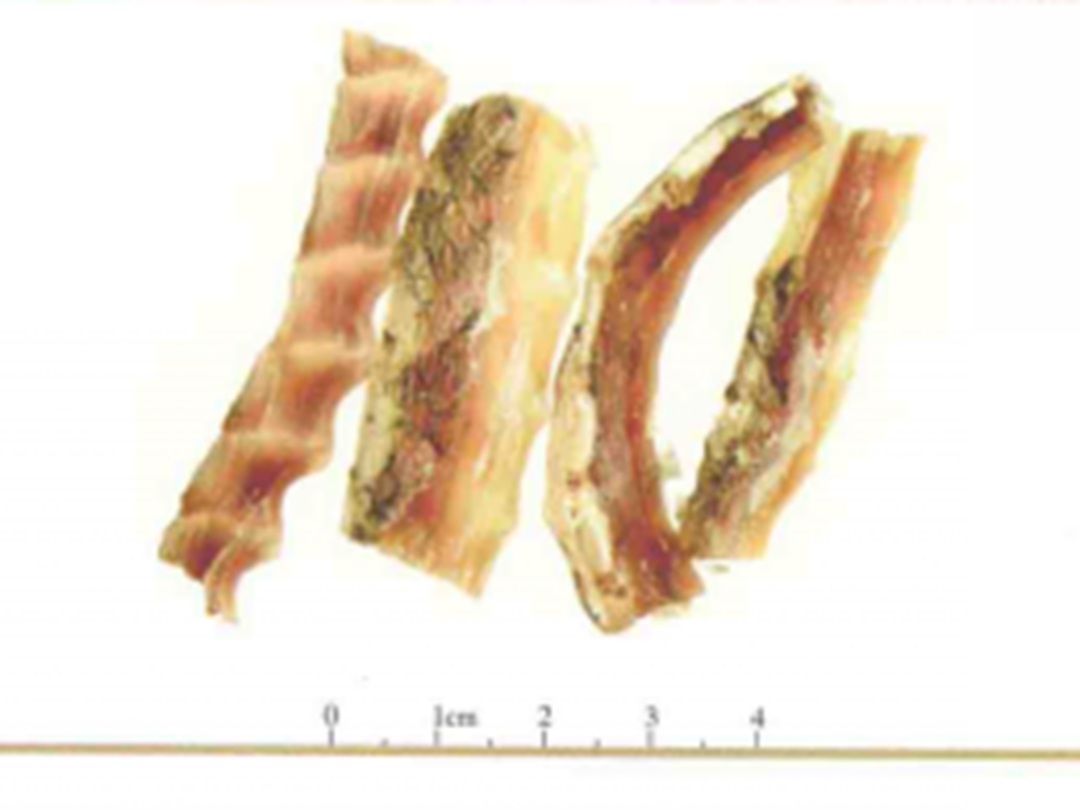
1. Qi Snake: Cut into small, square-shaped pieces. The dorsal vertebrae protrude to form ridges, and the surface displays square-shaped black-brown or light brown markings. Scale scars are present; the area near the abdomen is grayish-white, and the inner abdominal wall is yellowish-white, with the vertebrae and ribs visible. It has a fishy odor and a slightly salty taste.
2. Qi Snake Meat: Small, slice-like pieces, yellowish-white in color, free of skin and bones, with a slight aroma of alcohol.
3. Wine-Infused Qi Snake: Resembles the Qi Snake in shape, but with a darker surface color and a slight aroma of alcohol.
Botanical Information
Morphological Characteristics
The snout is pointed and curved upward and forward; the head is triangular and clearly distinct from the neck. The dorsal surface of the head is black; the lateral snout ridge extends diagonally from the eye to below the corner of the mouth and is yellowish-white; the head, belly, and throat are also white. The body is stout, the tail is relatively short, and the total length can reach 1.5 m. The dorsal surface is dark brown or brownish-gray.The dorsal stripe consists of (15–20) + (2–5) large square spots with light brown margins and slightly darker centers; some spots are incomplete. The ventral surface is white with blackish-brown patches arranged in a crisscross pattern, roughly forming three vertical rows; in some individuals, several patches merge, resulting in indistinct boundaries. The ventral surface of the tail is white, scattered with blackish-brown spots of varying density.The snout scales are very high; the upper part is narrow and elongated, forming the ventral surface of the pointed snout; there is one pair of inter-nasal scales, which are also narrow and elongated, forming the ventral surface of the pointed snout. The dorsal surface of the head bears large, symmetrical scales rich in tubercles; there is a zygomatic fossa; there are 2 preorbital scales, 1 postorbital scale, and 1 relatively large suborbital scale; there are 7 upper lip scales.Dorsal scales: 21 (23)–21 (23)–17 (19) rows; except for the outermost 1–3 rows, the remainder all bear nodular, strong ridges; ventral scales: 157–170;Anal scales intact; subcaudal scales 52–59, mostly in two rows, a few in a single row; posterior portion of the tail laterally compressed; the terminal scale laterally compressed and long-pointed.
Distribution Area
Distributed in Anhui, Zhejiang, Jiangxi, Fujian, Taiwan, Hubei, Hunan, Guangdong, Guangxi, and Guizhou.