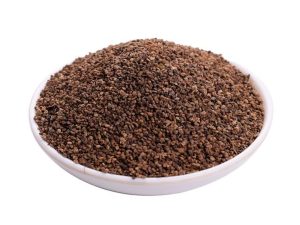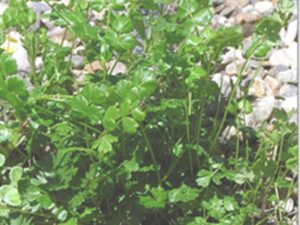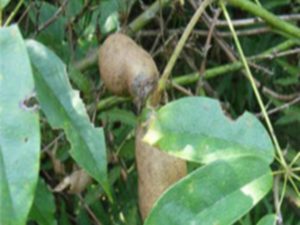
Ma-sang bark, a name in traditional Chinese medicine. It is the bark of Coriaria nepalensis Wall., a plant of the Coriariaceae family. It is distributed in southwestern China, as well as in Shaanxi, Gansu, Hubei, Hunan, Guangxi, and Tibet. It has the efficacy of clearing heat. It is commonly used to treat oral ulcers.
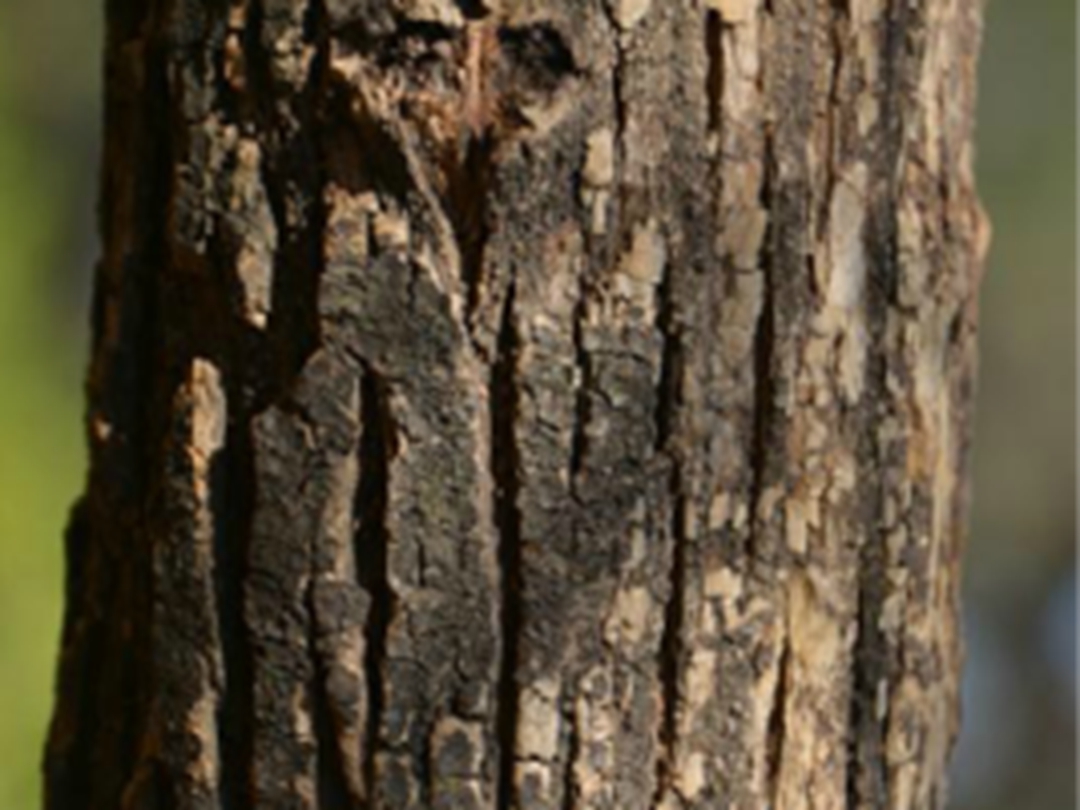
Coriaria Bark
Ma-sang bark, a name in traditional Chinese medicine. It is the bark of Coriaria nepalensis Wall., a plant of the Coriariaceae family. It is distributed in southwestern China, as well as in Shaanxi, Gansu, Hubei, Hunan, Guangxi, and Tibet. It has the efficacy of clearing heat. It is commonly used to treat oral ulcers.
Chinese Name : 马桑树皮
Latin Name : Coriaria nepalensis Wall.
Authentic Producing Area : Southwest China, Shaanxi, Gansu, Hubei, Hunan, Guangxi, Tibet
Nature, Flavor & Meridian Tropism : Bitter in taste, cool in nature; enters the Heart meridian
Benefits & Efficacy
Benefits
Clears heat.
Indications
White mouth sores.
Usage and Dosage
Pound 1–2 grams into a paste, wrap it in blue cloth, hold it in the mouth, remove it after five minutes, and repeat at intervals several times a day.
Precautions
Not yet established.
Relevant Discussions
*Guizhou Herbal Medicine*: “Treats white mouth sores.”
Applications
Related Compatibility
For white mouth sores: Pound fresh Ma-sang bark into a fine powder and hold it in the mouth. (*Guizhou Herbal Medicine*)
Processing & Preparation
Crude Drug Identification
Botanical Information
Botanical Classification
Matsang, a plant of the Matsang family.
Morphological Characteristics
Ma-sang, also known as Toad Tree, Asimu, Ladder to Heaven, Lotus Offering, Four-Linked Tree, Black Fruit, Drunken Fish, Noisy Fish, Water Ma-sang, Wild Ma-sang, Saddle, Thousand-Year Red, Black Tiger King, and Purple Mulberry. A deciduous shrub, sometimes reaching a height of 6 m.Branches are spreading obliquely; young branches are ribbed or bear four narrow wings, glabrous, and often tinged with purple; older branches have round, raised lenticels.Leaves are simple and opposite; petioles are short, 1–3 mm long, usually purple, with a cushion-like protrusion at the base; leaf blades are papery to thinly leathery, elliptic to broadly elliptic, 2.5–8 cm long and 1.5–4 cm wide, with an acute apex, a nearly rounded base, and entire margins; both surfaces are glabrous or only the lower surface has fine hairs along the veins; three basal veins.Racemes are lateral on the previous year’s branches; flowers are unisexual and monoecious. Male inflorescences are 1.5–2 cm long, blooming before the leaves emerge; the rachis is covered with glandular pubescence; there are 5 sepals and 5 petals; 10 stamens; sterile pistils are present;female inflorescences arise with the leaves, 4–6 cm long, purplish; sepals and petals as in male flowers; petals fleshy and keel-shaped; stamens shorter; 5 separate carpels bearing small wart-like projections; stigma curved outward at the apex; berry-like achenes, 5 in number, turning from red to purplish-black when ripe, approximately 6 mm in diameter, enclosed by fleshy petals.Flowering period: March–April; fruiting period: May–June.
Distribution Area
Distributed in Southwest China, as well as Shaanxi, Gansu, Hubei, Hunan, Guangxi, and Tibet.