Lemon Eucalyptus Leaves, a name in traditional Chinese medicine. These are the leaves of the plant Eucalyptus citriodora Hook.f. [E. maculata Hook. var. citriodora (Hook.f.) Bailey] of the Myrtaceae family. Lemon Eucalyptus is cultivated in Fujian, Taiwan, Guangdong, Hainan, and Guangxi.It has the therapeutic effects of dispelling wind and removing dampness, strengthening the stomach and relieving pain, and detoxifying and relieving itching. It is commonly used for wind-cold colds, rheumatic bone pain, stomach pain, food stagnation, bloating, vomiting, and diarrhea caused by wind-heat, dysentery, asthma, malaria, boils and abscesses, rubella, eczema, chronic tinea, burns from fire or water, and shell-shock injuries.
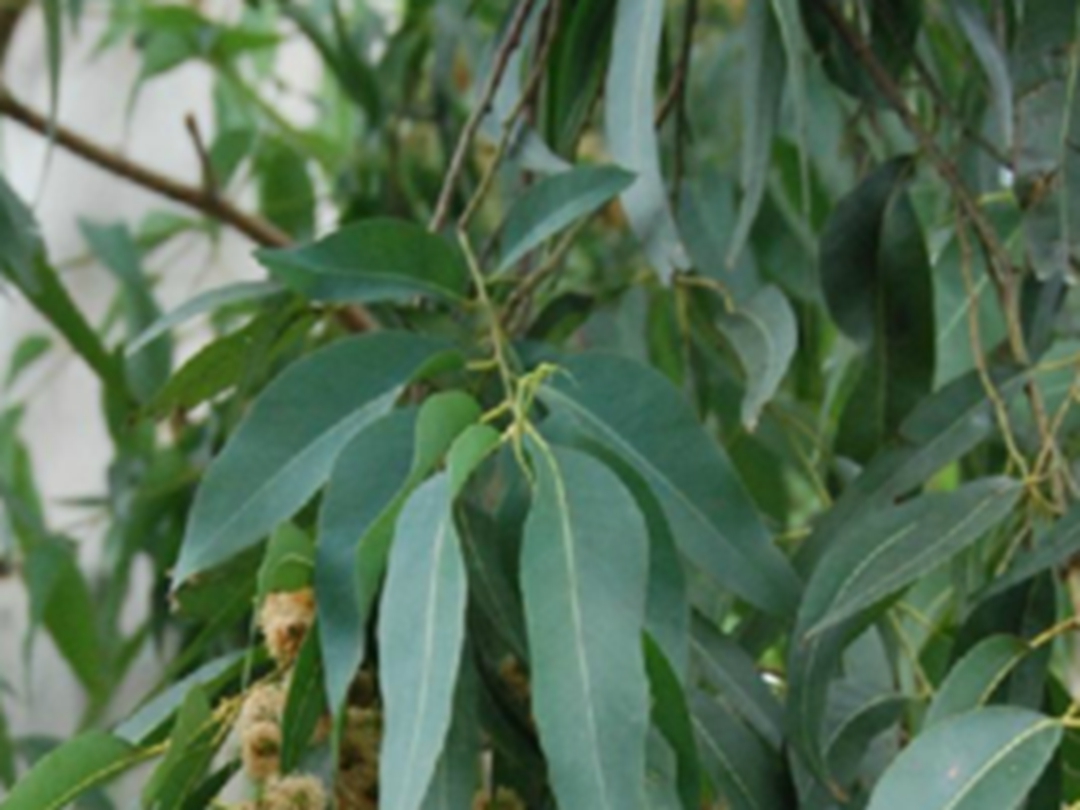
Lemon Eucalyptus Leaves
Lemon Eucalyptus Leaves, a name in traditional Chinese medicine. These are the leaves of the plant Eucalyptus citriodora Hook.f. [E. maculata Hook. var. citriodora (Hook.f.) Bailey] of the Myrtaceae family. Lemon Eucalyptus is cultivated in Fujian, Taiwan, Guangdong, Hainan, and Guangxi.It has the therapeutic effects of dispelling wind and removing dampness, strengthening the stomach and relieving pain, and detoxifying and relieving itching. It is commonly used for wind-cold colds, rheumatic bone pain, stomach pain, food stagnation, bloating, vomiting, and diarrhea caused by wind-heat, dysentery, asthma, malaria, boils and abscesses, rubella, eczema, chronic tinea, burns from fire or water, and shell-shock injuries.
Chinese Name : 柠檬桉叶
Nature, Flavor & Meridian Tropism : Taste: pungent and bitter; nature: slightly warm. Enters the Spleen, Stomach, and Liver meridians
Benefits & Efficacy
Benefits
Dispels wind and removes dampness; strengthens the stomach and relieves pain; detoxifies and relieves itching.
Indications
Used for wind-cold colds, rheumatic bone pain, stomach pain, food stagnation, bloating, vomiting, and diarrhea caused by wind-heat, dysentery, asthma, malaria, boils and abscesses, hives, eczema, chronic tinea, burns from water or fire, and shell-shock injuries.
Usage and Dosage
Internal use: Decocted as a soup, 3–6 g. External use: As needed; decocted for external washing.
Precautions
Use with caution in cases of yin deficiency with internal heat.
Pharmacological Actions
1. Antitubercular effects; 2. Antitumor effects.
Relevant Discussions
1. *Compendium of Guangxi Traditional Chinese Medicine*: “Bitter in taste, aromatic in scent, warm in nature. Non-toxic.”
2. *Compendium of Fujian Medicinal Herbs*: “Bitter and pungent, slightly warm.”
3. *Compendium of Guangxi Traditional Chinese Medicine*: “For external use, prepare a decoction for washing boils and abscesses; treats various skin diseases and rheumatic pain. Traditionally used in folk medicine to treat dysentery.”
Applications
Related Compatibility
1. For malaria: Decoct 7 lemon eucalyptus leaves in water. Add 1 egg or 1–2 shortbread cookies, and consume 1–2 hours before an attack. (*Compendium of Fujian Medicinal Herbs*)
2. For diarrhea, abdominal pain, boils, and rheumatic pain: An appropriate amount of lemon eucalyptus leaves; decoct into a decoction for oral administration or use the decoction to wash the affected area.
3. For dysentery: An appropriate amount of lemon eucalyptus leaves; decoct into a decoction for oral administration. (Formulas 2–3 are from *New Compilation of Traditional Chinese Veterinary Medicine*)
Processing & Preparation
Harvesting & Processing
Harvest on sunny days in autumn; sun-dry or use fresh.
Crude Drug Identification
Properties of Crude Drugs
Young, tender leaves are lanceolate, with glandular hairs; they have a rounded base and a shield-shaped petiole. Mature leaves are narrowly lanceolate, approximately 1 cm wide and 10–15 cm long, slightly curved, with black glandular dots on both surfaces. Transitional leaves are broadly lanceolate, 3–4 cm wide and 15–18 cm long, with a petiole 1.5–2 cm long.When dried, the leaves turn a withered green; when crushed, they emit a strong lemon scent and have a slightly bitter and pungent taste.
Botanical Information
Botanical Classification
Lemon eucalyptus, a plant of the Myrtaceae family.
Morphological Characteristics
Lemon eucalyptus is also known as oil eucalyptus, long-lasting fragrance, fragrant eucalyptus, lemon-scented eucalyptus, fish-scale wood, hairy iron nitrate, and “jiao’ermeng.” It is a large tree, reaching up to 28 m in height.The bark is smooth, grayish-white, and peels off in large plates. Young leaves are lanceolate, with glandular hairs, a rounded base, and a shield-shaped petiole; mature leaves are narrowly lanceolate, approximately 1 cm wide and 10–15 cm long, slightly curved, with a wedge-shaped base and black glandular dots on both surfaces; when rubbed, they emit a strong lemon scent;transitional leaves are broadly lanceolate, 3–4 cm wide and 15–18 cm long, with petioles 1.5–2 cm long. Panicles are axillary;flower pedicels 3–4 mm long, 2-angled; flower buds long obovate, 6–7 mm long; calyx tube 5 mm long, 4 mm wide at the top; cap 1.5 mm long, slightly wider than the calyx tube, rounded at the apex, with a small spur; stamens numerous, 6–7 mm long, arranged in two rows; anthers elliptical, dorsifixed, with parallel locules;The ovary is fused with the calyx tube. The capsule is jug-shaped, 1–1.2 cm long and 8–10 mm wide, with the fruit valves concealed within the calyx tube. Flowering period: April–September.