
any people are surprised to see cordyceps discussed for sleep support, because this medicinal mushroom is widely known for boosting daytime energy and endurance. Cultivated Cordyceps militaris has a long‑standing record within Traditional Chinese Medicine (TCM, 中医) for balancing the body’s internal reserves, easing stress‑driven restlessness and improving sleep quality — yet it is not a fast‑acting sedative sleeping pill. Most sleep‑related research comes from pre‑clinical animal experiments and small‑scale human clinical trials; large‑scale definitive human studies remain limited. It works by restoring whole‑body balance rather than forcing drowsiness.
Important Disclaimer: Cordyceps is complementary wellness support only. It cannot replace prescription sleep medication or medical care for chronic insomnia, sleep apnea or clinical sleep disorders. If you consistently struggle with falling asleep, staying asleep or daytime exhaustion caused by poor sleep, consult a sleep‑specialized healthcare provider.
Traditional Chinese Medicine Perspective: Cordyceps and Sleep Balance
In TCM theory (中医理论), sleep‑wake cycles rely heavily on the balance of Kidney Jing (肾,essence), Kidney Yin‑Yang (肾阴肾阳), and smooth circulation of Wei‑Qi (卫气,defensive energy) throughout day and night.
According to classical Chinese herbal records, disturbed sleep often arises when Kidney Jing becomes depleted: long‑term stress, overwork, chronic fatigue or post‑illness exhaustion consume the body’s deep constitutional reserves. Common accompanying signs include night sweating, lower‑back soreness, frequent nighttime urination, mental restlessness and light, easily‑interrupted sleep.
Cordyceps acts as a dual Lung‑Kidney tonic (补肺益肾). TCM practitioners do not describe it as an herb that “knocks you out”. Instead, it nourishes Kidney Jing, tonifies Lung Qi, calms disturbed spirit (安神) and helps restore natural yin‑yang rhythm so the body can shift smoothly into rest mode at night.
Important TCM note: Cordyceps is best suited for insomnia linked to constitutional depletion and burnout. It is not the first‑choice herb for insomnia caused by excess internal heat, severe Liver‑Qi stagnation from pure emotional anxiety without physical fatigue.
Modern Scientific Mechanisms & Research Findings
Note: Multiple mechanisms are observed in cell and animal research. Some small human trials show subjective sleep improvements, but high‑power large human RCT evidence is still limited.
1. Cordycepin acts as an adenosine analog to support deep NREM sleep
Cordycepin (3′‑deoxyadenosine), the signature bioactive compound inside Cordyceps militaris, is structurally similar to adenosine, the body’s natural sleep‑promoting molecule. Rat studies show cordycepin binds to brain adenosine receptors, increases non‑rapid‑eye‑movement (NREM) deep restorative sleep phases and reduces frequent sleep‑wake transitions. NREM sleep is critical for physical tissue repair, immune recovery and mental refreshment. This explains why many users report deeper, less‑fragmented sleep, rather than instant heavy sedation.
2. HPA‑axis adaptogenic modulation for stress‑related sleep trouble
Chronic high cortisol from burnout, overtraining or long‑term stress is one of the biggest triggers for middle‑of‑the‑night wake‑ups. As an adaptogen, cordyceps modulates hypothalamic‑pituitary‑adrenal (HPA‑axis) activity, blunting excessive stress‑hormone spikes. It does not artificially lower cortisol; it helps bring the diurnal cortisol rhythm back to normal: higher cortisol in daytime for alertness, and natural cortisol drop at night to prepare for sleep.
This explains the apparent contradiction: cordyceps supports daytime energy while indirectly improving night‑time rest — it corrects dysregulated stress signalling, instead of being either purely stimulant or purely sedative.
3. Antioxidant and anti‑neuroinflammatory protection
Persistent low‑grade neuroinflammation disturbs sleep architecture. Polysaccharides and cordycepin from cordyceps suppress excess pro‑inflammatory cytokines inside the nervous system, reduce oxidative damage to brain neurons. Reduced neural inflammation helps stabilise sleep cycles, especially for people recovering from long‑term illness or post‑viral fatigue who suffer sleep disruption.
4. Human clinical trial observations
A small randomized controlled trial using fermented cordyceps preparation measured sleep changes via Pittsburgh Sleep Quality Index (PSQI). Participants with primary insomnia showed gradual improvements in sleep latency, sleep efficiency and reduced night‑time disturbance after 14‑28 days of consistent intakeFrontiers. Another preliminary 6‑week trial explored cordyceps as adjuvant support for insomnia alongside depression treatment, but further large‑sample human validation is still required.
Critical limitation: These studies used fermented broth formulations. Effects cannot be directly extrapolated to every capsule or powder supplement sold on the market, because cordycepin concentration varies widely between products.
Which People May Get Sleep‑Related Support From Cordyceps
These describe functional wellness patterns, not formal medical diagnoses:
- Light, fragmented sleep caused by long‑term burnout, over‑work, heavy athletic training and constitutional depletion (matches TCM Kidney Jing deficiency signs: fatigue, night urination, lower‑back weakness)
- Post‑viral or post‑illness recovery with poor sleep quality alongside persistent tiredness
- Stress‑driven sleep disruption, where cortisol stays elevated at night, yet you feel drained during daytime
Groups expecting minimal sleep benefit:
- Acute insomnia triggered purely by sharp emotional anxiety, without physical fatigue or constitutional depletion
- Severe sleep apnea, advanced clinical sleep disorders requiring medical intervention
- Insomnia driven by unmanaged pain, thyroid disorders or other diagnosed organic illness
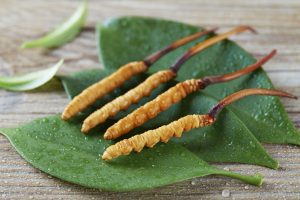
Wild Ophiocordyceps sinensis vs Cultivated Cordyceps militaris for Sleep Support
| Item | Ophiocordyceps sinensis (Wild caterpillar fungus) | Cultivated Cordyceps militaris |
|---|---|---|
| Sleep‑relevant bioactives | Highly variable cordycepin content, batch inconsistency | Controlled indoor cultivation, standardized cordycepin and polysaccharide levels |
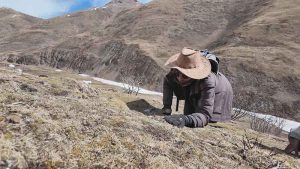
| Quality risks | High adulteration risk, heavy‑metal contamination from high‑altitude soil | Lab‑testable raw material, stable potency |
| Cost | Extremely expensive for long‑term daily use | Cost‑effective for cyclic supplementation |
| Research background | Mostly historical TCM clinical observation | Most modern pre‑clinical sleep mechanism research uses cultivated Cordyceps militaris |
| Practical recommendation | Not recommended for regular daily sleep‑support use | Preferred choice for sleep‑related wellness supplementation |
Important market warning: Many unregulated sleep‑support herbal blends labelled cordyceps may contain hidden sedative compounds. Always choose third‑party independently tested supplements.
Recommended Usage, Dosage & Timing for Sleep‑Related Wellness
This is extremely important: cordyceps can create mild alertness in sensitive users. Even though it supports night‑time sleep quality, it is generally NOT recommended to take large doses right before bedtime.
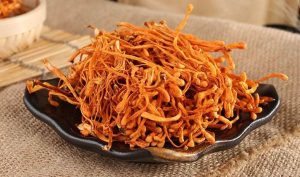
- Forms: Standardized dual‑extract capsules / powder (preferred for consistent cordycepin levels); cordyceps fruiting‑body decoction tea.
- Adult daily dosage for sleep‑balance goals: 1000‑2000 mg standardized Cordyceps militaris extract per day.
- Timing: Best taken in morning or early afternoon. If you take it too late in the evening, a subset of sensitive individuals may experience heightened mental alertness and worse falling asleep. Observe your personal response.
- Cyclic protocol: Take daily for 6‑8 weeks, then take a 7‑day rest break. Sleep improvements develop slowly; do not expect overnight results. Evaluate changes after 3‑6 weeks of consistent use.
- Synergistic herbal wellness combinations:
- cordyceps + astragalus root: tonify qi and constitutional reserves for people with fatigue‑linked sleep issues
- cordyceps + schisandra berry: adaptogen pair to stabilize HPA‑axis stress response
Critical Safety Guidelines & Contraindications
- Not a sedative: Do not expect immediate drowsiness after taking cordyceps. It modulates body balance over weeks, it will not produce rapid sleep onset like prescription sleep aids.
- Anticoagulant / anti‑platelet medication: Cordyceps shows mild anti‑platelet activity. If you take blood‑thinning drugs, obtain doctor approval before supplementation.
- Pre‑surgery: Discontinue cordyceps minimum two weeks before any scheduled surgery due to theoretical bleeding risk.
- Autoimmune disease / immunosuppressant drugs: Cordyceps is immune‑modulating. Specialist medical clearance is mandatory, do not self‑supplement.
- Pregnancy and breastfeeding: Avoid cordyceps, insufficient human safety data for these life stages.
- If you notice you become more awake and struggle to fall asleep after taking cordyceps, shift intake time earlier in the day or discontinue use. Individual response varies.
- Sleep hygiene remains foundational: consistent bedtime schedule, low evening blue light, stress management and sleep‑friendly environment matter far more than any herbal supplement.
Final Thoughts
Cordyceps for sleep works in a counter‑intuitive way. Rooted in centuries‑old TCM practice (中医), it nourishes Kidney Jing and restores yin‑yang balance for people whose poor sleep comes from bodily depletion and chronic stress. Modern pre‑clinical science points to cordycepin interacting with brain adenosine receptors to favour deep NREM sleep, plus adaptogenic HPA‑axis stress‑hormone regulation.
Still, human clinical evidence is preliminary. Cordyceps is not a sleeping pill. It cannot force sleep. It may help rebuild conditions needed for naturally restful sleep, mostly for people with burnout‑related fragmented sleep. Cultivated Cordyceps militaris is the practical, test‑safe choice, while wild caterpillar fungus carries high cost and contamination risks. Manage expectations and always prioritize medical evaluation for persistent insomnia.
Q&A Q1: Can I take cordyceps 30 minutes before bed to fall asleep faster?
A: Not recommended for most users. Cordyceps is not an on‑demand sedative. Some sensitive people get mental alertness from cordycepin. For sleep‑balance support, take it in morning or early afternoon. If you want to test evening intake, start with very low dose and closely observe your personal sleep reaction.
Q2: What type of sleep trouble might cordyceps potentially help?
A: It is most promising for fragmented, shallow sleep linked to burnout, heavy training, post‑illness recovery and TCM‑pattern Kidney Jing deficiency. It is less likely to help acute insomnia purely from emotional anxiety without physical fatigue. It cannot treat sleep apnea or severe clinical sleep disorders.
Q3: How long will it take to see sleep improvements from cordyceps?
A: Sleep‑balance changes are gradual. Allow minimum 3‑6 weeks of cyclic consistent intake. If you observe zero improvement after 8 weeks, discontinue supplementation and follow professional sleep‑health guidance.
Q4: Does cordyceps make you drowsy during daytime?
A: Properly‑dosed cultivated cordyceps generally supports daytime alertness. Day‑time drowsiness is not a typical effect. If you feel sleepy after taking it, this is individual unusual response; lower dose or stop using.
Q5: Can I combine cordyceps with other sleep‑support herbs like schisandra?
A: Yes. Cordyceps plus schisandra is a well‑known adaptogen pair for stress‑related sleep disruption. Stick to morning‑early‑afternoon dosing to avoid potential night‑time alertness for sensitive people.
Q6: Are there side‑effects when taking cordyceps for sleep support?
A: Healthy adults usually tolerate it well. Rare mild digestive bloating or loose stools may appear at the beginning. A subset of users get heightened alertness if dosed late in the day. Discontinue for any mushroom‑related allergic reaction.
Q7: Is wild Ophiocordyceps sinensis better than cultivated Cordyceps militaris for sleep?
A: No. Wild caterpillar fungus is extremely expensive, frequently adulterated and has heavy‑metal contamination risk. Cultivated Cordyceps militaris provides standardized cordycepin and polysaccharides and is the recommended option for sleep‑related wellness.







真是意料之外!一直以為蟲草是提神補氣用的,原來還能幫助睡眠。文中提到它在中醫裡能安神、緩解壓力引起的煩躁,這點很吸引人。最近睡不好,也許可以