
Cordyceps is widely known for boosting physical stamina, yet within Traditional Chinese Medicine (TCM, 中医), cultivated Cordyceps militaris has long been used for low mood that originates from deep bodily depletion. It is critical to set clear expectations upfront: cordyceps is not an antidepressant medication. It cannot replace prescription antidepressants, psychotherapy or formal psychiatric care for major depressive disorder. Most mood‑related data comes from pre‑clinical animal studies; large‑scale high‑quality human randomized controlled trials for depression remain limited. It works by rebuilding physical resilience, rather than directly lifting mood instantly.
Important Disclaimer: Cordyceps is complementary wellness support only. It is not a treatment for clinical depression. If you experience persistent low mood, loss of interest, sleep disturbance, suicidal thoughts or other depressive symptoms, please seek professional mental‑health care immediately. Never stop prescribed psychiatric medication without your doctor’s explicit approval.
Traditional Chinese Medicine Perspective: Cordyceps and Depressive‑Like Mood Patterns
In TCM theory (中医理论), emotional low‑mood states can stem from multiple root patterns. Cordyceps targets depression‑like symptoms tied to Kidney Jing depletion (肾精亏虚) and Heart‑Kidney disharmony (心肾不交).
Long‑term overwork, chronic stress, post‑illness weakness or prolonged physical over‑exertion consumes Kidney Jing, the deep constitutional essence of the body. Typical accompanying signs include profound persistent fatigue, lack of motivation, anhedonia (loss of joy), lower‑back soreness, night sweats, frequent nighttime urination, fragmented poor sleep and apathetic low spirits. In this pattern, emotional dullness is secondary to physical exhaustion.
Cordyceps acts as a dual Lung‑Kidney tonic (补肺益肾). It nourishes Kidney Jing, replenishes essence and restores yin‑yang balance. As physical reserves gradually recover, the fatigue‑driven low‑mood and listlessness may improve accordingly.
Important TCM note: Cordyceps fits best for depressive mood mixed with obvious physical deficiency and burnout. It is not the primary herbal choice for depression caused purely by Liver‑Qi stagnation from emotional frustration, or excess‑heat patterns without constitutional depletion.
Modern Scientific Mechanisms & Research Findings
Note: Antidepressant‑like behaviours are repeatedly observed in rodent stress models. Human clinical evidence remains preliminary and inconclusive.
1. Normalize over‑activated HPA‑axis stress response
Hyperactive hypothalamic‑pituitary‑adrenal (HPA) axis with chronically elevated cortisol is a well‑known biological driver of many depressive presentations. In chronic‑stress animal experiments, cordyceps extracts reduce exaggerated corticosterone spikes, restore normal diurnal stress‑hormone rhythm and lower stress‑induced helpless‑type behaviours. It does not artificially suppress cortisol; it helps the stress‑regulation system return to healthy responsiveness.
2. Anti‑neuroinflammatory and neuroprotective effects
The neuroinflammation theory of depression holds that persistent low‑grade brain inflammation contributes to low mood, anhedonia and mental fog. Cordycepin and cordyceps polysaccharides inhibit pro‑inflammatory cytokines (TNF‑α, IL‑6), suppress NF‑κB inflammatory pathways and reduce oxidative neuronal damage in hippocampal brain tissue in pre‑clinical models.It also up‑regulates BDNF (brain‑derived neurotrophic factor), a key protein supporting nerve‑cell survival and mood resilience.
3. Modulation of mood‑related neurotransmitters in animal research
Rodent stress‑model studies show cordyceps compounds raise brain serotonin and norepinephrine concentrations, neurotransmitters closely connected to mood regulation.These neurochemical shifts take weeks of continuous supplementation and do not produce rapid mood elevation like pharmaceutical antidepressants. These findings have not been fully replicated in large human trials.
4. Improve mitochondrial energy metabolism to counter depression‑related fatigue
Severe fatigue, lack of drive and mental exhaustion are core symptoms for many depressed individuals. Cordyceps enhances mitochondrial ATP production at the cellular level. Subjective improvement in motivation may partly come from reduced physical exhaustion, instead of direct mood‑lifting pharmacology.
5. Human clinical observations
Small‑scale human studies show mixed results. One six‑week double‑blind trial testing Cordyceps militaris as an add‑on alongside prescription antidepressant duloxetine did not produce statistically significant improvement in Hamilton depression rating scores compared to placebo group. Some observational user reports note better energy and sleep quality among burnout and post‑viral fatigue patients, which may indirectly ease low‑mood symptoms. Definitive human evidence for standalone anti‑depressive effect is absent.
Which People May Get Adjunct Wellness Support From Cordyceps
These describe functional wellness patterns, not formal psychiatric diagnoses:
- Low mood, apathy and lack of motivation strongly paired with chronic burnout, persistent physical fatigue, post‑viral or post‑illness constitutional depletion (matches TCM Kidney Jing deficiency signs: lower‑back discomfort, night sweats, broken sleep)
- Stress‑related mood decline from long‑term overwork or heavy athletic over‑reaching
- Depressive symptoms where fatigue and physical exhaustion are the most dominant complaints
Groups likely to see minimal depression‑related benefit:
- Major depressive disorder without obvious physical depletion
- Depression triggered mainly by trauma, grief, relationship conflict or primary psychological causes
- Severe clinical depression requiring formal psychiatric intervention and prescription medication
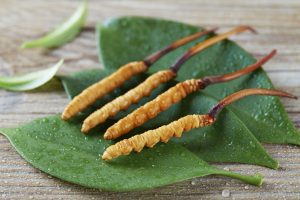
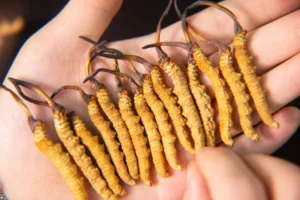
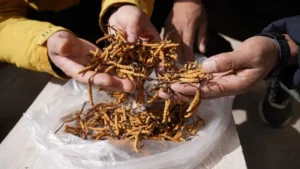
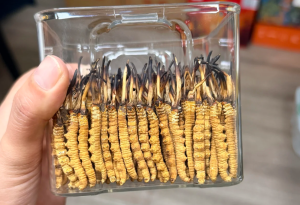
Wild Ophiocordyceps sinensis vs Cultivated Cordyceps militaris for Mood Support
| Item | Ophiocordyceps sinensis (Wild caterpillar fungus) | Cultivated Cordyceps militaris |
|---|---|---|
| Mood‑relevant bioactives | Unstable cordycepin and polysaccharide content, large batch‑to‑batch variation | Controlled indoor cultivation; standardized cordycepin and polysaccharide levels |
| Quality risks | High adulteration risk, heavy‑metal soil contamination hazard | Third‑party lab‑testable raw material, consistent potency |
| Cost | Prohibitively expensive for long‑term daily supplementation | Cost‑effective for cyclic adaptogen use |
| Research background | Mostly historical TCM clinical records | Nearly all modern pre‑clinical mood‑related studies use cultivated Cordyceps militaris |
| Practical recommendation | Not recommended for regular daily mood‑support use | Preferred choice for fatigue‑linked low‑mood adjunct wellness |
Important market warning: Some unregulated “mood‑boost” herbal products labelled cordyceps may contain hidden psychoactive ingredients. Always select independently third‑party tested supplements.
Recommended Usage, Dosage & Timing for Depressive‑Mood Adjunct Support
Cordyceps can create mild mental alertness in sensitive users, even though it supports long‑term stress resilience. Avoid large doses right before bedtime.
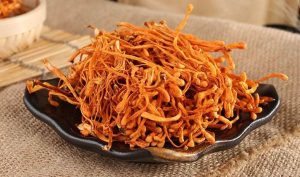
- Forms: Standardized dual‑extract capsules / powder; cordyceps fruiting‑body decoction tea.
- Adult daily dosage for mood‑wellness adjunct goals: 1000‑2000 mg standardized Cordyceps militaris extract per day.
- Timing: Best taken in morning or early afternoon. Late‑day intake may trigger mental alertness in sensitive people and worsen nighttime rumination or sleep quality. Observe your personal reaction carefully.
- Cyclic protocol: Take daily for 6‑8 weeks, followed by a 7‑day rest break. Shifts in mood, motivation and energy develop slowly. Evaluate subjective symptoms after at least 4‑6 weeks of consistent intake. If zero observable benefit after 8 weeks, discontinue supplementation.
- Synergistic adaptogen herbal combinations:
- cordyceps + astragalus root: tonify qi and constitutional reserves for burnout‑driven low mood
- cordyceps + schisandra berry: classic TCM adaptogen pair for stabilizing HPA‑axis stress response
Critical Safety Guidelines & Contraindications
- Not antidepressant medicine: Cordyceps cannot replace psychotherapy or prescription antidepressants. Never stop or reduce prescribed psychiatric medication without consulting your psychiatrist.
- Anticoagulant / anti‑platelet medication: Cordyceps exhibits mild anti‑platelet activity. People taking blood‑thinning drugs require medical approval before supplementation.
- Pre‑surgery: Discontinue cordyceps intake at least two weeks before any scheduled surgery to mitigate theoretical bleeding risk.
- Autoimmune disease / immunosuppressant drugs: Cordyceps is immune‑modulating. Specialist medical clearance is mandatory; do not self‑supplement.
- Pregnancy and breastfeeding: Avoid cordyceps, insufficient human safety data for these life stages.
- If you notice increased restlessness or racing thoughts after taking cordyceps, move intake time earlier in the day or lower dosage. Individual responses vary widely.
- Core lifestyle factors for mood health remain irreplaceable: regular gentle movement, sleep hygiene, social connection and professional mental‑health support deliver far more proven benefits than herbal supplements.
Final Thoughts
Cordyceps for depression originates from centuries‑old TCM practice (中医). It addresses low‑mood symptoms that arise when Kidney Jing is depleted by chronic stress and bodily exhaustion, rather than acting as fast‑acting mood‑lifting medication. Modern pre‑clinical research shows cordyceps modulates HPA‑axis stress signalling, reduces neuroinflammation and supports neurotrophic factors in animal models Human clinical evidence for treating depression remains limited and inconclusive.
Cultivated Cordyceps militaris works best as adjunct adaptogen support for depressive‑type mood states where profound physical burnout and fatigue are dominant symptoms. It is not suitable for all forms of depression. Wild caterpillar fungus carries high cost and contamination risks and is not recommended for daily routine use. Always seek professional psychiatric help for persistent clinical depression.
Q&A
Q1: Can cordyceps replace my prescription antidepressant?
A: Absolutely not. Pre‑clinical animal data shows promising antidepressant‑like behaviours, but robust human clinical proof is missing. Cordyceps is only complementary wellness support. Never discontinue prescribed antidepressants without your psychiatrist’s guidance.
Q2: What type of low mood might cordyceps potentially help?
A: It offers the most promise for low‑mood symptoms accompanied by burnout, severe fatigue, post‑illness weakness, matching TCM Kidney Jing‑deficiency pattern. It is not effective for depression mainly driven by trauma, grief or pure psychological stress without physical depletion. It cannot treat major depressive disorder on its own.
Q3: How long do I need to take cordyceps before noticing mood‑related improvements?
A: Allow minimum 4‑6 weeks of cyclic daily intake. Mood and energy changes are gradual. If you observe zero positive shifts after 8 weeks, discontinue supplementation and follow professional mental‑health guidance.
Q4: Will cordyceps make me feel immediately happier?
A: No. It produces no instant mood lift. Benefits, if any, unfold slowly through improved energy, sleep quality and stress resilience over multiple weeks of consistent intake. Some sensitive people may experience heightened mental alertness.
Q5: Can I combine cordyceps with schisandra berry for stress‑related low mood?
A: Yes. Cordyceps paired with schisandra berry is a well‑known TCM adaptogen combination to stabilize HPA‑axis stress response. Stick to morning or early‑afternoon dosing.
Q6: Are there possible side‑effects of taking cordyceps for mood support?
A: Most healthy adults tolerate it well. Rare mild gastrointestinal bloating or loose stools can appear at the start of supplementation. Sensitive individuals may experience heightened mental alertness with late‑day doses. Cease use if any mushroom‑related allergic reaction develops.
Q7: Is wild Ophiocordyceps sinensis better than cultivated Cordyceps militaris for low‑mood and depressive symptoms?
A: No. Wild‑sourced cordyceps is extremely expensive, frequently adulterated and carries heavy‑metal contamination risks. Cultivated Cordyceps militaris delivers standardized cordycepin and polysaccharides and is the preferred practical option for adjunct mood‑wellness supplementation.


Interesting perspective
冬虫夏草はスタミナだけじゃ