
Cultivated Cordyceps militaris draws growing attention as complementary wellness support for women navigating perimenopause and menopause. Within Traditional Chinese Medicine (TCM, 中医), menopause corresponds to the natural decline of Kidney Jing essence (肾精亏虚). It is critical to clarify upfront: cordyceps is not hormone‑replacement therapy. It cannot replace HRT or prescribed menopause‑related medications. Most supporting mechanistic findings come from pre‑clinical research; large‑scale human clinical trials for menopause symptoms remain limited and inconsistent. It serves only as adjunct nutritional support rather than medical treatment for menopausal syndrome.
Important Disclaimer: Cordyceps is complementary wellness support only. It cannot treat clinical menopausal syndrome. If you experience severe menopause‑related symptoms, follow your healthcare provider’s treatment plan. Never stop or adjust prescribed hormone‑related therapies without explicit medical approval.
Traditional Chinese Medicine Perspective: Cordyceps and Menopause Transition
In TCM theory (中医理论), female menopause marks the natural exhaustion of Kidney essence. As Kidney Jing gradually diminishes, yin‑yang balance becomes disturbed. Common menopausal complaints include hot flashes, night sweats, disturbed sleep, persistent fatigue, low libido, mood fluctuations, lower‑back soreness, tinnitus and vaginal dryness.
Cordyceps is a classic dual Lung‑Kidney tonic (补肺益肾). It nourishes depleted Kidney essence, helps restore yin‑yang harmony inside the body. When constitutional essence is replenished, deficiency‑driven menopausal discomforts may gradually become milder.
Important TCM note: Cordyceps works best for menopause patterns dominated by Kidney essence deficiency. For women with prominent excess‑heat, liver‑qi stagnation without obvious constitutional deficiency, cordyceps alone delivers limited benefit and should be combined with other herbal ingredients under professional TCM guidance.
Modern Scientific Mechanisms & Research Findings
Note: Bio‑activity signals are observed in pre‑clinical studies. Human evidence for menopause symptom relief remains preliminary.
1. HPA‑axis modulation for stress, mood and sleep support
Menopause transition often brings HPA‑axis dysregulation and elevated chronic stress response. Cordycepin and cordyceps polysaccharides help modulate hypothalamic‑pituitary‑adrenal function, lowering excessive stress‑hormone output. This may ease irritability, nervousness and sleep disturbances linked to mid‑life hormonal shifts.
2. Antioxidant protection against accelerated mid‑life oxidative stress
Estrogen decline increases oxidative stress across multiple tissues. Cordyceps activates the Nrf2 antioxidant pathway, mitigating oxidative damage caused by hormonal aging, supporting overall cellular resilience during menopause.
3. Mitochondrial energy support for persistent menopause fatigue
Many women suffer from long‑lasting tiredness during perimenopause and menopause. Cordyceps compounds improve mitochondrial respiratory‑chain function and ATP production at cellular level, helping relieve deficiency‑related persistent fatigue and low stamina.
4. Immune and metabolic balance support
Post‑menopause women face shifting metabolic and immune status. Cordyceps delivers immunomodulating effects and supports lipid‑glucose metabolic homeostasis, helping buffer age‑related metabolic changes after estrogen drops.
5. Not phyto‑estrogen source
Cordyceps does not contain high‑dose phytoestrogens. It does not directly raise circulating estrogen levels. It works via neuro‑endocrine‑adaptive modulation rather than exogenous hormone supply. This makes it different from soy‑based or red‑clover menopause supplements.
6. Human clinical observations
Small‑scale human studies show mixed outcomes. Some observational reports on mid‑life women suggest cordyceps supplementation may improve subjective energy, sleep quality and physical stamina. Limited data shows mild reduction in hot‑flash frequency for certain participants. No large‑scale RCT confirms cordyceps can produce consistent reduction of hot flashes or night sweats across broad menopausal populations. Individual response varies significantly.
Which People May Gain Adjunct Menopause Wellness Support
These describe functional wellness patterns, not formal medical diagnoses:
- Perimenopause or menopause women presenting clear Kidney‑deficiency signs: persistent fatigue, lower‑back soreness, tinnitus, poor stamina, sleep disruption, reduced libido
- Mid‑life women seeking non‑hormonal adjunct nutritional support alongside lifestyle adjustments
Groups expecting minimal or inappropriate benefit:
- Severe menopausal syndrome requiring prescription HRT or medical intervention
- Menopause pattern dominated by strong liver‑yang hyperactivity, excess internal heat without underlying essence deficiency
- Women with hormone‑sensitive cancers history; specialist medical clearance is mandatory before any supplementation
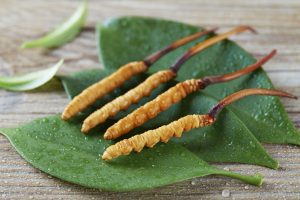
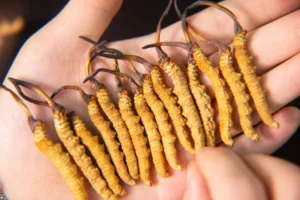
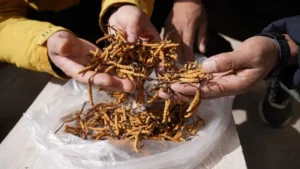
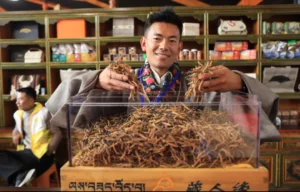
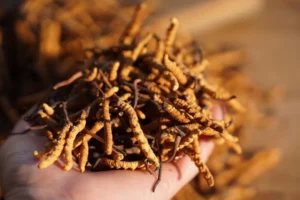
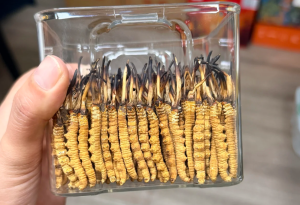
Wild Ophiocordyceps sinensis vs Cultivated Cordyceps militaris for Menopause Wellness
| Item | Ophiocordyceps sinensis (Wild caterpillar fungus) | Cultivated Cordyceps militaris |
|---|---|---|
| Mid‑life wellness bioactives | Unstable cordycepin and polysaccharide levels, large batch‑to‑batch variation | Controlled indoor cultivation; standardized cordycepin and polysaccharide content |
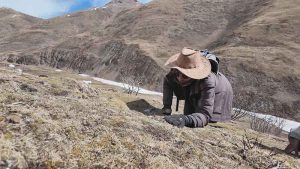
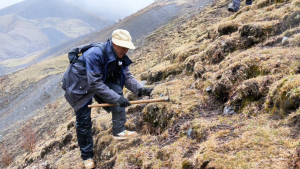
| Quality risks | High adulteration risk, heavy‑metal contamination from high‑altitude soil | Third‑party lab‑testable raw material, stable potency |
| Cost | Extremely expensive for long‑term daily supplementation | Cost‑effective for cyclic wellness use |
| Research background | Mainly historical TCM observational records | Majority of modern pre‑clinical aging‑related studies use cultivated Cordyceps militaris |
| Practical recommendation | Not recommended for regular daily menopause‑support use | Preferred choice for adjunct mid‑life wellness supplementation |
Important market warning: Some “menopause‑support” herbal blends labelled cordyceps may contain hidden phyto‑estrogen additives. Always select independently third‑party tested supplements.
Recommended Usage, Dosage & Timing for Menopause Adjunct Support
Cordyceps may trigger mild mental alertness in sensitive users; avoid high‑dose intake late in the evening.
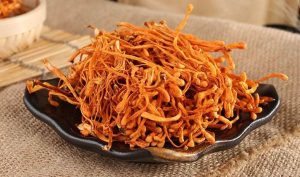
- Forms: Standardized dual‑extract capsules / powder; cordyceps fruiting‑body decoction tea.
- Adult daily dosage for menopause‑related wellness: 1000‑1800 mg standardized Cordyceps militaris extract per day. Start with lower dosage for sensitive individuals.
- Timing: Take in morning or early afternoon. Late‑day dosing may cause mental alertness and worsen sleep quality for menopause women already suffering insomnia.
- Cyclic protocol: Take daily for 8‑10 weeks, followed by a 7‑day rest break. Menopause‑related symptom changes develop gradually. Track subjective symptoms such as hot‑flash frequency, sleep quality and energy level. If zero measurable improvement after 12 weeks, discontinue supplementation.
- Synergistic herbal combinations:
- cordyceps + astragalus root: tonify qi and kidney essence for deficiency‑pattern menopause fatigue
- cordyceps + schisandra berry: well‑suited for night sweats, sleep instability and stress‑related mood swings
Critical Safety Guidelines & Contraindications
- Not hormone replacement therapy: Cordyceps cannot replace HRT or prescription menopause medications. Never discontinue prescribed hormone‑related treatments without doctor approval.
- Hormone‑sensitive cancer history: Even though cordyceps is not high‑phytoestrogen herb, women with breast‑cancer or other hormone‑sensitive tumour history must obtain specialist medical clearance before supplementation.
- Anticoagulant / anti‑platelet medication: Cordyceps shows mild anti‑platelet activity. People taking blood‑thinning medicines require medical clearance before supplementation due to bleeding risk.
- Pre‑surgery: Discontinue cordyceps at least two weeks before scheduled surgery.
- Autoimmune disease / immunosuppressant drugs: Cordyceps is immune‑modulating. Specialist medical supervision is mandatory; do not self‑supplement.
- Pregnancy and breastfeeding: Avoid cordyceps; insufficient human safety data for these life stages.
- If you experience digestive bloating, restlessness or sleep worsening after starting cordyceps, lower dosage or pause use.
- Foundational lifestyle factors remain primary for menopause management: balanced nutrition, regular gentle exercise, stress management and sleep hygiene deliver proven mid‑life wellness benefits.
Final Thoughts
Cordyceps for menopause combines centuries‑old TCM Kidney‑Jing‑nourishing theory and modern pre‑clinical aging‑related research. In TCM framework, it addresses menopausal imbalance rooted in Kidney essence depletion and yin‑yang disturbance. Modern lab research shows cordyceps compounds modulate HPA stress response, boost mitochondrial energy metabolism and enhance antioxidant defence. It is not a phyto‑estrogen source and works via neuro‑endocrine adaptive regulation.
Human clinical evidence remains preliminary. Cultivated Cordyceps militaris fits best as adjunct wellness support for perimenopausal and menopausal women with obvious Kidney‑deficiency symptoms such as fatigue, low stamina and sleep disturbance. It cannot substitute medical menopause therapy. Wild caterpillar fungus carries high cost and contamination risks and is not recommended for daily routine use. Always follow professional medical care for severe menopausal syndrome.
Q&A
Q1: Can cordyceps replace hormone replacement therapy for menopause?
A: No. Cordyceps is complementary wellness support only. It does not supply exogenous estrogen. Never stop prescribed HRT without your healthcare provider’s guidance.
Q2: What menopause symptoms might cordyceps potentially help?
A: It offers most promise for fatigue, low stamina, sleep disruption and stress‑related mood changes linked to Kidney‑essence deficiency. Its effect on hot flashes and night sweats varies greatly among individuals. It is not guaranteed to eliminate vasomotor symptoms.
Q3: Does cordyceps contain phytoestrogens that raise estrogen levels?
A: No. Cordyceps is not a phyto‑estrogen‑rich herb. It modulates neuro‑endocrine‑stress axis rather than directly increasing circulating estrogen.
Q4: How long should I take cordyceps to evaluate menopause‑related effects?
A: Allow 8‑10 weeks of consistent cyclic supplementation to observe subjective symptom shifts. If no improvement after 12 weeks, discontinue supplementation.
Q5: Can I combine cordyceps with schisandra berry for menopause support?
A: Yes. This pairing works well for night sweats, stress‑induced mood swings and unstable sleep during menopause. Prefer morning‑early‑afternoon intake.
Q6: Are there potential side‑effects taking cordyceps for menopause wellness?
A: Most mid‑life healthy women tolerate it well. Rare mild gastrointestinal bloating or loose stools can appear at the start. Sensitive users may get mental alertness and worsened sleep if dosed late‑day. Cease use for any mushroom‑related allergic reaction. Women with hormone‑sensitive cancer history need doctor supervision.
Q7: Is wild Ophiocordyceps sinensis better than cultivated Cordyceps militaris for menopause support?
A: No. Wild‑sourced cordyceps is extremely expensive, frequently adulterated and carries heavy‑metal contamination hazards. Cultivated Cordyceps militaris delivers standardized bioactive compounds and is the preferred practical option for adjunct mid‑life wellness supplementation.
Interessanter Artikel! Ich wusste gar nicht, dass Cordyceps auch in den Wechseljahren unterstützend wir
Interesting read! I’ve been looking into adaptogens for perimenopause fatigue, and it’s refreshing to see a clear disclaimer that cordyceps isn’t a magic HRT replacement. Still, as a supportive TCM approach for energy and balance, it feels worth discussing with my doctor. Anyone here tried it alongside lifestyle changes?
Interesting read! I’ve been