
A. Techniques for holding the scraping board, scraping direction, and scraping angle.
1. Grasping scraping board technique
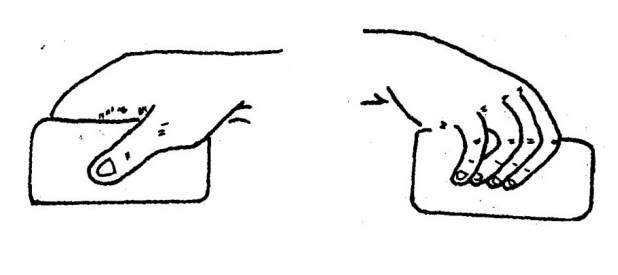
Hold the scraping plate in the palm, with the thick side facing the palm during supports and the thin side facing the palm for health maintenance.
2. Direction of Scraping
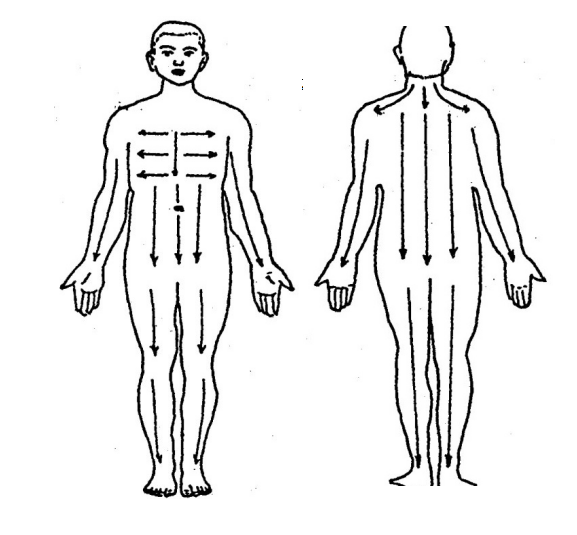
Scrape from top to bottom on the neck, back, abdomen, upper limbs, and lower limbs, and scrape from inside to outside on the chest.
3. Angle of scraping
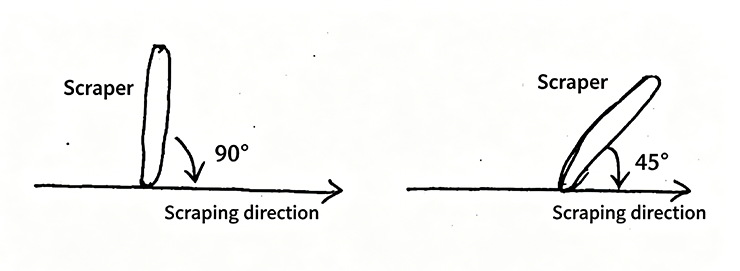
Perform Gua Sha by keeping the scraping board at a 90-degree to 45-degree angle to the scraping direction.
B. Gua Sha Precautions
During Gua Sha, apply even pressure (including up and down, inside and outside, left and right), and extend the scraped area as much as possible.
C. Techniques of reinforcing scraping, reducing scraping, and even reinforcing-reducing scraping in Gua Sha
It is mainly distinguished based on the strength and speed of Gua Sha.
| scraping pressure | scraping frequency | |
| Supplementary Gua Sha | light pressure | slow speed |
| Reducing Gua Sha | firm pressure | fast speed |
| Neutral gua sha technique | ①moderate pressure | moderate speed |
| ②light pressure | fast speed | |
| ③deep pressure | slow speed |
How to hold gua sha tool correctly for effective scraping?
To hold a gua sha tool correctly, grasp it firmly in your palm with the curved edge facing the skin. For support and deeper work, keep the thick side facing your palm; for gentler maintenance, turn the thin side toward the palm. This ensures control and prevents slipping during use.
What angle to hold gua sha tool for facial scraping?
The ideal angle to hold a gua sha tool is approximately 45 degrees against the skin. This angle allows the tool to glide smoothly without scratching or dragging, especially when working on delicate areas like the cheeks and jawline. Adjust slightly if you need more or less pressure.
How to use gua sha tool on jowls to reduce sagging?
To use a gua sha tool on jowls, start from the chin and scrape upward along the jawline toward the ear at a 45-degree angle. Always use an upward and outward motion to lift and contour the area. Repeat each stroke 3–5 times, applying gentle but consistent pressure.
What is the correct scraping direction for gua sha techniques?
The correct scraping direction for gua sha is from top to bottom on the body and from bottom to top on the face for lifting effects. Always follow the natural contours of your muscles and lymph nodes. Avoid back-and-forth or circular motions to prevent irritation.
Should the thick side or thin side of the gua sha tool face the palm?
For deeper, more supportive scraping, hold the gua sha tool with the thick side facing your palm. For lighter maintenance or sensitive areas, turn the thin side toward your palm. This distinction helps you control pressure and adapt the technique to different parts of the face.
How much pressure should you apply when using a gua sha tool?
Apply light to moderate pressure—enough to feel the tool contacting the skin but not so much that it causes pain or redness. Start gently, especially on the jowls, and increase pressure gradually as you learn how to hold the gua sha tool correctly. The skin should not indent deeply.
Can you use gua sha on the neck and jawline for lymph drainage?
Yes, gua sha is excellent for the neck and jawline to promote lymph drainage and reduce puffiness. Use a 45-degree angle and scrape downward on the neck (toward the collarbone) and upward on the jawline. This complements the technique for jowls and helps define the contour.
I’ve been meaning to try gua sha at home, and this article is super helpful! I didn’t realize the board should be held differently for treatment vs. daily maintenance. The scraping direction tip is also key—thanks for breaking it down so clearly!
¡Qué útil! Justo estaba buscando una guía clara sobre las técnicas básicas de gua sha. No sabía que el lado grueso o fino del raspador cambiaba según el objetivo. Voy a probar lo de raspar de arriba abajo, siempre tenía dudas con la dirección. Gracias por compartir.
와, 과사 기본 기술 설명이 정말 유용하네요! 스크래핑 보드 잡는 법과 방향까지 상세히 알려줘서 초보자인 제게 큰 도움이 됐어요. 특히 두꺼운 쪽과 얇은 쪽의 용도 차이가 흥미로웠습니다. 감사합니다!
「グアシャの持ち方や方向、角度の基本がよくまとまっていて参考になりました。特に厚い面と薄い面の使い分けは知らなかったので、今度試してみます。シンプルで実践的な解説、ありがとうございます。」
I’ve been trying gua sha at home and was never sure about the correct angle. This is super helpful—especially the tip about which side of the board to hold for different purposes. Thanks for breaking it down simply!