does gua sha help with nausea and vomiting
gua sha points for nausea and indigestion
how to use gua sha for nausea relief
gua sha for morning sickness vomiting relief
gua sha points for nausea and vomiting
how does gua sha help vomiting
benefits of gua sha for knee pain

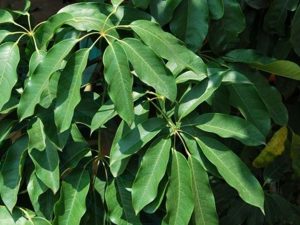
Winter Melon

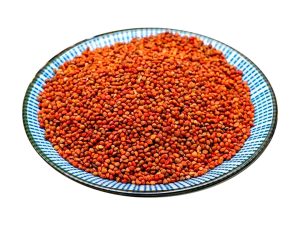
Winter Melon, a name in traditional Chinese medicine. It refers to the outer rind, mature seeds, leaves, and pulp of Benincasa hispida (Thunb.), a plant of the genus Benincasa in the Cucurbitaceae family. It is produced in most regions of China.Winter melon rind has diuretic and anti-edematous properties and clears heat and relieves summer heat; it is primarily used to treat edema and abdominal distension, difficulty urinating, thirst caused by summer heat, and scanty, reddish urine. Winter melon seeds clear heat, resolve phlegm, expel pus, and promote the elimination of dampness; they are primarily used to treat coughs caused by phlegm-heat, lung abscesses, intestinal abscesses, leukorrhea, dysuria, and edema.Winter melon leaves have the effects of clearing heat, draining dampness, and detoxifying; they are primarily used to treat diabetes insipidus, summer-heat-induced diarrhea and dysentery, malaria, skin infections, and bee stings; while winter melon flesh has the effects of clearing heat, quenching thirst, promoting urination, and reducing swelling; it is primarily used to treat feverish conditions with restlessness and thirst, diabetes insipidus, dysuria, edema, and abscesses.

Xie Bai

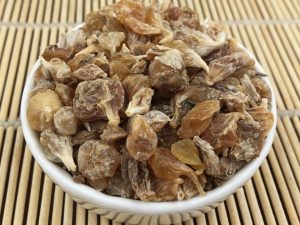
Xiebai is the name of a traditional Chinese medicine. It consists of the dried bulbs of Allium macrostemon Bge. (small-rooted garlic) or Allium chinense G.Don, both belonging to the genus Allium in the Liliaceae family. It has the therapeutic effects of promoting yang energy, dispersing nodules, regulating qi, and relieving stagnation. It is primarily used to treat chest pain caused by bi syndrome, epigastric and abdominal fullness, distension, and pain, as well as tenesmus following diarrhea or dysentery.

Tamarind

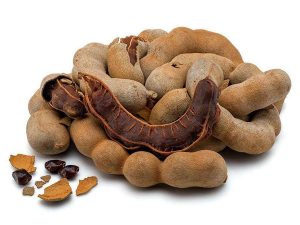
Tamarind is a name used in traditional Chinese medicine. It refers to the fruit of the tamarind tree (Tamarindus indica Linn.), a plant in the legume family. It is distributed in Fujian, Taiwan, Guangdong, Hainan, Guangxi, and Yunnan. It has the effects of clearing heat, relieving summer heat, harmonizing the stomach, and eliminating food stagnation. It is commonly used to treat heatstroke, loss of appetite, malnutrition in children, morning sickness, and constipation.

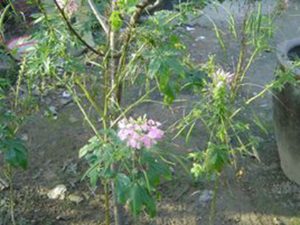
Thyrocarpus

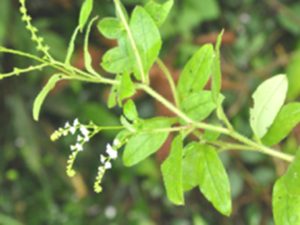
Thyrocarpus, a name in traditional Chinese medicine. It refers to the whole plant of Thyrocarpus sampsonii Hance, a member of the Boraginaceae family. It is distributed in Shaanxi, Gansu, Jiangsu, Anhui, Zhejiang, Jiangxi, Fujian, Taiwan, Hubei, Hunan, Guangdong, Guangxi, Sichuan, Guizhou, Yunnan, and other regions. It has the effects of clearing heat, detoxifying, and reducing swelling. It is commonly used to treat boils, carbuncles, sore throat, diarrhea, and dysentery.

Gua Sha for Nausea Relief – Key Acupuncture Points

Overview: Also known as “Fanwei” (regurgitation) or “Weifan” (stomach regurgitation). It is a condition characterized by abdominal distension and fullness, undigested food retention, morning vomiting of food eaten the previous evening, and evening vomiting of food eaten that morning as its primary clinical manifestations. It often results from improper dietary habits, excessive alcohol consumption and … Read more

Gua Sha Therapy for Vomiting Relief

Vomiting is a condition caused by multiple factors leading to the disharmony and failure of the stomach to descend Qi, resulting in the upward reversal of Qi, which causes food, phlegm, or other substances to be expelled upward from the stomach. It is also known as “ou e” (vomiting and nausea). Scraping therapy areas 1. … Read more

Knee Joint Gua Sha Therapy

1. Guasha Therapy for the Knee Joint (1) Scrape Knee Eyes (Xiyan) First, use the edge of the scraping board to apply acupressure by pressing on both Knee Eyes (EX-LE5, Xiyan), moving from the inside outward. Begin with deep acupressure at the depression, then scrape outward. (2) Scrape the anterior surface of the knee joint … Read more

Four-limb Gua Sha Therapy

1. Guasha Method for the Limbs (Upper and Lower Limbs) (1) Scrape the medial aspect of the upper limbs Scrape from top to bottom (passing through the three hand yin meridians, namely Lung Meridian of Hand-Taiyin (LU), Pericardium Meridian of Hand-Jueyin (PC), and Heart Meridian of Hand-Shaoyin (HT)). (2) Scrape the lateral aspect of the … Read more

Abdominal Gua Sha Therapy

1. Abdominal Guasha Therapy (1) Scrape along the midline of the abdomen (the course of the Ren Meridian (RN) on the abdomen) from CV15 (Jiuwei) to CV9 (Shuifen), and from CV3 (Yinjiao) to CV2 (Qugu). (2) Scrape both sides of the abdomen downward from Youmen (LU5), Burong (ST19), and Riyue (GB24), passing through Tianshu (ST25), … Read more

Thoracic Gua Sha Therapy

1. Thoracic Gua Sha Therapy (1) Scrape along the midline of the chest (the thoracic portion of the Conception Vessel (CV) pathway) from CV22 (Tiantu) via CV17 (Shanzhong) to above CV15 (Jiuwei), moving from top to bottom. (2) Scrape both sides of the chest from the midline outward. Thoracic Gua Sha Therapy 2. Indications for … Read more

Back Guasha Therapy

1. Back Gua Sha therapy including Gua Sha therapy for the thoracic vertebrae region, lumbar vertebrae region, and sacral vertebrae region. (1) Scrape along the midline of the back (the course of Governor Vessel (GV), thoracic vertebrae, lumbar vertebrae, and sacral vertebrae), from Dazhui (GV14) to above Changqiang (GV1). (2) Scrape both sides of the … Read more

Neck Gua Sha Therapy

1. Neck Gua Sha Therapy (1) Scrape along the midline of the neck (the Governor Vessel (GV), the part running along the neck) from Yaneixue (an acupoint, not officially named in standard acupoint systems, literal meaning: mute inner point) to Dazhui (GV14). (2) Scrape along both sides of the neck to the shoulders, starting from … Read more

Facial Gua Sha Therapy

1.Facial Gua Sha Therapy (1) Scrape the forehead area Divided by the anterior-posterior midline, scrape both sides from the inside outward. The forehead includes the skin between the anterior hairline and the eyebrows. The acupoints passed through include EX-HN3 (Yintang), BL2 (Cuanzu), EX-HN4 (Yuyao), GB14 (Sizhukong), etc. (2) Scrape both zygomatic regions (from Chengqi (BL2) … Read more

Head Gua Sha Therapy

(1) Scrape the sides of the head, starting from the Taiyang (EX-HN5) points on both sides of the head to the Fengchi (GB20) points, passing through acupoints such as Touwei (ST8), Hanyan (GB4), Xuanlu (GB5), Xuanli (GB6), Shuaigu (GB8), Tianchong (GB9), Fubai (GB10), and Naokong (GB19). (2) Scrape the anterior head starting from Baihui (GV20) … Read more