
1. Thoracic Gua Sha Therapy
(1) Scrape along the midline of the chest (the thoracic portion of the Conception Vessel (CV) pathway) from CV22 (Tiantu) via CV17 (Shanzhong) to above CV15 (Jiuwei), moving from top to bottom.
(2) Scrape both sides of the chest from the midline outward.
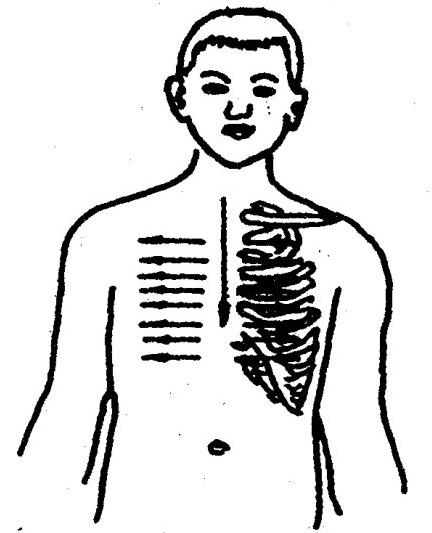
Thoracic Gua Sha Therapy
2. Indications for Chest Gua Sha Therapy
supports comfortable movement of tendons and meridians in the chest region, helps maintain a balanced internal environment, and promotes general well-being.
Scraping the chest primarily supports Heart and Lung health, such as helping maintain a balanced internal environment for conditions like coronary Heart wellness, angina pectoris, irregular Heartbeat, chronic bronchitis, bronchial asthma, and emphysema. Additionally, it supports breast tissue health and helps helps maintain occasional discomfort associated with mammary gland hyperplasia, mastitis, and breast-related concerns in women.
3. Precautions for chest Gua Sha.
(1) When scraping the midline of the chest, apply gentle pressure and avoid excessive force.
(2) For scraping on both sides of the chest, the even reinforcing-reducing method or reinforcing method is generally employed. For patients with a long-standing wellness, weak constitution, and emaciated chest muscles, the edge of the scraping board can be used to scrape along the intercostal spaces. Scraping on the nipples of women is prohibited.
Q1: What is thoracic gua sha therapy?
A1: Thoracic gua sha therapy is a traditional manual technique that involves scraping the chest area to stimulate circulation and promote healing. It specifically targets the thoracic region along the midline (Conception Vessel pathway) and outward to address respiratory and cardiac concerns. This therapy is often used to alleviate chest tightness, cough, and stress.
Q2: How to perform gua sha on the chest?
A2: To perform gua sha on the chest, start by scraping along the midline from CV22 (Tiantu) down to above CV15 (Jiuwei), moving from top to bottom. Then, scrape both sides of the chest from the midline outward. Use moderate pressure with a smooth-edged tool and lubricant to avoid skin irritation.
Q3: Is thoracic gua sha safe?
A3: Thoracic gua sha is generally safe when performed by a trained practitioner on healthy skin and using proper technique. However, it should be avoided over areas with broken skin, infections, bruises, or known blood clotting disorders. Always consult a healthcare professional before starting any new therapy.
Q4: What are the indications for thoracic gua sha?
A4: Thoracic gua sha is indicated for conditions such as chest congestion, bronchitis, asthma, anxiety, and musculoskeletal pain in the upper body. It is also used to improve lymphatic drainage and reduce inflammation in the thoracic region. The therapy may help relieve tension and promote relaxation.
Q5: Can thoracic gua sha help with breathing problems?
A5: Yes, thoracic gua sha can help with breathing problems by stimulating acupressure points along the chest, such as CV17 (Shanzhong), which is known to support respiratory function. The scraping motion helps release tight fascia and improve blood flow to the lungs and diaphragm. However, it should complement, not replace, medical treatment.
Q6: Who should avoid thoracic gua sha?
A6: Individuals with bleeding disorders, varicose veins on the chest, severe osteoporosis, or active skin infections should avoid thoracic gua sha. Pregnant women should avoid scraping the upper chest near the breasts. Those on blood-thinning medications should consult a doctor before undergoing the therapy.
Q7: What are the benefits of gua sha on the chest?
A7: The benefits of gua sha on the chest include reduced muscle tension, improved circulation, enhanced lymphatic drainage, and relief from respiratory congestion. It can also help alleviate symptoms of anxiety and promote better sleep. Regular sessions may support overall thoracic health and vitality.
Q8: How often can you do gua sha on the chest?
A8: Thoracic gua sha can typically be performed once a week for maintenance, but frequency depends on individual needs and the severity of the condition. Allow at least 3-5 days between sessions for skin and tissue recovery. Over-scraping may cause unnecessary bruising or irritation.
This is such a helpful breakdown! I’ve been curious about Gua sha for the chest area, especially for stress and breathing. Do you recommend using oil for the thoracic region or is a light touch enough?
مقال رائع! جربت هذه التقنية للتو، كانت مفيدة جدًا لتخفيف التوتر في الصدر. السطر من الأعلى للأسفل مع التركيز على منتصف الصدر يعطي شعورًا بالاسترخاء العميق. شكرًا على الشرح الواضح!
شكراً على هذا الشرح الواضح لتقنية غوا شا الصدرية. أنا جربتها على خط منتصف الصدر وشعرت بارتياح كبير بعدها. هل تنصحون بتكرارها يومياً أم مرة في الأسبوع؟
गुआ शा थेरेपी के बारे में यह जानकारी बहुत उपयोगी है। छाती के मध्य रेखा पर ऊपर से नीचे की ओर स्क्रैप करने का तरीका आसान लग रहा है। क्या नियमित रूप से करने से सांस लेने में आराम मिलता है? मैं इसे आजमाने के बार
Interesting protocol! I’ve been practicing gua sha on my back and neck, but never considered the chest. The conception vessel path makes sense for heart and lung tensions. Definitely adding this to my routine. Thanks for the clear breakdown of direction and points.