
Decoction for Masses and Accumulations,From *Formulas for Universal Relief* (Pujifang), Volume 168.,Shock, anxiety, worry, or anger, or exposure to cold and heat that lingers without dissipating, gives rise to latent, stagnant qi. As qi circulates, it moves up and down along the meridians; when these forces collide, they cause stagnant qi to accumulate—either on one side, on both sides, or in irregular patterns—or between the muscles, resembling cuts made by a chicken knife. This stagnant qi remains invisible but causes fullness and pain in the abdomen; over time, it leads to a sensation of fullness and oppression.When qi accumulates in the stomach, it resembles a mass or tumor, causing stabbing pain in the flanks and lower back; it leads to stagnation and obstruction of the upper qi, distension of the lower abdomen, and difficulty with urination and defecation, or uncontrolled diarrhea and frequent, scanty urination.
Decoction for Masses and Accumulations
Formulas Name : Decoction for Masses and Accumulations
Chinese Name : 积聚汤
Drug Formulation
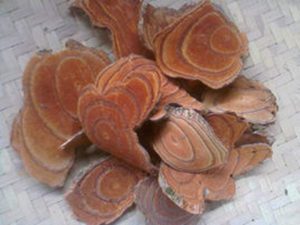
1 liang and a half of Sanleng, 1 liang and a half of E Zhu, 1 liang and a half of Qingpi (white pith removed), 1 liang and a half of Chenpi (white pith removed), 1 liang and a half of Guixin (unroasted), 1 liang and a half of Huoxiang Ye, 1 liang and a half of Jiegeng (root stalk removed, chopped, and stir-fried), 1 liang and a half of Yizhiren, 1 liang and a half of Xiangfuzi, and 3 qian of licorice (roasted).
Source
From *Formulas for Universal Relief* (Pujifang), Volume 168.
Benefits
Shock, anxiety, worry, or anger, or exposure to cold and heat that lingers without dissipating, gives rise to latent, stagnant qi. As qi circulates, it moves up and down along the meridians; when these forces collide, they cause stagnant qi to accumulate—either on one side, on both sides, or in irregular patterns—or between the muscles, resembling cuts made by a chicken knife. This stagnant qi remains invisible but causes fullness and pain in the abdomen; over time, it leads to a sensation of fullness and oppression.When qi accumulates in the stomach, it resembles a mass or tumor, causing stabbing pain in the flanks and lower back; it leads to stagnation and obstruction of the upper qi, distension of the lower abdomen, and difficulty with urination and defecation, or uncontrolled diarrhea and frequent, scanty urination.
Instructions for Use
Crush the ingredients. Take 6–7 qian per dose; boil with 2 zhan of water until reduced to 1 zhan; strain and take warm before meals.
Decoction for Masses and Accumulations,Shock, anxiety, worry, or anger, or exposure to cold and heat that lingers without dissipating, gives rise to latent, stagnant qi. As qi circulates, it moves up and down along the meridians; when these forces collide, they cause stagnant qi to accumulate—either on one side, on both sides, or in irregular patterns—or between the muscles, resembling cuts made by a chicken knife. This stagnant qi remains invisible but causes fullness and pain in the abdomen; over time, it leads to a sensation of fullness and oppression.When qi accumulates in the stomach, it resembles a mass or tumor, causing stabbing pain in the flanks and lower back; it leads to stagnation and obstruction of the upper qi, distension of the lower abdomen, and difficulty with urination and defecation, or uncontrolled diarrhea and frequent, scanty urination.