
Divine Immortal Treasure Pill,From *One Hundred Questions on Gynecology*, Volume 1.,For women with deficiency-cold in the Blood Sea (Xuehai) who are exposed to cold winds from the exterior, causing stagnation that fails to disperse and accumulates into masses or hard masses (jia); as well as for conditions where blood and qi surge, causing severe abdominal pain, tightness and distension in the lower abdomen, occasional rumbling sounds due to deficiency, vomiting of phlegm and foam, dizziness and blurred vision, heaviness and pain in the legs and knees, a sallow and withered complexion,edema in the limbs; prior to menstruation, a sensation of heaviness and pain, varying in intensity; reddish or whitish vaginal discharge; uncontrollable metrorrhagia or menorrhagia; palpitations and forgetfulness;frequent urination or the passage of clear, watery urine, occasional bouts of low-grade fever, night sweats, emaciation, irregular fetal breathing, abdominal pain, all types of difficult labor, postpartum blood fainting, toxic blood rushing to the heart, locked jaw and stiff tongue, or retained lochia accompanied by thirst and facial swelling, postpartum weakness and emaciation, and irregular menstrual cycles in unmarried women.
Divine Immortal Treasure Pill
Disclaimer: These statements have not been evaluated by the Food and Drug Administration (FDA). This product is not intended to diagnose, treat, cure, or prevent any disease. All references in this article to TCM syndrome differentiation, herbal medicines, teas, and decoctions are intended to promote TCM culture and are provided solely for educational and reference purposes.
Formulas Name : Divine Immortal Treasure Pill
Chinese Name : 神仙聚宝丹
Drug Formulation
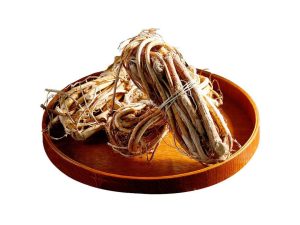
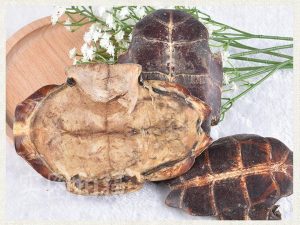
Wood Fragrance (ground into a fine powder) 1 liang, Amber (ground separately) 1 liang, Angelica Root 1 liang, Myrrh (ground separately) 1 liang, Cow’s Milk (ground separately) 1 fen, Musk 1 qian (ground separately), Cinnabar 1 qian (ground separately).
Source
From *One Hundred Questions on Gynecology*, Volume 1.
Processing
Grind the above ingredients into a fine powder, mix with a few drops of cold boiled water to form pills, making 15 pills per liang.
Benefits
For women with deficiency-cold in the Blood Sea (Xuehai) who are exposed to cold winds from the exterior, causing stagnation that fails to disperse and accumulates into masses or hard masses (jia); as well as for conditions where blood and qi surge, causing severe abdominal pain, tightness and distension in the lower abdomen, occasional rumbling sounds due to deficiency, vomiting of phlegm and foam, dizziness and blurred vision, heaviness and pain in the legs and knees, a sallow and withered complexion,edema in the limbs; prior to menstruation, a sensation of heaviness and pain, varying in intensity; reddish or whitish vaginal discharge; uncontrollable metrorrhagia or menorrhagia; palpitations and forgetfulness;frequent urination or the passage of clear, watery urine, occasional bouts of low-grade fever, night sweats, emaciation, irregular fetal breathing, abdominal pain, all types of difficult labor, postpartum blood fainting, toxic blood rushing to the heart, locked jaw and stiff tongue, or retained lochia accompanied by thirst and facial swelling, postpartum weakness and emaciation, and irregular menstrual cycles in unmarried women.
Instructions for Use
Take 1 pill per dose, ground with warm wine.For irregular fetal movements and abdominal pain, as well as all types of difficult labor, grind the pill with warm wine and a child’s urine, regardless of the time of day; for postpartum blood fainting, stagnant blood rushing to the heart, trismus and stiff tongue, or persistent lochia accompanied by thirst and facial swelling, grind the pill with a decoction of black plum and a child’s urine; for postpartum weakness and emaciation unresponsive to other treatments, grind the pill with a child’s urine; for irregular menstrual cycles in unmarried women, take half a pill each time, ground with warm wine.
Copyright: Excerpt from From *One Hundred Questions on Gynecology*, Volume 1., Copyright belongs to the Original Author and all original sources, This article was shared by DeDe on August 31, 2026, Please credit the source and include a link to the original article when reposting.
Terminology Proofreading: [Cheng Bo] | August 31, 2026 Reviewed by: [Wang Zhongxiang, Associate Chief TCM Physician (China)] | August 31, 2026
Correct Content Errors: Errors may occur during the writing, editing, translation, and publication of website content. If you find any errors or inaccurate information in this article, please feel free to Contact Us to report them, and we will correct them promptly.
FDA Disclaimer: The descriptions of the efficacy of Chinese herbal medicines, herbal teas, decoctions, and formulas, as well as the content on Traditional Chinese Medicine (TCM) diagnostic theory and traditional TCM therapies contained on this site, are intended solely for the purpose of popularizing TCM culture and serving as an educational reference; they do not constitute medical diagnosis or treatment advice. Please do not attempt to use these products on your own without proper guidance. These statements have not been evaluated by the Food and Drug Administration. This product is not intended to diagnose, treat, cure, or prevent any disease. If you are experiencing any physical discomfort, please consult a licensed healthcare professional and seek treatment at a reputable medical institution. This platform assumes no responsibility for any consequences resulting from the use of herbs or formulas by any individual based on the information provided on this site. Please read Medical Disclaimer.

Divine Immortal Treasure Pill,For women with deficiency-cold in the Blood Sea (Xuehai) who are exposed to cold winds from the exterior, causing stagnation that fails to disperse and accumulates into masses or hard masses (jia); as well as for conditions where blood and qi surge, causing severe abdominal pain, tightness and distension in the lower abdomen, occasional rumbling sounds due to deficiency, vomiting of phlegm and foam, dizziness and blurred vision, heaviness and pain in the legs and knees, a sallow and withered complexion,edema in the limbs; prior to menstruation, a sensation of heaviness and pain, varying in intensity; reddish or whitish vaginal discharge; uncontrollable metrorrhagia or menorrhagia; palpitations and forgetfulness;frequent urination or the passage of clear, watery urine, occasional bouts of low-grade fever, night sweats, emaciation, irregular fetal breathing, abdominal pain, all types of difficult labor, postpartum blood fainting, toxic blood rushing to the heart, locked jaw and stiff tongue, or retained lochia accompanied by thirst and facial swelling, postpartum weakness and emaciation, and irregular menstrual cycles in unmarried women.