
Tian Gen Yue Ku Ointment,*Treatise on Warm Diseases* (Wen Bing Tiao Bian), Volume 5.,For those with damage to both Yin and Yang in the Lower Jiao and impairment of the Eight Extra Meridians, where recovery is not immediate but the stomach qi remains robust and there are no signs of damp-heat; for men suffering from seminal emission and premature ejaculation, cold semen leading to infertility, and pain in the lower back, knees, and abdomen due to kidney deficiency;Elderly individuals who are emaciated, suffer from heat rash, dizziness, tinnitus, numbness in the left limb, and muscle weakness and laxity—all symptoms of yin-yang deficiency in the lower jiao; women with postpartum deficiency, dysuria, leukorrhea, masses, uterine cold leading to infertility, frequent miscarriages, or those who gave birth too frequently in their youth and now experience soreness and pain in the lower back, knees, buttocks, and hips in old age.
Tian Gen Yue Ku Ointment
Disclaimer: These statements have not been evaluated by the Food and Drug Administration (FDA). This product is not intended to diagnose, treat, cure, or prevent any disease. All references in this article to TCM syndrome differentiation, herbal medicines, teas, and decoctions are intended to promote TCM culture and are provided solely for educational and reference purposes.
Formulas Name : Tian Gen Yue Ku Ointment
Chinese Name : 天根月窟膏
Drug Formulation
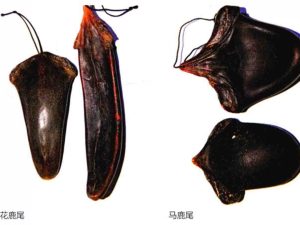
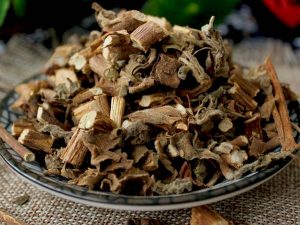
1 jin of deer antler, 1 pair of black-boned chickens, 2 jin of abalone, 1 jin of deer antler gelatin, 16 egg yolks, 2 jin of sea cucumber, 2 jin of turtle shell, 16 sheep kidneys, 1 jin of silkworm cocoons, 1 jin of cuttlefish bone, 2 jin of Poria cocos, 2 jin of oyster shells, 3 jin of American ginseng,1 jin of dodder seeds, 2 jin of dragon bone, 3 jin of lotus seeds, 1 jin of longan flesh, 4 jin of prepared rehmannia root, 2 jin of Shayuan tribulus, 2 jin of white peony root,Euryale seed 2 jin, Angelica root 1 jin, Fennel seed 1 jin, Psoralea seed 2 jin, Goji berries 2 jin, Cistanche 2 jin, Cornus fruit 1 jin, Purple quartz 1 jin, Raw Eucommia bark 1 jin, Achyranthes root 1 jin, Smilax root 1 jin, White honey 3 jin.
Source
*Treatise on Warm Diseases* (Wen Bing Tiao Bian), Volume 5.
Processing
Place the above herbs in four copper pots: group the “sentient” ingredients with the “sentient” and the “insentient” with the “insentient,” then simmer over low heat in sequence to extract the decoction;Transfer the decoction to a clean pot and refine it gently for nine days and nights until it becomes a paste. Then add the gelatin and honey. Take the eight ingredients from the formula—Poria, lotus seeds, euryale seeds, oyster shell, dragon bone, deer antler, white peony root, and cuttlefish bone—which are listed as powders without decoction, grind them into an extremely fine powder, and mix them with the paste to form pills the size of a paulownia seed.
Benefits
For those with damage to both Yin and Yang in the Lower Jiao and impairment of the Eight Extra Meridians, where recovery is not immediate but the stomach qi remains robust and there are no signs of damp-heat; for men suffering from seminal emission and premature ejaculation, cold semen leading to infertility, and pain in the lower back, knees, and abdomen due to kidney deficiency;Elderly individuals who are emaciated, suffer from heat rash, dizziness, tinnitus, numbness in the left limb, and muscle weakness and laxity—all symptoms of yin-yang deficiency in the lower jiao; women with postpartum deficiency, dysuria, leukorrhea, masses, uterine cold leading to infertility, frequent miscarriages, or those who gave birth too frequently in their youth and now experience soreness and pain in the lower back, knees, buttocks, and hips in old age.
Instructions for Use
Take 3 qian per dose, three times daily.
Note
This formula is not suitable for those with a weak stomach unable to process heavy and turbid herbs, those with damp-heat, or those with yin deficiency confined solely to the lower jiao.
Copyright: Excerpt from *Treatise on Warm Diseases* (Wen Bing Tiao Bian), Volume 5., Copyright belongs to the Original Author and all original sources, This article was shared by DeDe on August 31, 2026, Please credit the source and include a link to the original article when reposting.
Terminology Proofreading: [Cheng Bo] | August 31, 2026 Reviewed by: [Wang Zhongxiang, Associate Chief TCM Physician (China)] | August 31, 2026
Correct Content Errors: Errors may occur during the writing, editing, translation, and publication of website content. If you find any errors or inaccurate information in this article, please feel free to Contact Us to report them, and we will correct them promptly.
FDA Disclaimer: The descriptions of the efficacy of Chinese herbal medicines, herbal teas, decoctions, and formulas, as well as the content on Traditional Chinese Medicine (TCM) diagnostic theory and traditional TCM therapies contained on this site, are intended solely for the purpose of popularizing TCM culture and serving as an educational reference; they do not constitute medical diagnosis or treatment advice. Please do not attempt to use these products on your own without proper guidance. These statements have not been evaluated by the Food and Drug Administration. This product is not intended to diagnose, treat, cure, or prevent any disease. If you are experiencing any physical discomfort, please consult a licensed healthcare professional and seek treatment at a reputable medical institution. This platform assumes no responsibility for any consequences resulting from the use of herbs or formulas by any individual based on the information provided on this site. Please read Medical Disclaimer.
Tian Gen Yue Ku Ointment,For those with damage to both Yin and Yang in the Lower Jiao and impairment of the Eight Extra Meridians, where recovery is not immediate but the stomach qi remains robust and there are no signs of damp-heat; for men suffering from seminal emission and premature ejaculation, cold semen leading to infertility, and pain in the lower back, knees, and abdomen due to kidney deficiency;Elderly individuals who are emaciated, suffer from heat rash, dizziness, tinnitus, numbness in the left limb, and muscle weakness and laxity—all symptoms of yin-yang deficiency in the lower jiao; women with postpartum deficiency, dysuria, leukorrhea, masses, uterine cold leading to infertility, frequent miscarriages, or those who gave birth too frequently in their youth and now experience soreness and pain in the lower back, knees, buttocks, and hips in old age.