
Yiguan Decoction,*Continuation of Case Studies by Renowned Physicians*, Volume 18.,Deficiency of liver and kidney yin with qi stagnation; distension and pain in the chest, flanks, epigastrium, and abdomen; acid regurgitation and bitter vomiting; dry throat and mouth; as well as hernias and masses; red tongue with little coating; and a string-like, fine, and rapid pulse.Currently used for chronic hepatitis; pain in the flanks; acid regurgitation; hernias and masses; all liver diseases; yin deficiency of the liver and kidneys; stagnation of qi; throbbing pain in the flanks; distension of the chest and abdomen; a pulse that is fine and weak or deficient and taut; a tongue lacking moisture; and dryness of the throat and pharynx;Liver-kidney yin deficiency manifesting as aching pain in the legs and knees, weakness and lack of strength in the feet, or pulling pain at the Huantiao, Beishu, and heel acupoints. It also treats post-dysentery wind syndrome and conditions such as “crane’s knee,” “bone-adhering,” and “Huantiao” syndromes. Chronic hepatitis.
Yiguan Decoction
Disclaimer: These statements have not been evaluated by the Food and Drug Administration (FDA). This product is not intended to diagnose, treat, cure, or prevent any disease. All references in this article to TCM syndrome differentiation, herbal medicines, teas, and decoctions are intended to promote TCM culture and are provided solely for educational and reference purposes.
Formulas Name : Yiguan Decoction
Chinese Name : 一贯煎
Drug Formulation
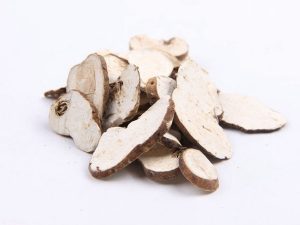
Northern Glehnia, Ophiopogon, Rehmannia, Angelica, Goji Berries, and Chinese Toon.
Source
*Continuation of Case Studies by Renowned Physicians*, Volume 18.
Benefits
Deficiency of liver and kidney yin with qi stagnation; distension and pain in the chest, flanks, epigastrium, and abdomen; acid regurgitation and bitter vomiting; dry throat and mouth; as well as hernias and masses; red tongue with little coating; and a string-like, fine, and rapid pulse.Currently used for chronic hepatitis; pain in the flanks; acid regurgitation; hernias and masses; all liver diseases; yin deficiency of the liver and kidneys; stagnation of qi; throbbing pain in the flanks; distension of the chest and abdomen; a pulse that is fine and weak or deficient and taut; a tongue lacking moisture; and dryness of the throat and pharynx;Liver-kidney yin deficiency manifesting as aching pain in the legs and knees, weakness and lack of strength in the feet, or pulling pain at the Huantiao, Beishu, and heel acupoints. It also treats post-dysentery wind syndrome and conditions such as “crane’s knee,” “bone-adhering,” and “Huantiao” syndromes. Chronic hepatitis.
Note
Contraindicated for cases accompanied by retained phlegm and accumulated fluid, with a turbid and greasy tongue coating and no signs of yin deficiency; particular attention must be paid to the phrase “tongue without moisture” in this formula—if the tongue coating is turbid and greasy, it is not appropriate. Contraindicated for all conditions involving stagnation of qi, blood, fire, food, phlegm, or dampness that do not involve yin deficiency. As this formula contains a relatively large number of nourishing and greasy herbs, it is not suitable for patients with concomitant retained phlegm and accumulated fluid.
Copyright: Excerpt from *Continuation of Case Studies by Renowned Physicians*, Volume 18., Copyright belongs to the Original Author and all original sources, This article was shared by DeDe on August 31, 2026, Please credit the source and include a link to the original article when reposting.
Terminology Proofreading: [Cheng Bo] | August 31, 2026 Reviewed by: [Wang Zhongxiang, Associate Chief TCM Physician (China)] | August 31, 2026
Correct Content Errors: Errors may occur during the writing, editing, translation, and publication of website content. If you find any errors or inaccurate information in this article, please feel free to Contact Us to report them, and we will correct them promptly.
FDA Disclaimer: The descriptions of the efficacy of Chinese herbal medicines, herbal teas, decoctions, and formulas, as well as the content on Traditional Chinese Medicine (TCM) diagnostic theory and traditional TCM therapies contained on this site, are intended solely for the purpose of popularizing TCM culture and serving as an educational reference; they do not constitute medical diagnosis or treatment advice. Please do not attempt to use these products on your own without proper guidance. These statements have not been evaluated by the Food and Drug Administration. This product is not intended to diagnose, treat, cure, or prevent any disease. If you are experiencing any physical discomfort, please consult a licensed healthcare professional and seek treatment at a reputable medical institution. This platform assumes no responsibility for any consequences resulting from the use of herbs or formulas by any individual based on the information provided on this site. Please read Medical Disclaimer.
Yiguan Decoction,Deficiency of liver and kidney yin with qi stagnation; distension and pain in the chest, flanks, epigastrium, and abdomen; acid regurgitation and bitter vomiting; dry throat and mouth; as well as hernias and masses; red tongue with little coating; and a string-like, fine, and rapid pulse.Currently used for chronic hepatitis; pain in the flanks; acid regurgitation; hernias and masses; all liver diseases; yin deficiency of the liver and kidneys; stagnation of qi; throbbing pain in the flanks; distension of the chest and abdomen; a pulse that is fine and weak or deficient and taut; a tongue lacking moisture; and dryness of the throat and pharynx;Liver-kidney yin deficiency manifesting as aching pain in the legs and knees, weakness and lack of strength in the feet, or pulling pain at the Huantiao, Beishu, and heel acupoints. It also treats post-dysentery wind syndrome and conditions such as “crane’s knee,” “bone-adhering,” and “Huantiao” syndromes. Chronic hepatitis.