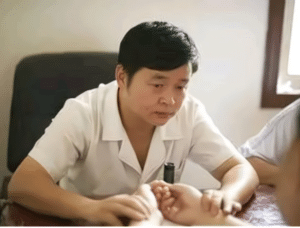
Conceptually, Traditional Chinese Medicine (TCM) does indeed place greater emphasis on a physician’s “insight” based on a holistic perspective and personal experience, rather than relying on standardized tests as Western medicine does. TCM assesses a patient’s condition through the integrated application of the four diagnostic methods—observation, auscultation, inquiry, and palpation—and emphasizes syndrome differentiation and treatment; thus, the same condition may be treated with different formulas in different patients. Western medicine, on the other hand, places greater emphasis on diagnosing based on quantifiable indicators and uniform standards.
The Story of Stir-Frying
Anyone who enjoys cooking knows that when you try a dish at a restaurant, you can figure out how to make it yourself after giving it some thought at home. Beyond sheer diligence, this process relies more on an intuitive understanding of cooking.
I love cooking, and I love figuring out how to cook. When I’m in a good mood, I enjoy imitating restaurant chefs to make a few dishes. Although the presentation, aroma, and appearance may not be quite as good, the flavor is by no means inferior.
When stir-frying, you start by adding oil—but how much? That’s a matter of feel. When to add the main ingredients, how long to stir-fry before adding salt and seasonings, and how much salt to use—these are all a matter of instinct. Just by looking at what’s in the wok, you can tell roughly how much salt to add. After adding it, take a taste—it’s just right, neither too salty nor too bland!
This is the Chinese way of stir-frying. If you ask a restaurant chef whether 5 grams or 6 grams of salt is better, he might not be able to explain it clearly, but that doesn’t mean he can’t cook!
When Westerners cook, they supposedly need a scale. For 500 grams of meat, how much oil is appropriate? How much salt? They have a rigid set of rules. Precisely because this standardized approach is easy to replicate and scale up, KFC has branches all over the world—even in our small city.
The differences between Chinese and Western cultures are just like cooking.
I once had an Italian lunch in Beijing—it was so bad that I’d rather have gone home and stir-fried some tiger-skin green peppers. Maybe I just have a Chinese palate—Western flavors just don’t suit me.
China’s traditional culture runs deep, and you’ll truly appreciate this if you try a variety of regional cuisines across the country.
Treating illnesses is actually much like a chef cooking a meal.
In traditional Chinese medicine, prescribing herbs may seem casual—10 grams or 12 grams might be written down offhand, and sometimes even 20 grams works well. Some schools of thought might use 50 grams, or even 100 grams. It’s just like stir-frying—a casual spoonful of salt is all it takes, yet the flavor is excellent!
Back home, I just toss in a few chili peppers when cooking. But when I eat the fragrant spicy chicken in Chengdu, there’s half a bowl of chili peppers, and it tastes great too. As I marvel at this, I slowly savor the experience—each has its own unique charm and distinct character!
Western medicine pursues standardization and quantification in everything, appearing very scientific. Traditional Chinese Medicine (TCM) seems arbitrary, leading people to perceive it as unscientific; some even consider it pseudoscience. Amid all this debate, TCM itself has become confused about how to move forward.
Consequently, many researchers have adopted Western medical models: performing acupuncture on mice and injecting Da Cheng Qi Tang into the bellies of lab mice—taking knowledge that has been clinically applied for thousands of years and turning it around to seek validation from mice. If the experimental results are negative, TCM is pseudoscience; if the mice “nod in agreement,” then it’s scientific! Turning something that was originally scientific into something unscientific—this is the tragedy of TCM’s modernization.
If you were to limit the amount of chili peppers in Sichuan cuisine to the standards of Hangzhou-style cuisine, I wonder what it would taste like.
Why can’t we get used to Western food, yet we insist on pursuing its style and experiencing its atmosphere? Is it our spirit that’s enjoying it, or our stomachs?
Many people believe Western medicine is scientific. They often receive IV drips for over ten days for a simple cold, spending hundreds of yuan without getting better, yet they still feel relieved because they’re receiving “scientific” treatment—but is it their body that’s being healed, or their spirit that’s being comforted?
After catching a cold, traditional Chinese medicine (TCM) treats it with gua sha and herbal remedies to dispel exterior pathogens, and the patient recovers in a day or two. But what the patient sees isn’t sophisticated medical equipment—it’s a bowl of bitter, black herbal decoction that doesn’t smell like Lysol. Even though the body recovers, some say it isn’t “scientific.”
I believe that what Chinese people consume is Chinese culture.
Traditional Chinese medicine also draws upon Chinese culture in its approach to treating patients.
Today, Western medicine is highly specialized, yet diseases are complex and difficult to categorize absolutely. For example, a patient might have diabetes, high blood pressure, and heart disease, as well as a herniated lumbar disc, and a history of cerebral infarction. Now, after catching a chill, the patient is experiencing a cough, shortness of breath, dizziness, and palpitations. Because the patient has multiple underlying and severe conditions, they may need to make appointments with many different specialists when seeking treatment, yet the problem often remains difficult to resolve. Hospitals frequently recommend hospitalization. In fact, from the perspective of Traditional Chinese Medicine, all diseases are related to the five zang organs, which are interconnected. Treatment should take a holistic approach, regulating the five zang organs, rather than focusing on one aspect while neglecting others. By bringing the five zang organs into a state of relative balance, the patient’s symptoms will improve.
Patients often ask me, “Dr. Yu, what kinds of illnesses do you mainly treat?”
I reply, “I treat all kinds of illnesses!”
“That’s impossible! Doctors at hospitals are all specialized—some treat digestive issues, some treat diabetes, and some treat liver disease. What exactly do you treat?”
I still answer, “I treat all kinds of illnesses!”
Many people don’t understand why a TCM practitioner can treat any illness.
In fact, a true TCM practitioner doesn’t treat the disease itself, but rather the patient’s five zang organs. After conducting the Four Diagnostic Methods, the practitioner synthesizes the gathered information to assess the condition of each of the patient’s five zang organs. By regulating the fluctuations in their vitality, the disease resolves on its own without the need for specific treatment.
When we learn to cook, we shouldn’t focus solely on how to prepare a specific dish; instead, we should learn the techniques of cooking and understand the underlying principles. Since there are so many different dishes, we’ll never be able to master how to cook every single one. However, once we’ve mastered the techniques and grasped some basic principles, we’ll not only be able to follow recipes but also create new dishes.
The same applies to treating illnesses. There are tens of thousands of known diseases, and many more remain unknown. If we approach illness by focusing on each individual condition—trying to determine its specific classification and prescribe the appropriate treatment—we are operating at the level of “ten thousand.” We will never attain the realm of “managing the complex through simplicity.”
Sometimes, enthusiasts of Traditional Chinese Medicine may fall into a trap during their studies by overemphasizing the importance of “technique”—much like when learning to stir-fry, they focus excessively on how to toss the wok without understanding when or why it should be tossed.
They often hear that gua sha is effective and immediately begin learning it, without first understanding its underlying principles and indications. Consequently, after practicing it clinically for a while, they discover that gua sha cannot treat every illness—and sometimes, even for the same condition, it does not work equally well for all patients.
Later, they heard about the “miracle needle”—the idea that a single acupuncture needle could treat any disease—so they rushed to learn acupuncture. But when they applied it clinically, they found the results were not very good; it was effective only for a portion of patients.
After that, they heard that the “small needle knife” was highly effective, so they began learning that technique as well. In the end, however, they discovered that for many patients, the small needle knife provided only temporary relief and could not achieve a complete cure.
So where exactly does the secret of Traditional Chinese Medicine lie? Is there anything that, once mastered, can treat all diseases?
In fact, gua sha, acupuncture, micro-needle knife therapy, cupping, tuina, fire dragon therapy—including decoctions and pills—are all techniques for treating diseases.
There are many such techniques. I once told a student: If a patient has palpitations and the doctor firmly pinches the Laogong acupoint with their thumb, and the condition improves—does that mean the doctor’s fingernail is particularly powerful? Should we all grow a long fingernail to pinch patients?
Obviously not. What we need to learn is why pinching the Laogong acupoint is effective.
In Traditional Chinese Medicine, the most important thing is to understand the underlying principles behind a disease. If these principles are not understood, no technique can solve the problem; if they are understood, any technique will be effective. There is no need to envy Zhang San for his excellent acupuncture results or Li Si for his fame in massage therapy.
Behind every successful practitioner lies a breakthrough in understanding these “principles” and a thorough grasp of them.
If you only see surface phenomena without taking the time to deeply contemplate medical principles, you will never become a master practitioner!
To grasp medical principles, you must quiet your mind and study the Huangdi Neijing (The Yellow Emperor’s Classic of Internal Medicine), Shanghan Lun (Treatise on Cold Damage), Jingui Yaolue (Essentials of the Golden Chamber), and Shennong Bencao Jing (Shennong’s Classic of Materia Medica). You must also explore many other ancient TCM texts—rather than relying on unfounded speculation to invent new theories in an attempt to “reform” TCM. In today’s society, how many people can truly fathom the Huangdi Neijing? If one cannot even understand a classic of the TCM world, how can one even speak of innovation?
In this restless and impatient environment, many hope to achieve success and fame overnight—but that is impossible. Only through quiet study and contemplation can one gain true insight.
The development of Traditional Chinese Medicine does not lie in clamouring for urgent theoretical updates, nor in engaging in life-and-death battles with those who oppose it, nor in gathering for lively but empty discussions. Rather, it lies in quietly studying the classics: “Reading the classics—gaining one insight at a time” often leads to breakthroughs, and “spontaneous insights gained during clinical practice” frequently lead to success.
Once the four major classics have been thoroughly mastered, no one will claim that TCM is outdated or incapable of treating serious illnesses. At that point, the task will be to convey the classics to the world in the most accessible language, so that everyone can read and understand them. When everyone comprehends the classics, TCM will naturally be revived.
The purpose of writing this book is to help everyone understand the principles of Traditional Chinese Medicine through small, everyday incidents. Only by grasping these medical principles can they be widely applied; only then can we fundamentally comprehend human wellness. Getting sick is not frightening; what is frightening is our misunderstanding of wellness and our ignorance of medical principles.
Let us together gain insight into medical principles from the small details of daily life, recognize diseases, understand them, and overcome them.