
Introduction to Medicinal Diet
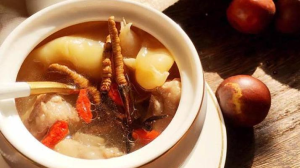
Cordyceps and Astragalus Pigeon Soup is a nourishing medicinal food derived from a classic TCM combination. It features Cordyceps sinensis (Dongchongxiacao), Astragalus membranaceus (Huangqi), and pigeon as the main ingredients, supplemented with Lycium barbarum (Gouqi), Ziziphus jujuba (Hongzao), and other ingredients simmered together. This soup has been passed down through folk tradition for a long time, with the saying “one pigeon is worth more than nine chickens.” Combined with the tonifying properties of Cordyceps and Astragalus, it serves as an excellent choice for nourishing in autumn and winter and supporting the body’s natural recovery process after wellness.
Cordyceps, also known as Dongchongxiacao (Chinese Cordyceps), is a composite formed by the parasitic fungus *Ophiocordyceps sinensis* (family Clavicipitaceae) on the larvae of insects from the family Hepialidae. According to Traditional Chinese Medicine (TCM), it is neutral in nature and sweet in taste, and enters the Lung and Kidney Meridians. Astragalus (Huangqi) is the dried root of *Astragalus membranaceus* or *Astragalus membranaceus* var. *mongholicus* (family Fabaceae). It is slightly warm in nature and sweet in taste, and enters the Spleen and Lung Meridians. Pigeon meat is rich in protein, amino acids, and various trace elements, with a tender texture that is easy to digest and absorb. The skillful combination of these three ingredients not only preserves the natural flavor of the food but also leverages the nourishing properties of the herbs, creating a nourishing soup that is appealing in color, aroma, and taste.
Functions of Medicinal Cuisine
Cordyceps sinensis (Dongchongxiacao) and Astragalus membranaceus (Huangqi) Pigeon Soup is most notably associated with supporting the body’s protective Qi and reinforcing the exterior, as well as nourishing the Kidney and Jing (essence). Astragalus (Huangqi) is known for its ability to tonify Qi and raise Yang, helping to maintain the body’s surface defense and supporting energy levels, occasional spontaneous sweating, and a general sense of vitality. Cordyceps (Dongchongxiacao) is valued for supporting both the Kidney and Lung, and may help with occasional lower back and knee discomfort, occasional cough or respiratory weakness, and overall reproductive health.
Additionally, this soup has the comprehensive benefit of supporting the middle and nourishing blood, as well as helping maintain internal moisture and balance. Pigeon meat itself supports Yin nourishment and blood supplementation, and helps expel wind and toxins. When combined with Cordyceps sinensis (Dongchongxiacao) and Astragalus membranaceus (Huangqi), it supports the production of hemoglobin and helps maintain healthy red blood cell levels. It also provides supportive benefits for women’s menstrual regularity and helps support recovery after childbirth. Regular consumption may help support immune system function, support a healthy aging process, and promote overall vitality.
Functions of Traditional Chinese Medicine
supports healthy Qi and helps maintain the body’s natural defenses, while nurturing the vital foundation for overall well-being.
From the perspective of Traditional Chinese Medicine (TCM), Astragalus membranaceus (Huangqi) is known as the “holy herb for tonifying Qi,” specifically entering the Spleen and Lung meridians to powerfully tonify the Qi of these two organs. The Spleen governs transportation and transformation, serving as the source for generating Qi and blood; the Lung governs the skin and body hair, controlling the opening and closing of the Couli (interstices). By tonifying the Qi of the Spleen and Lung, Astragalus helps strengthen the body’s defensive (Wei) Qi function, thereby supporting resistance against external challenges. Cordyceps sinensis (Chongcao) enters the Kidney meridian, where it helps warm and tonify Kidney Yang, while nourishing the Jing (essence) and marrow. Used synergistically with Astragalus, it creates a complementary approach that simultaneously supports the Spleen, Lung, and Kidney organs—making this combination particularly beneficial for supporting individuals with long-term fatigue or age-related weakness.
Promotes the mutual nourishment of Metal and Water (Lung and Kidney) to support healthy respiration.
The Cordyceps and Astragalus Pigeon Soup also reflects the TCM supports principle of “Metal and Water Mutual Generation (Jin Sheng Shui)”. The Lung corresponds to Metal and the Kidney to Water; Metal generates Water, and sufficient Kidney Essence in turn nourishes Lung Yin. Cordyceps sinensis (Dong Chong Xia Cao) supports both Kidney Yang and Lung Yin, while Astragalus membranaceus (Huangqi) supports Lung Qi to assist the Kidney in receiving Qi. Together, they help maintain respiratory comfort and normal breathing, especially during physical activity. Pigeon meat, neutral in nature and salty in flavor, enters the Liver and Kidney Meridians, supporting Liver and Kidney health as well as nourishing essence and marrow, adding depth to the soup.
Suitable For
Cordyceps and Astragalus Pigeon Soup is especially suitable for long-term health maintenance in the following groups: First, middle-aged and older adults. As they age, the functions of the body’s organs gradually decline, often accompanied by occasional lower back and knee discomfort, increased nighttime urination, and occasional fatigue. This soup supports Kidney health and overall vitality, promoting healthy aging. Second, individuals recovering from wellness, surgery, or postpartum. At this stage, the body’s vital energy (Qi) is significantly depleted and needs gentle, targeted nourishment. Cordyceps and Astragalus Pigeon Soup provides nutritional support while helping to strengthen the body’s natural defenses, supporting the recovery process.
Third, sub-healthy individuals who engage in long-term mental work, experience high work stress, and frequently stay up late. This population often presents with Qi Deficiency and subtle depletion of Kidney Essence, manifesting as memory decline, dizziness with tinnitus, insomnia with excessive dreaming, etc. Consuming this soup helps restore vitality and supports restful sleep. Fourth, individuals with chronic respiratory conditions, such as those in the remission phase of chronic bronchitis or bronchial asthma, presenting with shortness of breath, fatigue, spontaneous sweating, and aversion to wind. Cordyceps and Astragalus Pigeon Soup helps support Lung function and immune health, and assists in reducing the frequency of acute episodes.
Contraindications
Although Cordyceps sinensis and Astragalus membranaceus Pigeon Soup is highly regarded for its nourishing properties that support general well-being, it is not suitable for everyone. Individuals with Excess Patterns or Heat Patterns should use it with caution, such as those currently experiencing a common cold with fever, sore throat, cough with yellow phlegm, or dry stools. At such times, the body may have Excess Heat or externally-contracted pathogens, and premature tonification could lead to “locking the pathogen inside” (retaining pathogenic factors), potentially prolonging the condition. Individuals with hypertension during acute phases or unstable blood pressure control should also avoid excessive consumption, as Astragalus has the effect of raising Yang and lifting the sunken (lift prolapse), which may potentially raise blood pressure.
Additionally, individuals with a Yin Deficiency with Fire Hyperactivity constitution should adjust the formula before consumption. Such individuals often present with heat in the palms and soles, dry mouth and throat, night sweats, and a red tongue with little coating. Although Cordyceps (Dongchongxiacao) has some effect in supporting Yin, Astragalus (Huangqi) has a warm nature that may affect internal balance by aggravating deficient heat. It is recommended to reduce the amount of Huangqi or combine it with Yin-supporting herbs such as Ophiopogon (Maidong) and Polygonatum (Yuzhu). Children and adolescents, who are in a period of growth and development with abundant Yang Qi, should not indiscriminately take tonics unless there is confirmed Qi Deficiency under the guidance of a practitioner. Contraindicated for those with allergies to Cordyceps or pigeon meat.
Food ingredient formula proportions
Here is the standard formula and proportion for Cordyceps sinensis and Astragalus membranaceus Pigeon Soup (calculated for 3–4 servings): 1 pigeon (approx. 300–350 g), preferably an older pigeon for firmer texture and richer nutritional value; 3–5 g of Cordyceps sinensis (Dongchongxiacao), ideally with plump body, golden color, and dense cross-section; 15–20 g of raw Astragalus membranaceus (Huangqi), preferably with evenly sliced pieces, yellowish-white cross-section, and a sweet taste.
The auxiliary ingredients include: 10 g (about a small handful) of Lycium barbarum (Goji Berry, Gouqi), preferably large, red, and thick-fleshed; 5–6 Ziziphus jujuba (Red Date, Hongzao), pitted before use to avoid excessive warming; 3–4 slices of fresh Zingiber officinale (Ginger, Shengjiang) to remove fishy odor and warm the stomach; about 2000 ml of water; and salt to taste, added at the end for final seasoning. If you wish to enhance the flavor, a small amount of Dimocarpus longan (Longan, Longyanrou) or Dioscorea opposita (Chinese Yam, Huaishanyao) may also be added, but not too much to avoid overpowering the primary beneficial effects.
Cooking method
Step 1: After slaughtering, remove the feathers and internal organs of the pigeon, then clean thoroughly. Cut into 4–6 pieces. Place them in a pot of cold water, add 2 slices of ginger and a small amount of cooking wine, bring to a boil over high heat, and skim off any foam. Remove the pigeon pieces and rinse them with warm water to remove any residual blood. This blanching step helps eliminate any unwanted odors and impurities, resulting in a clearer broth and a purer flavor.
Step 2: Rinse the Astragalus membranaceus (Huangqi), Lycium barbarum (Gouqi), and Jujubae Fructus (Hongzao) separately with clean water to remove surface dust. Avoid over-washing Cordyceps sinensis (Dongchongxiacao); gently brush off any attached soil with a soft brush to helps maintain loss of active components. Place the Astragalus membranaceus (Huangqi), Jujubae Fructus (Hongzao), and the blanched pigeon pieces into a clay pot. Add enough clean water (about 2000 ml). Bring to a boil over high heat, then reduce to low heat, cover with a lid, and simmer for 1.5 hours.
Step 3: After simmering for 1.5 hours, add Cordyceps sinensis (Dongchongxiacao) and Lycium barbarum (Gouqizi), then continue to simmer over low heat for 20–30 minutes. Note that Cordyceps should not be cooked for too long, as prolonged heating may disrupt its active constituents. Finally, season with an appropriate amount of salt according to personal taste, stir well, turn off the heat, cover the pot, and let it rest for 5 minutes before serving. It is recommended to use a clay pot or ceramic pot throughout the cooking process, and to avoid iron or aluminum pots, as these may affect the beneficial properties.
Consumption Tips
1. It is recommended to consume Cordyceps and Astragalus Pigeon Soup (Cordyceps sinensis [Dongchongxiacao] and Astragalus membranaceus [Huangqi] Pigeon Soup) on an empty stomach, either 1 hour before or 2 hours after meals. At these times, the digestive burden is lighter, which supports the full absorption of nutrients. It is advisable to consume this soup 2 to 3 times per week, and for no more than 4 consecutive weeks. After that, take a 1-week break before resuming, in order to achieve continuous supportive balancing without causing a cloying or overly rich effect.
2. When consuming the soup, you can also eat the pigeon meat and the medicinal herbs together. Especially the Cordyceps sinensis (Chongcao) should be chewed and swallowed; do not discard it. Pigeon meat is rich in high-quality protein and various minerals. After prolonged simmering, the meat becomes tender and easy to digest. If you find the taste of Astragalus membranaceus (Huangqi) residue unpleasant, you can wrap the Astragalus in a gauze bag before adding it to the pot, making it easy to remove.
3. For individuals with a tendency toward a heat constitution or those who are prone to internal heat, 10 grams of *Ophiopogon japonicus* (Maidong) or 6 grams of *Polygonatum odoratum* (Yuzhu) can be added to the formula to balance the warm nature. When consumed in winter, increase fresh ginger to 5–6 slices and add a small amount of ground pepper to support a warm and comfortable digestive environment and help the body maintain warmth. Pregnant women and those during menstruation should consume only under the guidance of a healthcare practitioner; it is recommended to remove *Astragalus membranaceus* (Huangqi) and keep only *Cordyceps sinensis* (Dongchongxiacuo) and pigeon.

I’ve been looking for a good TCM soup recipe to boost my energy this winter—this one sounds perfect! I love how cordyceps and astragalus work together. One question: can I use dried astragalus slices straight from the bag, or do they need any special prep before simmering? Thanks for sharing this!
와, 동충하초와 황기 비둘기탕이라니! 건강에 좋은 재료들이 한 가득 들어가서 완전 보양식이네요. 집에서 한 번 끓여보고 싶어요. 레시피도 자세히 알려주면 좋겠어요! 감사합니다~ 😊
This soup sounds amazing! I love that it combines classic TCM ingredients like cordyceps and astragalus. I’ve been looking for more nourishing recipes, especially for winter. Do you think I could substitute chicken if I can’t find pigeon? Thanks for sharing the recipe!
I’ve been curious about trying this soup for immune support! The combo of cordyceps and astragalus sounds amazing for boosting energy. Do you have any tips for sourcing quality cordyceps without breaking the bank? Thanks for sharing the recipe!