Poria is the name of a traditional Chinese medicine. It is the dried sclerotium of the fungus Polyporus umbellatus (Pers.) Fries, belonging to the genus Polyporus in the family Polyporaceae. It has the effects of promoting diuresis, reducing edema, and draining dampness. It is primarily used to treat edema, difficulty urinating, beriberi, diarrhea, dysuria with turbid urine, and leukorrhea.
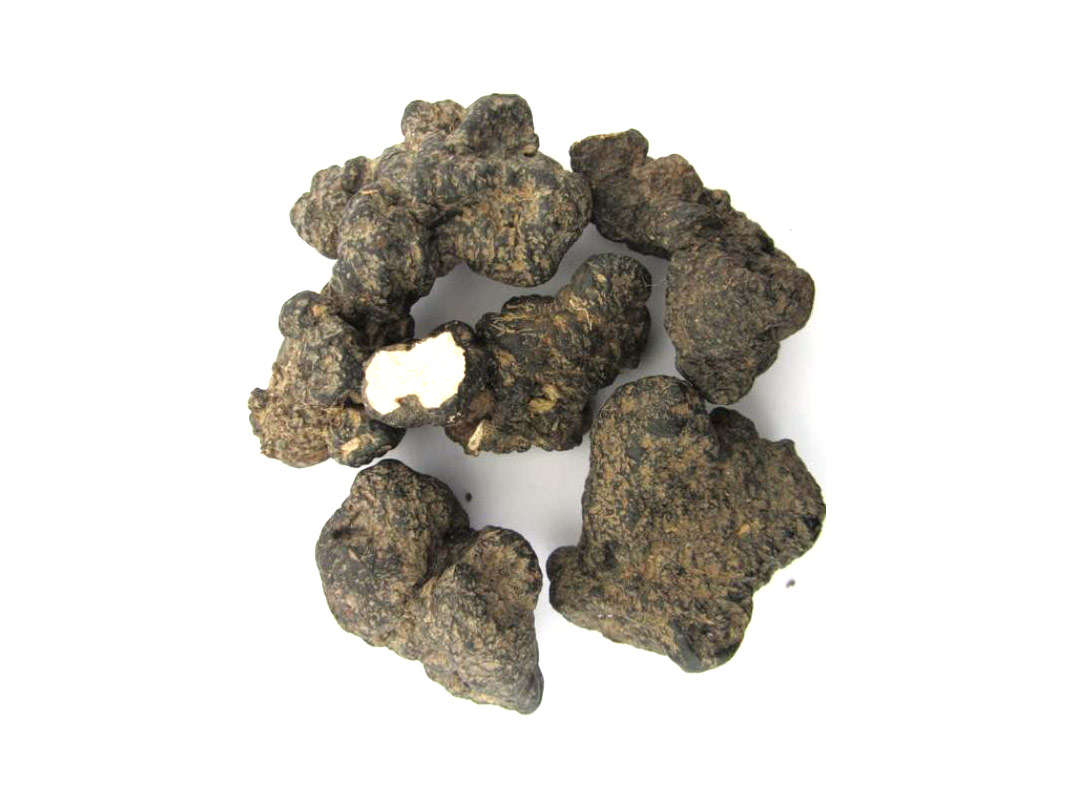
Poria
Poria is the name of a traditional Chinese medicine. It is the dried sclerotium of the fungus Polyporus umbellatus (Pers.) Fries, belonging to the genus Polyporus in the family Polyporaceae. It has the effects of promoting diuresis, reducing edema, and draining dampness. It is primarily used to treat edema, difficulty urinating, beriberi, diarrhea, dysuria with turbid urine, and leukorrhea.
Chinese Name : 猪苓
Latin Name : Polyporus
Aliases : Shiling, Wild Boar Dung, Shituo, Xiling, Diwutao, Wild Boar Food, Pig Dung Poria, Pig Poria
Authentic Producing Area : Mainly produced in Shaanxi, Henan, Hebei, Sichuan, and Yunnan.
Nature, Flavor & Meridian Tropism : Sweet and bland in taste; neutral in nature; enters the Kidney and Bladder meridians
Benefits & Efficacy
Benefits
Promotes diuresis, reduces swelling, and drains dampness.
Indications
Mainly used for edema, difficulty urinating, beriberi, diarrhea, turbid urine, and leukorrhea.
Usage and Dosage
Internal use: Decocted as a soup, 10–15 g; or incorporated into pills or powders.
Precautions
1. This herb has a strong diuretic effect; it should not be used by individuals without internal water-dampness or those with excessive urination. 2. Avoid lard and limit intake of greasy foods.
Chemical Constituents
It primarily contains polysaccharides, such as Poria glucan, as well as steroidal compounds, free and bound biotin, and crude protein.
Pharmacological Actions
1. Effects on the urinary system: The diuretic potency of a Poria decoction is stronger than that of caffeine, Akebia, or Poria cocos. Wuling Powder (Poria, Poria cocos, Atractylodes macrocephala, Alisma orientale, and Cinnamomum cassia) increases urine output while also enhancing the excretion of sodium and potassium. Its diuretic mechanism may involve inhibiting the reabsorption of electrolytes and water in the renal tubules. 2. Effects on Immune Function: Poria is a nonspecific immunostimulant. Its antitumor effects may also be related to this property. 3. Hepatoprotective Effects: Poria polysaccharides can alleviate carbon tetrachloride-induced liver damage in mice, reducing pathological damage to liver tissue and lowering serum alanine aminotransferase (ALT) levels. 4. Other Effects: Poria cocos also exhibits radioprotective, antibacterial, anti-aging, platelet aggregation-enhancing, and antimutagenic effects.
Relevant Discussions
1. *Compendium of Materia Medica*: Poria cocos has a bland and diuretic nature; its energy rises yet can also descend, thus it can open the pores, promote urination, and shares the same functions as Poria (Poria cocos), but is not as suitable as Poria for use in tonic formulas.
2. *Comprehensive Discourse on Materia Medica*: Poria cocos is a herb that drains dampness, promotes urination, and harmonizes yin and yang.This herb has a sweet, bland, and slightly bitter taste. Although the bitterness has a descending action, the sweetness and blandness also possess draining, dispersing, and dispersing properties. It ascends yet descends, and descends yet ascends; thus, it excels at opening the skin pores, separating and regulating the yang qi of the exterior and the yin qi of the interior to promote urination. Therefore, in ancient times, it was primarily used to treat chronic malaria and to neutralize poisonous insect toxins. In Zhen’s formula, it is used for severe fever in cases of typhoid fever and epidemic fever, capable of inducing sweating and expelling pathogens—this involves directing the yang qi of the exterior outward.Zhang’s formula is indicated for abdominal distension, swelling, acute pain, and a sense of distress in the chest, as well as for malaria, dysentery, and malaria-induced diarrhea—this involves directing the internal yin qi outward. Zhang Zhongjing treated Taiyang syndrome characterized by a floating pulse, fever, thirst, and scanty urination by using Wuling San to induce sweating; for cases of thirst with a desire to drink water followed by vomiting—known as “water reversal”—he used Wuling San to stop the vomiting;for a winter cold cough accompanied by chills and fever resembling malaria—a condition known as “phlegm-wind”—Wu Ling San is used to subdue the cough. In all three of these methods, the emphasis lies on Zhu Ling’s ability to open the skin pores and its subtle efficacy in regulating the balance between yin and yang.
3.*The Meaning of Medicinal Substances*: Poria has a bland taste; blandness governs diuresis. It enters the Spleen to regulate the water channels. It is used to treat watery and damp diarrhea, relieve dysuria and eliminate dampness, reduce edema, and treat jaundice—it is the most effective for these conditions, which is why it is said to have the same efficacy as Amber. However, it cannot serve as the primary agent; rather, it assists tonics to strengthen the Spleen, guides purgatives to regulate the Spleen, supports warming herbs to warm the Spleen, and combines with cooling herbs to clear the Spleen.
4. *Changsha Explanation of Medicinal Substances*: “Poria cocos (Zhu Ling) drains and expels water more rapidly than Poria (Fu Ling). However, the nature of water is such that it cannot act alone without the support of earth and wood elements to facilitate its flow.The diuretic effect of Zhu Ling San relies on Bai Zhu to dry dampness (Earth); the diuretic effect of Zhu Ling Tang relies on Ejiao to clear wind (Wood); the diuretic effect of Wu Ling Tang relies on Bai Zhu to dry dampness (Earth) and Gui Zhi to promote the flow of Wood; the diuretic effect of Ba Wei Tang relies on Gui Zhi to promote the flow of Wood and Di Huang to clear wind (Wood). If one merely seeks diuretic effects from Zhu Ling, Fu Ling, Hua Ling, and Ze Ling alone, it is unlikely to achieve remarkable results.”
5. *Seeking the Truth in Materia Medica*: Poria (Zhu Ling) is used in all formulas containing the Four Ling or Five Ling herbs. Although its nature is similar to that of Alisma (Zexie)—both enter the Bladder and Kidney meridians to clear heat, eliminate dampness, open the orifices, and promote diuresis—once fluids are eliminated, the spleen will inevitably become dry; once fluids are completely depleted, qi will inevitably dissipate;Although Alisma also promotes diuresis and shares a drying nature, its predominantly salty nature retains some moisturizing properties; though Alisma treats fire and may deplete qi, its moisturizing action nourishes yin and still offers a tonifying effect. Therefore, Poria must be combined with Alisma for use; this ensures a balanced combination of moisturizing and drying effects, thereby avoiding the risk of imbalance.As for Poria, although it belongs to the category of diuretics and can naturally eliminate dampness, Poria enters the Qi channel and ascends, whereas Alisma enters the Blood channel and descends. Moreover, when combined with Alisma to promote diuresis, reduce swelling, treat malaria, and stop dysentery—all of which are clearly cases of internal obstruction by summer-heat and damp-heat—it is invariably relied upon to facilitate the dispersal of these pathogenic factors.As the ancients have said, “Nothing clears and promotes urination as swiftly as this.” This is precisely why, among yin-nourishing herbs, only Alisma is used, while Poria is not—this is the very reason. However, since it specializes in draining fluids, body fluids are easily depleted, and long-term use often leads to damage to the eyes.
Applications
Clinical Applications
1. For treating swelling in pregnancy extending from the feet to the abdomen, accompanied by difficulty urinating and mild thirst with a desire to drink: Grind 5 liang of Poria into a fine powder. Take one fangcun bi with boiled water, three times daily. (From *Secret Records of Mothers and Children*)
2. For treating urinary retention during pregnancy, accompanied by hardness and pain below the navel: Poria, Akebia, and white mulberry root bark (chopped), each 1 liang. Coarsely pound and sift the ingredients.Take three qian per dose; add one zhan of water and some lamp wick, then decoct until reduced to seven-tenths of the original volume. Strain and take warm before meals. (Pujifang: Poria Decoction)
3. For ascites due to liver cirrhosis: One carp (weighing 500–2000 g); 9 g each of Poria, Areca nut peel, Stephania root, and Alisma rhizome. Cut open the fish’s abdomen, remove the internal organs, and rinse thoroughly.Grind the four herbs into a fine powder and stuff it into the fish’s abdomen. Boil until cooked, strain out the herbal residue, and consume the fish and soup. (*Medicinal Fungi of China*)
4. For scanty, reddish urine and loose stools: Equal parts of Poria cocos, Poria, Alisma, and Atractylodes macrocephala. Grind into a fine powder; take 2 qian per dose, mixed with water on an empty stomach. (*Shengji Zonglu*: Poria Decoction)
5. For cold-dampness in the stomach and intestines, uncontrollable watery diarrhea, and a tendency to lie down and refuse food: Half a liang of Poria (black skin removed), two pieces of Cardamom (shelled and roasted), and one fen of Phellodendron (coarse bark removed and roasted). Pound the three ingredients into a fine powder, sift, and mix with rice water to form pills the size of mung beans. Take ten pills each time with hot water before meals.(Zhuling Pills from *Shengji Zonglu*)
6. For treating young men with vigorous vital energy who experience nocturnal emissions of white discharge: 1 liang of Pinellia, 1 liang of Poria. Chop the Pinellia into pieces the size of beans; grind the Poria into a fine powder. First, stir-fry the Pinellia until it turns yellow, taking care not to burn it, then let it sit on the ground for half a day to remove the heat toxicity.Grind the Pinellia into a powder; mix it evenly with half of the Poria powder to form pills the size of a tung seed. Then mix the remaining Poria powder with the pills, let them dry, and store them in an unglazed earthenware jar. Take forty pills each time on an empty stomach with warm wine or salted broth; in the hours of Shen and Wei, take them with cold wine. (Poria Pill from *Jisheng Fang*)
7. For a floating pulse accompanied by fever, thirst with a desire to drink water, and scanty urination: Poria (peeled), Poria, Alisma, Donkey-hide Gelatin, and Talc (crushed), each one liang. Combine the five ingredients with four sheng of water. First, decoct the first four ingredients until reduced to two sheng; strain out the residue, then add the Donkey-hide Gelatin and melt it completely. Take seven he while warm, three times daily. (Poria Decoction from *Treatise on Cold Damage*)
8. For vomiting with the disease located above the diaphragm and a craving for water: Zhu Ling, Fu Ling, and Bai Zhu, each in equal parts. Pound the three ingredients into a powder; take one fangcun bi with water, three times daily. (Zhu Ling Powder from *Essentials of the Golden Cabinet*)
Related Compatibility
1. Poria combined with Atractylodes: Poria excels at draining dampness and promoting diuresis; Atractylodes excels at tonifying qi, strengthening the spleen, and drying dampness. When used together, these two herbs have the effects of strengthening the spleen, tonifying qi, draining dampness, and promoting diuresis. They are used to treat watery diarrhea and scanty urination caused by an excess of dampness and an imbalance between clear and turbid fluids, as well as fatigue and loss of appetite.
2. Poria combined with Da Fu Pi: Poria excels at draining dampness and promoting diuresis; Da Fu Pi excels at descending qi and promoting fluid movement. When used together, these two herbs have the effect of promoting diuresis and relieving distension. They are suitable for conditions involving edema, abdominal distension, and difficulty urinating.
Medicinal Identification
Poria (Zhu Ling) and Poria (Fu Ling): Both herbs belong to the category of diuretics that reduce swelling; they have a sweet and bland taste and a neutral nature, and are commonly used to treat edema and abdominal distension. Both herbs can promote diuresis and drain dampness, and are often used in combination to treat conditions such as difficulty urinating, dysuria, and edema.However, Zhu Ling primarily enters the Kidney and Bladder meridians; it has only the function of draining dampness and promoting urination, without the effect of tonifying the Spleen and strengthening the middle jiao. Furthermore, its diuretic effect is stronger than that of Fu Ling, making it suitable for conditions such as edema, diarrhea, and turbid dysuria.Poria, on the other hand, primarily enters the Heart, Spleen, and Kidney meridians; it combines diuretic and tonifying effects, capable of tonifying the Heart and Spleen, calming the mind, and soothing the spirit. It is used for diarrhea, loose stools, and poor appetite caused by spleen deficiency with excessive dampness, as well as insomnia and forgetfulness; furthermore, Poria is a key herb for treating phlegm and is often selected for dizziness, cough, and palpitations caused by phlegm-fluid retention.These two herbs are often combined in the treatment of conditions such as edema.
Related Medicines
Nephritis-Relief Capsules.
Related Prescriptions
Wuling Powder from *Treatise on Cold Damage*; Zhu Ling Decoction from *Treatise on Cold Damage*.
Medicinal Diet Therapy
Zhuling, Winter Melon Rind, and Crucian Carp Soup:
1. Effects: Strengthens the spleen, dispels dampness, reduces swelling, and promotes diuresis. Used for ascites due to liver cirrhosis and malnutrition-induced edema caused by spleen deficiency with internal retention of dampness and fluid. Symptoms include emaciation, fatigue, poor appetite, scanty urination, mild ascites or lower limb edema, and jaundice.
2. Ingredients: 1 crucian carp, 6 g Poria, 10 g winter melon peel, 2 slices of ginger, and seasoning to taste.
3. Preparation: Scale the crucian carp and remove the gills and internal organs, then rinse thoroughly. Rinse the Poria, winter melon peel, and ginger. Place them in a clay pot with the crucian carp and add an appropriate amount of water. Bring to a boil over high heat, then reduce to low heat and simmer for 2 hours. Season to taste before serving.
4. Usage: Consume an appropriate amount with each meal.
Notes
Patients requiring treatment with traditional Chinese medicine should first consult a licensed TCM hospital, where a TCM practitioner will conduct a professional pattern differentiation and issue a prescription.
Processing & Preparation
Harvesting & Processing
In the south, it is harvested year-round; in the north, harvesting is most common in summer and fall. After digging it up, remove mud and sand, then sun-dry it.
Processing Methods
Remove impurities, sort by size, soak, and thoroughly clean out any mud and sand. Wash thoroughly until thoroughly moistened, cut into thick slices, and dry.
Storage Methods
Store in a well-ventilated, dry place.
Crude Drug Identification
Identification
1. Cross-section of this product: The entire structure consists of densely interwoven hyphae. The outer layer is 27–54 μm thick; the hyphae are brown and difficult to separate. The internal hyphae are colorless, curved, and 2–10 μm in diameter; some show transverse septa and may be branched or nodularly enlarged.Numerous calcium oxalate prisms are present between the hyphae; most are in the form of regular octahedra, regular bipyramidal octahedra, or irregular polyhedra, with diameters ranging from 3 to 60 μm and lengths up to 68 μm; occasionally, several crystals are aggregated.
2. Take 1 g of the powdered sample, add 20 mL of methanol, subject to ultrasonic treatment for 30 minutes, filter, and use the filtrate as the test solution.Take an ergosterol reference standard, dissolve it in methanol to prepare a solution containing 1 mg per mL, and use this as the reference solution. Perform thin-layer chromatography (General Chapter 0502): pipette 20 μL of the test solution and 4 μL of the reference solution, and apply them separately onto the same silica gel G plate. Develop the plate using a mobile phase of petroleum ether (60–90 °C)-ethyl acetate (3:1) as the developing agent, develop the plate, remove it, allow it to air-dry, spray with a 2% vanillin-sulfuric acid solution, and heat at 105°C until the spots become clearly visible. In the test solution chromatogram, spots of the same color appear at positions corresponding to those in the reference standard chromatogram.
Properties of Crude Drugs
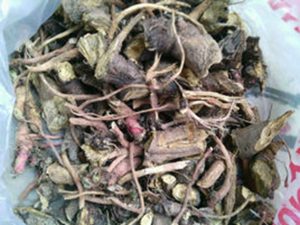
The sclerotia are irregularly lump-shaped, rod-shaped, subcircular, or flattened, some with branches, 5–25 cm long and 2–6 cm in diameter. The surface is black, grayish-black, or brownish-black, wrinkled or with tuberculate protrusions. They are light in weight and hard in texture; the cross-section is off-white or yellowish-white, with a slightly granular appearance.Odor is faint; taste is mild. Those that are large, with black outer skin, a white cross-section, and a relatively heavy body are considered superior.
Properties of Processed Slices
It appears as roundish or irregular thick slices with a black or brownish-black outer skin that is shriveled. The cross-section is off-white or yellowish-white and slightly granular. It has a faint odor and a mild taste.
Botanical Information
Botanical Classification
Poria cocos, a fungus belonging to the genus Poria in the family Polyporaceae.
Morphological Characteristics
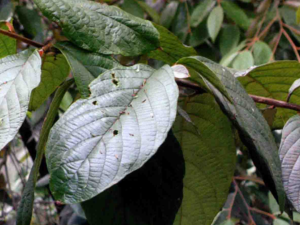
The sclerotium is irregular in shape, forming clumps of varying sizes; it is firm, with a purplish-black surface covered in numerous uneven wrinkles, and a white interior. It generally measures (3–5) cm × (3–20) cm. The fruiting body emerges from the sclerotium buried underground; it has a stem that branches multiple times, forming a cluster of caps with a total diameter of up to 20 cm.The cap is round, 1–4 cm in diameter, with a umbilicate center; it bears pale yellow fibrous scales and ranges in color from nearly white to light brown. It lacks a ring, and the margin is thin and sharp, often inrolled; the flesh is fleshy but becomes hard and brittle when dry. The flesh is thin and white. The tubes are approximately 2 mm long, the same color as the flesh, and extend downward.The pore openings are round to polygonal, with 3–4 per millimeter. The spores are colorless, smooth, cylindrical, rounded at one end and obliquely pointed at the other, measuring (7–10) μm × (3–4.2) μm.
Distribution Area
Distributed in Hebei, Henan, Anhui, Zhejiang, Fujian, Hunan, Hubei, Sichuan, Guizhou, Yunnan, Shanxi, Shaanxi, Gansu, Qinghai, Inner Mongolia, and the Northeast.
Growth Habits
It grows wild in secondary mountain forests at elevations of 1,000–2,000 m. In the rainy southern regions of China, it is commonly found on sunny slopes, while in the north, it is more common on shaded or partially sunny slopes. Sclerotia begin to germinate when the soil temperature at a depth of 5 cm reaches 8–9°C; Poria cocos grows rapidly and produces abundant sprouts when the monthly average soil temperature is 14–20°C, and forms fruiting bodies at 22–25°C.Poria cocos thrives in loose, well-aerated, humus-rich, fertile, slightly acidic sandy loam with a soil moisture content of 30%–50%.Poria cocos forms a symbiotic relationship with the fungus Armillaria, so its associated vegetation is related to the saprophytic and parasitic tree species on which Armillaria grows. It is commonly found alongside tree species such as oak, birch, maple, elm, poplar, willow, and privet.
Propagation Methods
Semi-wild cultivation is employed.
Cultivation Techniques
1. Semi-wild cultivation: Select shrublands or firewood forests where Armillaria fungi can grow; avoid timber forests and commercial plantations. In the southern Shanxi region, choose areas at an elevation of 1,000–1,500 m with flat terrain, gully-like terrain, or gentle slopes of about 15°, where the soil is relatively fertile sandy loam.First, cultivate Armillaria branches. You can collect tree roots or wood segments colonized by Armillaria as inoculum, or use artificially cultivated third-generation Armillaria production strains to cultivate the branches. Select fresh branches from Fagaceae plants and other broad-leaved trees with a diameter of 1–2 cm, and cut them diagonally into 10-cm-long segments.Dig a cultivation pit 50–60 cm in diameter and 30 cm deep. Line the bottom of the pit with a layer of leaves, then place the cut branches in the pit and cover them with a thin layer of soil. Repeat this process to stack several layers on top; each pit can generally accommodate 5–7 layers. Finally, cover the top of the pit with 3–5 cm of soil and cover the soil with leaves.Water frequently to maintain moisture. After about two months, the branches will be completely covered with Armillaria mycelium, forming what are known as “mycelium-inoculated branches.” Select mycelium-inoculated branches with a diameter of 2–3 cm and cut them into short sections approximately 30 cm long to serve as spawn. Use the same method as for cultivating mycelium-inoculated branches to expand the production of spawn material, which will be used for co-cultivation with Poria cocos. For Poria cocos spawn, select fresh, gray-brown Poria cocos with vigorous vitality as the seed material.Dig small holes about 10 cm deep beside shrubbery; the holes should contain tree roots and a network of fine roots. First, lay a layer of damp leaves at the bottom of the hole. Place a section of mycelium-inoculated wood next to the tree roots, and position the Poria sclerotium between the tree roots and the mycelium-inoculated wood. Place 100–250 g of Poria sclerotium in each hole, then cover with a layer of damp leaves and fill the hole with soil, leveling the surface.Cover the top of the hole with a thick layer of leaves.
2. Field Management: Once Poria cocos sclerotia have been planted, the soil should not be disturbed, and livestock should be prevented from trampling the area. If drought occurs during the summer, water can be brought in for irrigation. Each spring, add a layer of leaves to the top of the hole; this reduces soil moisture evaporation, replenishes soil organic matter, and improves soil fertility.