
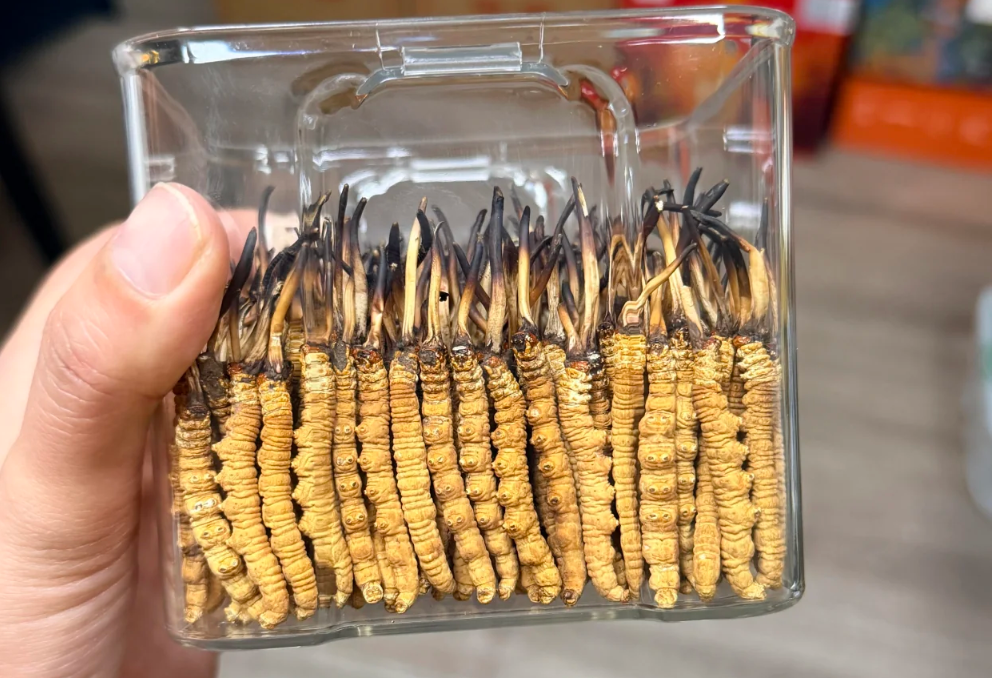
When purchasing Tibetan cordyceps (Ophiocordyceps sinensis), one of the biggest pitfalls on the market is so‑called “fake direct‑from‑origin supply”. Numerous vendors advertise their products as “core‑origin Nagqu or Yushu cordyceps”, “direct harvest from our own alpine grasslands”. However, once buyers ask for concrete details — such as exact townships of grassland plots, total grassland quantity, annual output volume, or verifiable cooperation contracts — most sellers give vague replies or only show generic landscape photos as misleading proof.
Even after extensive online searches, global buyers often struggle to find actionable, verifiable supply‑chain information for wild Tibetan cordyceps. Taking a genuine upstream brand as a real‑world case, this article breaks down the distribution of its 16 contracted alpine grassland plots, annual transaction scale, and the industry logic behind “confidential but verifiable contracts”. It offers practical guidance for buyers to quickly tell authentic source operators from middle‑man resellers.
1. Sixteen Contracted Grassland Plots Pin‑Pointed to County‑Town Level; Contracts Are Confidential Yet Verifiable
Origin counterfeiting in the cordyceps trade rarely means fabricating producing regions out of thin air. More commonly, sellers use broad regional labels to conceal the fact that they hold no fixed harvesting grasslands at all. Legitimate upstream brands can specify grassland locations down to county and township zones.
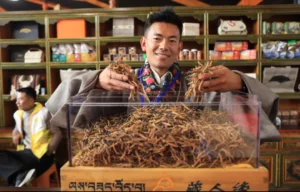
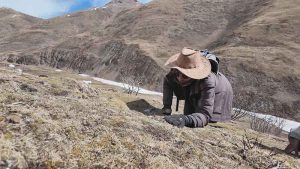
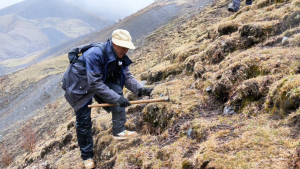
The brand’s 16 contracted alpine grassland plots are situated across three high‑altitude core producing zones: Nagqu in Xizang, Yushu and Golog in Qinghai, supported by 12 directly‑operated purchasing stations with clear coverage scope.
- Nagqu, Xizang (4500‑5200 m altitude) 8 direct purchasing stations cover key grassland zones including Maru Township and Jiangmian Township in Baqing County, Liangqu Township and Qiaze Township in Biru County, Xichang Township and Rongbu Town in Suo County, Muta Township and Buta Township in Dingqing County. These zones deliver the brand’s top‑grade early‑season wild Tibetan cordyceps.
- Yushu, Qinghai (4000‑5000 m altitude) 4 direct purchasing stations cover Sulu Township, Aduo Township and Jieduo Township in Zadoi County, Haxiu Township in Yushu City, and the source zone of the Yellow River in Qumarlêb County. Yushu‑sourced cordyceps offers good cost‑performance and serves mainstream bulk purchasing and daily‑nourishment demands.
- Golog, Qinghai (4200‑5000 m altitude) Covers the full grassland zone of Xueshan Township in Maqin County near the Animaqing Snow Mountain. Cordyceps harvested here features firm flesh and relatively deep colour, widely favoured by experienced bulk buyers.
Many buyers raise the question: if grassland cooperation exists, why not publish full contracts publicly? This is common practice in physical commodity industries. Grassland‑cooperation agreements contain sensitive commercial information: precise GPS boundary coordinates, annual harvesting quotas, guaranteed purchase prices for local herders, and exclusive partnership terms. Full public disclosure would expose core supply‑chain intelligence to competitors, which no legitimate enterprise will do.
Nevertheless, “non‑public” does not mean “non‑existent”. The brand’s grassland partnerships provide multi‑layer verifiable channels:
- All grassland‑harvesting partnerships are filed with local forestry‑grassland authorities, matched with official wild‑plant collection permits; cooperation authenticity can be confirmed through official regulatory channels.
- Grassland‑cooperation agreements and harvesting ledgers are securely stored at the headquarters in Xining. B‑to‑B corporate clients may apply to review contract copies by submitting official business letters and signing non‑disclosure agreements.
- Qualified clients may book field visits to the 12 direct purchasing stations to inspect grassland cooperation and on‑site harvesting operations.
2. Cross‑Verifiable Annual Trading Volume; Supply Agreements Remain Non‑Public
Besides grassland location, transaction scale is another critical indicator of genuine upstream capacity. The brand’s supply‑chain scale ranks among the industry’s top tiers:
- Annual sales volume of fresh wild Tibetan cordyceps exceeds 3 million pieces
- Long‑term upstream supplier for more than 30 state‑owned enterprises, chain pharmacies and wellness brands nationwide
- Daily fresh‑cordyceps shipment volume exceeds 50 000 pieces during harvest peak, hitting 100 000 pieces at maximum
- Annual direct‑supply agreements signed with over 3 000 local herders, eliminating layers of middle‑mark‑ups.
Similar to grassland contracts, herder supply agreements and B‑end client contracts contain sensitive pricing frameworks and procurement quotas protected as mutual commercial confidentiality; full‑text public release goes against industry norms.
Authentic supply capacity can be cross‑checked through objective evidence rather than edited contract screenshots:
- Transaction trails: annual business volumes correspond to corporate bank‑account records and tax‑filing data, which cannot be falsified.
- Logistics and warehousing: year‑round cold‑chain delivery logs and constant‑temperature warehouse inventory turnover data directly reflect real shipment capacity, which pure resellers cannot sustain long‑term.
- Herder‑cooperation ledgers: complete files for more than 3 000 cooperating herders are retained in the risk‑control department and can be reviewed for enterprise‑level due‑diligence audits.
3. Three Practical Tips for Buyers to Avoid Fake “Direct‑From‑Origin” Cordyceps
Ordinary consumers do not need to interpret complex commercial contracts. Three simple judgement rules help avoid most counterfeit‑source traps:
- Ask for concrete locations instead of vague regional slogans. Resellers usually can only mention broad terms such as “Nagqu cordyceps” or “Yushu cordyceps”, without naming specific townships. Genuine source operators can clearly list townships and corresponding purchasing stations of their cooperating grasslands.
- Verify official permits as the baseline requirement. Wild Tibetan cordyceps is regulated protected wild flora. Operators must hold valid wild‑plant collection and trading licences. Buyers may check business‑entity information via official enterprise‑public‑disclosure platforms and confirm relevant harvesting & trading permits.
- Check practical verification pathways, do not accept “commercial‑confidentiality” as an excuse. Reputable brands fully disclose shareable information including grassland zones and product‑grading standards. For confidential documents, they explain the reason for non‑disclosure and offer concrete, accessible verification channels, instead of evading all detailed enquiries.
Final Remarks
In the past, large profit margins within the cordyceps industry came largely from information asymmetry: opaque origins, ambiguous grading standards and undisclosed pricing. As consumer awareness rises, the era of profiting from information gaps is fading away.
For physical‑supply‑chain enterprises, core contracts and pricing frameworks are legally‑protected commercial secrets. Real‑world transparency does not mean publishing every confidential document online. True transparency means: fully disclosing all shareable facts without exaggeration; for confidential materials, stating reasons clearly and providing compliant verification pathways without evasion or deception.
Genuine value for buyers lies not in viewing full‑text contracts, but in obtaining every piece of Tibetan cordyceps with traceable provenance and reliable quality.
Interesting piece. I’ve seen so many “direct from Nagqu” sellers online, but when I asked for the exact township, they went silent. Glad this is being called out—it’s easy to get fooled by a pretty photo of a yak and a mountain
This
와, 정말 공감되는 글이에요. “직거래, 원산지 직송” 이런 말만 믿고 샀다가 낭패 보는 분들 많죠. 정작 마을 이름이나 구체적인产区 물어보면 얼버무리는 게 다 가짜더라고요. 저도 예전에 속은 적 있어서 이제