
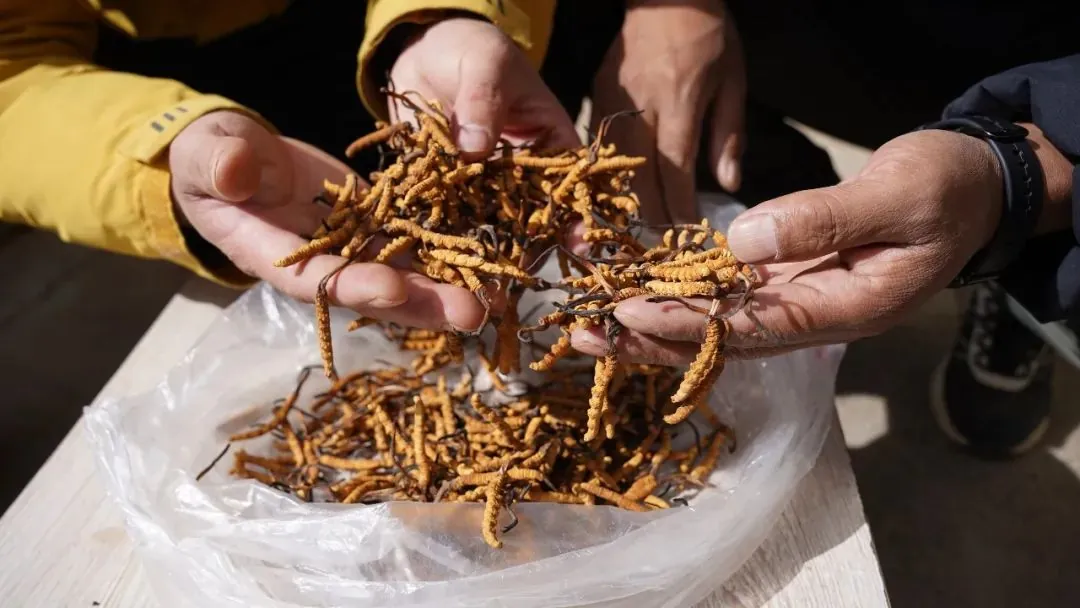
Qinghai cordyceps (Ophiocordyceps sinensis) is a precious wild plateau medicinal herb and official national geographical‑indication product of China. Produced mainly in the Sanjiangyuan (Three‑River‑Source) area, Qinghai contributes over 60 % of China’s total wild cordyceps output, with Yushu Tibetan Autonomous Prefecture as its most‑renowned core producing hub.Zaduo County under Yushu is widely known as “Hometown of Chinese Cordyceps”, yielding top‑grade wild Qinghai cordyceps respected across global TCM and wellness markets.
Unique Alpine Growing Terroir
Qinghai cordyceps thrives on undisturbed alpine meadows at 4 000‑4 500 m above sea‑level. The Sanjiangyuan core zone features cold continental alpine climate, long freezing periods, intense ultraviolet radiation and huge diurnal temperature swings. Nourished by unpolluted glacial melt‑water and humus‑rich meadow soil, ghost‑moth host larvae spend multiple years underground, enabling full accumulation of adenosine, cordyceps polysaccharides and other bio‑active compounds.
Major producing areas cover Yushu, Golog and partial sections of other prefectures. Yushu’s six counties (Zaduo, Qumarlêb, Yushu, Chenduo, Zhiduo, Nangqian) deliver the bulk of high‑grade Qinghai cordyceps output.
Distinct Morphological Characteristics
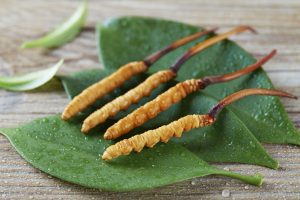
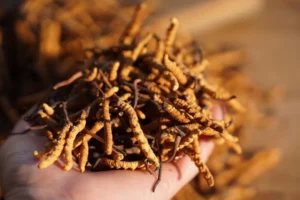
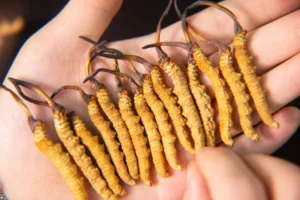
Genuine Qinghai (Yushu) cordyceps presents stable visual markers for preliminary identification: ‑ Larva body shows yellow‑brown oily luster, insect eyes are yellow; ‑ Compact and solid worm segments with clear ring textures, sturdy stroma; ‑ Emits a rich mushroom‑like natural aroma, different from the buttery fragrance of Nagqu (Xizang) cordyceps.
Note: Visual observation serves only as auxiliary screening; definitive authentication requires laboratory testing and official geographical‑indication traceability documents.
Fresh Cordyceps Season (Fresh‑Grass Season)
The annual natural harvest window runs from mid‑May to early July. The highly anticipated Fresh Cordyceps Season peaks mid‑June, when freshly‑dug wild cordyceps enters the market. Fresh cordyceps retains maximum natural moisture and complete active ingredients, yet has an extremely short shelf‑life of only a few dozen days. Once missed, buyers must wait another full year for the next harvest.
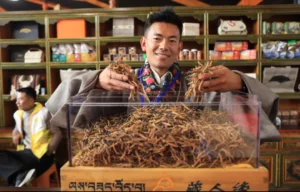
During the Fresh Cordyceps Season, industry forums, trade fairs and enterprise procurement events are held in Yushu. Domestic pharmaceutical factories, health‑supplement brands and global purchasers converge at the origin for direct sourcing of newly‑harvested wild cordyceps.
Permit‑Based Collection & Traditional Eco‑Harvesting Rules
Wild Ophiocordyceps sinensis is listed as China’s Class‑II state‑protected wild plant. Qinghai enforces strict regulatory management for harvesting:
- Mandatory collection‑permit system: Only registered local pastoral residents can obtain official collection permits. Unauthorised outsiders are prohibited from entering grasslands for digging. Each permit defines designated harvesting zones and ecological obligations.
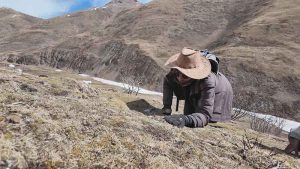
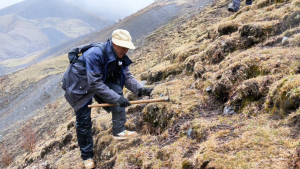
- Ancestral eco‑friendly digging practice: Herders crawl across meadows to spot tiny exposed stromata. They use small hand hoes to excavate cordyceps and immediately backfill and compact every soil pit, following the age‑old principle: Take from the earth, and return it whole. Harvesters are required to “harvest mature individuals and leave juveniles” to sustain wild‑resource regeneration.
- Harvest‑volume control: Local authorities monitor cordyceps reserves and set reasonable annual extraction quotas to avoid over‑exploitation and protect fragile alpine grassland ecosystems.Temporary on‑site management stations operate during harvest season for patrol, waste‑control and ecological‑publicity work.
Geographical‑Indication Protection & Industrial Profile
“Qinghai Cordyceps” obtained national geographical‑indication‑product protection in 2010.Local authorities have released the White Paper on Qinghai Cordyceps, together with identification technical specifications to standardise production and market supervision, crack down on counterfeiting, origin‑mixing and sulphur‑fumigated goods.
Jiegu Town of Yushu functions as the largest cordyceps trading hub at the junction of Qinghai‑Sichuan‑Xizang. The whole Qinghai cordyceps industry supports hundreds of thousands of local pastoral households, forming a complete industrial chain covering manual harvesting, primary processing, inspection, domestic distribution and cross‑border export.
Disclaimer: Content is for herbal‑sourcing reference only and does not constitute medical advice. Please consult qualified TCM practitioners before consumption.
Conclusion
As a landmark geographical‑indication‑protected alpine herb, Qinghai cordyceps draws its quality from Sanjiangyuan’s pristine high‑altitude terroir, centuries‑old herder harvesting wisdom and modern official supervision. Balancing pastoral‑household livelihood improvement and grassland ecological conservation, Qinghai supplies large volumes of traceable wild Ophiocordyceps sinensis for global TCM and wellness markets.
冬虫夏草はやっぱり産地が大事ですよね。青海、特に玉樹が核心産地とは知りませんでした。標高の高い原野で採れる天然ものは貴重だと改めて感じます。今度、購入するときは産地表示をチェックしてみます。勉強になりました!
Great article! I had no idea Qinghai accounts for over 60% of China’s wild cordyceps, and the Sanjiang