Search for Herbal Teas Recipes by Symptom:

Xie Bai

Xiebai is the name of a traditional Chinese medicine. It consists of the dried bulbs of Allium macrostemon Bge. (small-rooted garlic) or Allium chinense G.Don, both belonging to the genus Allium in the Liliaceae family. It has the therapeutic effects of promoting yang energy, dispersing nodules, regulating qi, and relieving stagnation. It is primarily used to treat chest pain caused by bi syndrome, epigastric and abdominal fullness, distension, and pain, as well as tenesmus following diarrhea or dysentery.

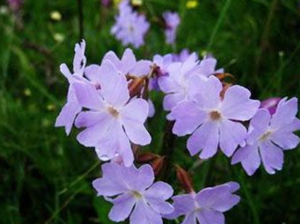
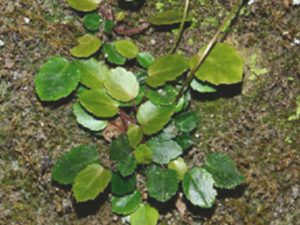
White-backed Primrose

White-backed Primrose is a name used in traditional Chinese medicine. It refers to the whole plant of Primula hypoleuca Hand.-Mazz. [P. forbesii Franch. subsp. hypoleuca (Hand.-Mazz.) W.W. Smith et Forr.], a member of the Primulaceae family. It has the therapeutic effects of clearing heat and detoxifying, as well as promoting blood circulation and relieving pain.It is primarily used to treat coughs caused by lung heat, mouth and tongue ulcers, redness and swelling of the throat, redness, swelling, and pain in the eyes, painful and scanty urination, bruises and swelling from trauma, and rheumatic pain.

Emei Screen Grass

Emei Screen Grass, a name in traditional Chinese medicine. It refers to the whole plant of Tanakaea omeiensis, a member of the Saxifragaceae family. It is distributed in Sichuan. It has the therapeutic effects of clearing heat and subduing wind. It is commonly used to treat high fever with convulsions and epileptic seizures.

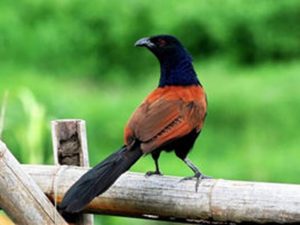
Red-feathered Pheasant

Red-feathered Pheasant, a name in traditional Chinese medicine. It refers to the meat of the brown-winged cuckoo (Centropus sinensis (Stephens)), a bird of the family Cuculidae. It is distributed in China from southern Zhejiang to Guangdong, Guangxi, Yunnan, and other regions. It has the effects of nourishing yin and replenishing blood, regulating menstruation and promoting lactation, and dispelling wind and dampness. It is commonly used to treat postpartum weakness and headaches in women, numbness in the hands and feet, rheumatic pain, and injuries from falls or blows.

Tendon-Regulating Manipulation: Warming, Regulating, and Moving Techniques

Muscle-regulating manipulation techniques have the effects of dredging meridians and collaterals, promoting blood circulation to remove blood stasis, and moving qi to helps with occasional pain. They are mainly used for acute soft tissue injuries in various parts of the body caused by various reasons, blood stasis, swelling, and pain caused by chronic strain, or … Read more
How to take self-care after massage therapy

For patients with facial paralysis, they should avoid exposure to cold drafts after massage as much as possible; for patients with rheumatism, they should be instructed not to wash with cold water after returning home; for patients with fractures, joint dislocations or malpositions, muscle, tendon, or ligament displacements, as well as those with cervical or … Read more

Avoid Cold After Massage: Why Wind and Dampness Matter

During massage, it is often necessary to advise patients who have been severely invaded by pathogenic wind, cold, and dampness, or patients who have just undergone treatments such as fumigation, sauna, or electrothermal physiotherapy devices, to avoid exposure to wind and cold or to refrain from using cold water. When the human body maintains an … Read more

How long does it take for massage to supports wellness?

The main purpose of massage is to supports wellness. To supports wellness, a certain amount of time is required, which refers to the process of supports wellness, abbreviated as “supports course”. The determination of a patient’s supports course cannot be arbitrarily decided; it is related to many issues. For instance, the patient’s condition must be … Read more

Massage Duration and Pressure: What Actually Works for Health

Health care massage uses relatively gentle force, giving a person a comfortable feeling, and the massage duration can be slightly longer. Medical massage is different. A long massage duration does not necessarily guarantee better efficacy, while a short one does not necessarily mean poor results. The key issue lies in whether it is possible to … Read more

Relationship between the Intensity of Massage Techniques and Therapeutic Effects

Massage can be divided into two types: health care massage and medical massage. Healthcare massage does not pay much attention to etiology, pathology, meridians, and acupoints, but rather emphasizes light, brisk, and gentle techniques to make patients feel relaxed and comfortable. Medical massage, however, is different. It requires consideration of the physiological functions and pathological … Read more

Is medication therapy still necessary during massage supports?

In clinical massage practice, people often ask, “Is medication still necessary during massage therapy?” To clarify this issue, explanations are provided from two aspects as follows: 1. Basic Principles of Massage Therapy and Pharmacotherapy Massage Therapy Massage therapy involves masseurs applying stimulation to specific areas or acupoints on the body’s surface using various techniques and … Read more

What effects can massage therapy actually achieve?

The therapeutic effects of massage: Generally, it is more effective for children than adults; more effective for young people than the elderly; more effective for those with strong physiques than those with weak physiques; more effective for newly developed and mild wellness than for chronic and severe wellness; and continuous massage is more effective than … Read more

Adjunctive therapies enhance the efficacy of massage supports

1. Medicinal substances In massage therapy, most wellness can be supports solely with massage techniques, while for some wellness, such as Qi Stagnation and deficiency-consumption wellness, appropriate medications should be used to enhance the therapeutic effect. 2.Traction, physiotherapy, hot compress (1) Traction Traction method involves using traction to moderately stretch the human body, with the … Read more

Massage Indications, Contraindications, and Precautions

1. Indications for massage Massage therapy has a wide range of applications. (1) Internal Medicine: Common cold, headache, dizziness, toothache, insomnia, stomachache, abdominal distension, abdominal pain, diarrhea, constipation, indigestion, intestinal adhesion, and vertigo caused by insufficient blood supply to the brain, etc. (2) Gynecology: dysmenorrhea, amenorrhea, breast hyperplasia, etc. (3) Pediatrics – Pseudomyopia, strabismus, muscular … Read more