
Critical opening disclaimer: Dong quai cannot dissolve large, complex, cancer-suspicious ovarian cysts. It serves only as adjunct herbal support for certain functional ovarian cysts (follicular cysts, corpus luteum cysts) linked to pelvic blood stasis and hormone imbalance. It is not a replacement for gynecological surveillance and ultrasound monitoring.
Core Mechanisms
- Dispel chronic pelvic blood stasis & improve ovarian circulation In TCM, many functional ovarian cysts are categorized as Zheng Jia (abdominal masses) arising from qi stagnation and blood stasis. Ligustilide boosts microcirculation around the ovaries, reduces local venous congestion, eases tissue stagnation that contributes to fluid buildup and cyst formation.
- Regulate smooth muscle and reduce pelvic tension It relieves ovarian/pelvic spasms, dull aching, unilateral lower abdominal discomfort often associated with cysts.
- Gentle hormone-modulating activity Weak phytoestrogenic compounds balance erratic hormone signalling that disrupts normal follicle rupture (a common cause of functional cysts).
⚠️ Major clinical caveat:
Dong quai’s phytoestrogen action creates risk considerations. Estrogen-sensitive cyst types (certain endometriomas/chocolate cysts) may theoretically be stimulated by excess estrogenic influence. Pattern differentiation is essential.
Symptom Profiles Most Likely to Benefit
✅ Suitable cases
- Small functional ovarian cysts (follicular / corpus luteum cysts <4cm), monitored by ultrasound, no suspicious features.
- Cyclic unilateral lower pelvic ache, dull ovarian tenderness, painful menstruation, dark blood with clots.
- Irregular cycles caused by failed ovulation, PMS bloating and breast tenderness linked to stagnation.
- Functional cysts recurring repeatedly each cycle due to poor pelvic circulation.
❌ Situations to avoid or strictly consult a gynecologist first
- Large complex cysts, solid components, septations, suspicious for malignancy. Rely on medical management, not herbal treatment.
- Ovarian endometriomas (chocolate cysts): estrogen-sensitive; continuous daily dong quai may worsen lesion activity. Use only follicular phase in low dosage under guidance.
- Cysts accompanied by persistent heavy, bright-red vaginal bleeding. Blood-moving effects can increase menstrual volume.
- Polycystic ovary syndrome (PCOS) with dominant androgen excess: dong quai alone is insufficient; requires broader herbal formulation.
- Pregnancy: absolutely contraindicated.
Phase-Aligned Dosing Protocol (Critical for Ovarian Cyst Care)
Rule: No year-round continuous daily intake. Restrict use to safer windows to limit sustained phytoestrogen exposure.
1. Follicular Phase (after menstruation ends until ovulation)
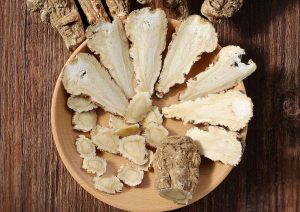
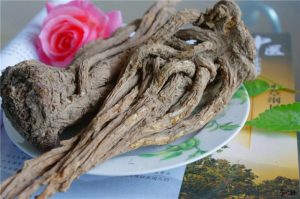
Dong quai 1.5–2 g daily (soup preferred over concentrated tincture)
Goal: improve ovarian blood flow, support healthy follicle maturation, encourage regular ovulation to prevent new functional cysts.
2. Ovulation → Luteal Phase
Reduce dosage to 1 g every other day OR pause completely.
Luteal phase hormone elevation increases risk that phytoestrogens may disrupt corpus luteum stability.
3. Menstruation
- Scanty, dark, clot-rich flow: maximum 1.5 g for first 1–2 days only.
- Moderate or heavy bleeding: cease dong quai entirely during menses.
Recommended Synergistic Herbal Blends
- Ovarian cyst + pelvic pain, blood stasis: Dong quai + Corydalis + White Peony
- Cyst recurrence + PMS mood swings and bloating: Dong quai + Bupleurum + Cyperus rotundus
- Fatigue, recurring functional cysts + blood deficiency: Dong quai + Astragalus
Contraindications & Safety Guidelines
- Maintain regular transvaginal ultrasound follow-up to track cyst size. If cyst grows rapidly, stop herbal use and follow gynecological advice.
- If pelvic pain intensifies after starting dong quai, discontinue immediately.
- Anticoagulants (warfarin, regular aspirin): avoid, higher bleeding risk.
- Concurrent hormone medication (birth control pills, progestins): consult your doctor before combining.
- Chronic loose stools: dong quai has mild laxative properties; choose slow-cooked soup preparation.
- Seek emergency care for sudden sharp one-sided pelvic pain (possible ovarian torsion or cyst rupture).
Expected Timeline
Pelvic discomfort and menstrual cramping often improve within 2–3 cycles.
For recurrent small functional cysts, 3–6 months of cyclic controlled use may lower recurrence frequency.
Dong quai does not guarantee cyst shrinkage; many functional cysts resolve naturally without herbs.
Summary
Dong quai may support women with small, benign functional ovarian cysts associated with blood stasis, irregular ovulation and cyclic pelvic pain. Due to phytoestrogen effects, strictly limit intake to the follicular phase and avoid continuous use. It cannot treat complex or suspicious ovarian masses and must be paired with routine gynecological monitoring.


This is such an important reminder. I’ve seen too many people try herbal supplements instead of getting an ultrasound for a suspicious cyst. Dong quai can be helpful for minor hormonal imbalance, but it’s not a magic bullet. Regular monitoring is the real lifesaver here. Glad the article stresses that.
這篇文章的提醒很重要!當歸確實是調理血虛和血瘀的好幫手,但很多人容易忽略它只是輔助角色。尤其是囊腫問題,還是要定期照超音波追蹤才安心,千萬別自行停藥或放棄正規檢查。感謝作者把機轉和安全界線講得這麼清楚,受益